Prevent German Wirehaired Pointers From Jumping: Easy Tips That Actually Work
Your German Wirehaired Pointer just knocked your grandmother into the coat closet again, and you’re standing there wondering if this is just who your dog is now. It’s not. GWPs are athletic, high-drive bird dogs bred to cover ground and express themselves physically, and jumping is often just misdirected enthusiasm — which means it’s entirely trainable with the right approach and about 15 minutes a day.
Why German Wirehaired Pointers Jump in the First Place
Before you can fix the behavior, you need to understand where it comes from. GWPs were developed in Germany in the late 1800s as versatile hunting dogs, bred to work all day in dense cover, retrieve waterfowl, and point upland birds. That breeding history means you’re dealing with a dog that has a naturally high energy reserve, a strong desire for physical contact with people, and a breed-typical excitability threshold that’s higher than, say, a Basset Hound’s.

Jumping usually stems from one of three drivers:
- Greeting arousal — the dog is overjoyed you’re home and jumping puts their face closer to yours, which is instinctively rewarding.
- Attention-seeking — if jumping has ever gotten a reaction (even a scolding), the dog learns it works.
- Under-exercised energy — GWPs typically need 60-90 minutes of vigorous activity daily. A dog that’s only getting a 15-minute leash walk is going to explode into any social interaction.
Most owners try to correct the behavior in the moment without addressing these underlying triggers, which is why yelling “off!” repeatedly for six months hasn’t worked. You have to treat the cause and the symptom simultaneously.
The Real Cost of Ignoring Jumping Behavior
This isn’t just a manners issue. A full-grown German Wirehaired Pointer weighs 50-70 pounds and stands 22-26 inches at the shoulder. When a dog that size launches at an adult with full force, the impact is roughly equivalent to being hit by a 50-pound weight moving at 3-4 mph — enough to bruise, knock over a small child, or seriously injure an elderly person or someone with balance issues.

There are three concrete risks to letting this slide:
- Liability — if your GWP jumps on a visitor and causes a fall or injury, you could be facing a homeowner’s insurance claim or worse. Dog-related liability claims averaged over $64,000 per incident industry-wide in recent years according to insurance industry data.
- Social isolation for your dog — friends and family stop wanting to visit, which means less socialization, which compounds behavioral issues over time.
- Reinforced anxiety patterns — dogs that jump excessively often show elevated arousal in other contexts too, since they haven’t learned impulse control as a general skill.
The good news: this is one of the most fixable behaviors in dog training, provided you’re consistent for at least 3-4 weeks.
Prevent German Wirehaired Pointers From Jumping: Easy Tips You Can Start Today
These are the exact techniques trainers use with high-drive sporting breeds, adapted specifically for the GWP’s temperament.

1. The Turn-and-Ignore Method
The instant your dog’s paws leave the ground, turn your body 90 degrees away, cross your arms, and avoid eye contact. Don’t speak, don’t push the dog off (pushing is physical contact, which dogs often interpret as play). Wait until all four paws are on the floor, count two full seconds of calm, then turn back and reward with calm praise or a treat. This teaches the dog that jumping makes you disappear and stillness makes you reappear.
2. The “Sit for Greeting” Replacement Behavior
You can’t just punish jumping — you need to give the dog something else to do with all that energy. Teach a rock-solid sit and make it the only acceptable greeting posture. Practice this at low-arousal moments first, not during actual greetings, so the behavior is automatic before you test it under excitement.
3. Manage Arousal Before It Peaks
GWPs go from 0 to 100 fast. If you can intervene at the 60% excitement mark instead of the 100% mark, you have a much better chance of success. Watch for early signs — perked ears, stiffening tail, quickened breathing — and cue a sit before the dog reaches full jump-launch mode.
4. Front-Clip Harness for Greetings at the Door
Keep a front-clip harness (like the PetSafe Easy Walk, $25-35) by the door. Clip your dog to a short lead before opening the door for guests. This gives you physical leverage to guide the dog into a sit without yanking on the neck, which matters for a breed prone to tracheal sensitivity.
Step-by-Step Training Protocol: The 4-Week Plan
This is the exact sequence I recommend to clients with jumpy sporting breeds. Each session should last 5-10 minutes, twice daily.
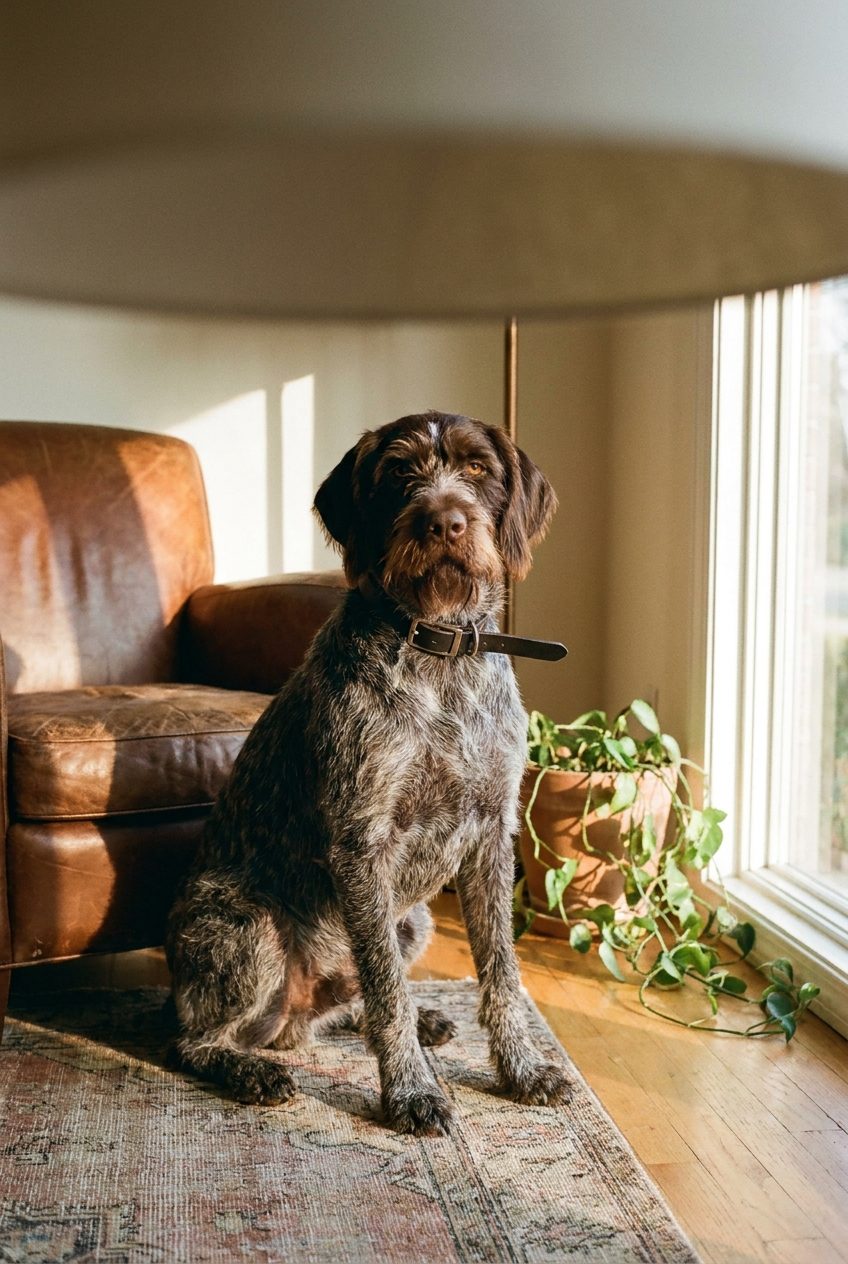
- Week 1 — Foundation: Practice sit/stay in a quiet room with zero distractions. Reward with high-value treats like Zuke’s Mini Naturals or small pieces of boiled chicken. Aim for a dog that sits within 1 second of the cue, 9 out of 10 times.
- Week 2 — Low-arousal greetings: Have one calm household member enter the room slowly. Cue sit before the dog gets excited. Reward heavily. Repeat 10-15 times per session.
- Week 3 — Medium-arousal greetings: Introduce mild excitement — a family member coming home from work, using an upbeat voice. Continue enforcing the turn-and-ignore method if jumping happens, and reward the sit immediately when it occurs.
- Week 4 — Real-world testing: Invite a friend over specifically to practice. Keep the dog on a leash for the first few sessions. Gradually phase out the leash once you get 8-10 successful greetings in a row without jumping.
Most GWPs show noticeable improvement within 10-14 days, with reliable behavior change by day 25-30, assuming consistent practice and that every family member enforces the same rules.
Tools and Equipment Comparison
Not all training tools work equally well for this breed’s build and temperament. Here’s how the most common options stack up:

| Tool | Best For | Approx. Cost | Pros | Cons |
|---|---|---|---|---|
| Front-clip harness | Door greetings, leash walks | $25-40 | Gentle, gives control without neck strain | Requires proper fitting |
| Treat pouch | Daily training reps | $12-20 | Fast reward timing, hands-free | None significant |
| Baby gate/exercise pen | Managing door chaos with guests | $30-60 | Prevents rehearsal of bad behavior | Doesn’t teach the behavior itself |
| Prong or choke collar | Not recommended for this use | $15-25 | N/A | Can cause pain-based reactivity in sensitive sporting breeds |
| Long training leash (15-20 ft) | Practicing recalls and calm approaches | $15-25 | Allows distance management | Can tangle if not handled carefully |
I specifically steer clients away from aversive tools like prong collars for jumping issues — GWPs are sensitive, intelligent dogs, and pain-based corrections often increase anxiety-driven behaviors rather than resolving them.
Common Mistakes That Sabotage Your Training
Even motivated owners derail their own progress. Here are the three mistakes I see most often:

- Mistake #1: Inconsistent household rules. If Dad allows jumping during rough play but Mom scolds it, the dog gets mixed signals and the behavior never fully extinguishes. Fix: hold a 5-minute family meeting and get everyone on the same page — jumping is never rewarded, period.
- Mistake #2: Punishing after the fact. Yelling at your dog for jumping 30 seconds after it happened teaches nothing, since dogs associate consequences with actions occurring within about 1-2 seconds. Fix: intervene in real time or not at all — use the turn-and-ignore method the instant it happens.
- Mistake #3: Skipping the exercise requirement. No amount of obedience training overcomes a dog with unspent energy. A GWP that hasn’t had at least 45-60 minutes of real physical output that day will struggle to control impulses. Fix: schedule a run, fetch session, or hike before high-stimulation events like guests arriving.
- Mistake #4: Only practicing in calm settings. Dogs don’t generalize well — a sit learned in your living room doesn’t automatically transfer to the front porch with a delivery driver. Fix: practice in at least 5-6 different locations and contexts before calling the behavior “trained.”
Age-Specific Strategies for Puppies vs. Adult Dogs
Puppies (8 weeks – 12 months)
Start training the moment you bring your GWP puppy home. Puppies under 6 months have shorter attention spans, so keep sessions to 3-5 minutes, several times a day. Never allow jumping “because they’re small and cute” — a 12-week-old GWP puppy weighs around 15-18 pounds, but by 9 months they’ll be pushing 45-55 pounds, and the habit you tolerated at 15 pounds becomes dangerous at 55.

Adolescents (6-18 months)
This is peak jumping season. Adolescent GWPs are physically capable but still impulsive, similar to a human teenager. Expect some regression even after initial training success — this is normal and doesn’t mean your training failed. Simply return to Week 2 of the protocol above for a refresher.
Adult Dogs (18 months+)
Older dogs with long-established jumping habits take longer to retrain — often 6-8 weeks instead of 4 — because you’re competing against years of reinforcement history. Be patient and increase treat value (freeze-dried liver, small hot dog pieces) to compete with the existing habit strength.
What If Scenarios: Troubleshooting Tough Cases
Real training rarely goes exactly according to plan. Here’s how to handle the situations owners ask about most.
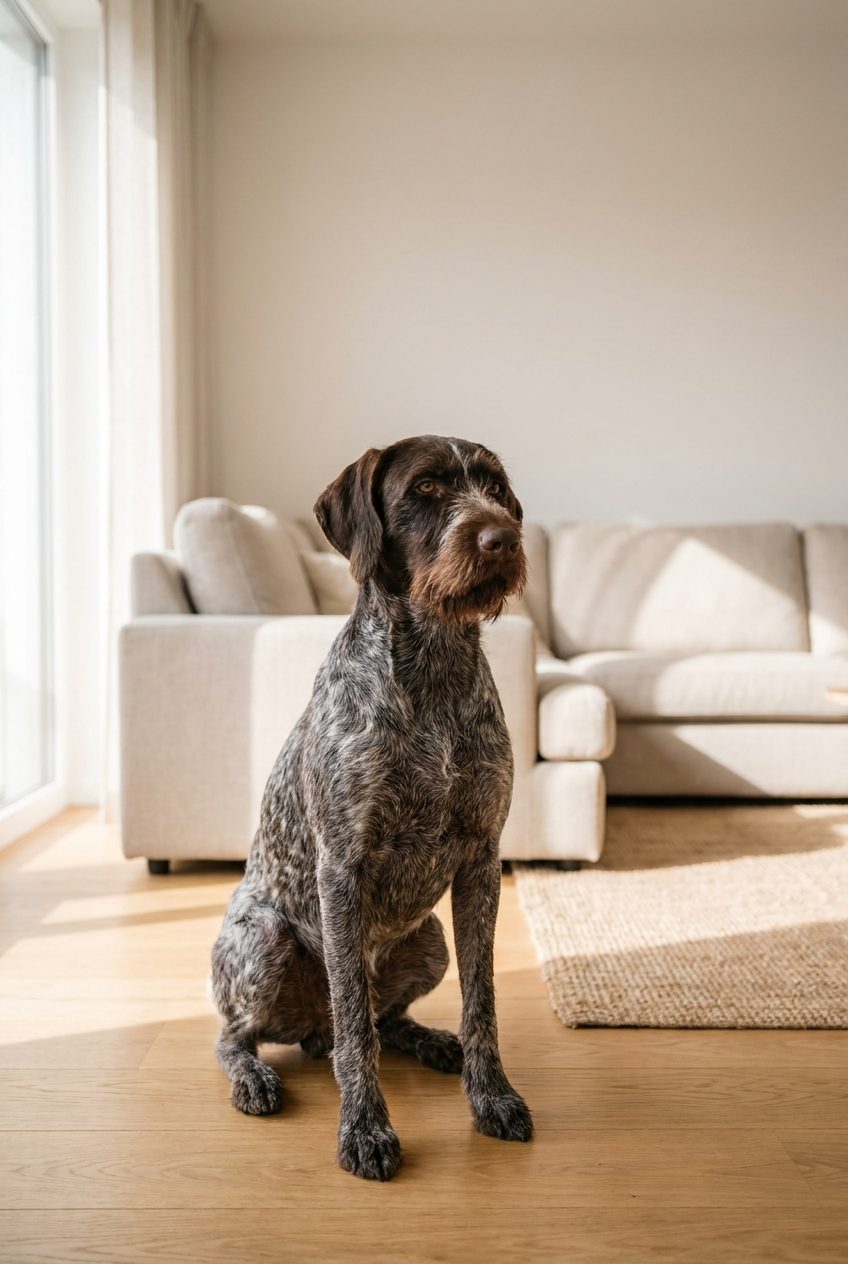
What if my dog only jumps on certain people?
This usually means the dog has learned that specific person tolerates or rewards jumping (even unintentionally, through laughing or petting). Brief that person on the turn-and-ignore method before they interact with your dog, and don’t let them make exceptions.
What if my dog jumps out of anxiety, not excitement?
If jumping is paired with whining, tucked tail, or avoidance behaviors, you may be dealing with anxiety rather than exuberance. In this case, consult a certified applied animal behaviorist (look for the CAAB or ACAAB credential) rather than relying solely on obedience-style training, since anxiety-driven jumping often needs a desensitization protocol.
What if treats don’t motivate my dog during high-arousal moments?
This is common — arousal can override food drive temporarily. Switch to a jackpot reward system: instead of one treat, give 4-5 in rapid succession for a successful sit, which helps recapture focus. If that still fails, physically manage the situation (leash, gate) until arousal drops before attempting training reps.
What if I have small children who get knocked down?
Prioritize safety immediately: use a baby gate or crate to physically separate the dog during high-traffic moments (like school pickup time) while you’re actively working through the training protocol. Management isn’t a failure — it’s a bridge to get you through the training period safely.
Managing Jumping Around Guests and Strangers
Door greetings are the hardest context to control because you can’t fully script a stranger’s behavior. Here’s a practical system:

- Keep a leash hanging on a hook by the front door at all times.
- When the doorbell rings, clip the leash on before opening the door — this takes 3 seconds and prevents 90% of jumping incidents.
- Ask guests to ignore the dog completely for the first 30-60 seconds — no eye contact, no talking, no touching. This sounds harsh but dramatically speeds up calm behavior.
- Once your dog is sitting calmly, invite the guest to offer a treat at chest height (not face height) to reinforce the calm posture.
- If your dog breaks the sit and jumps, calmly reset — leash back to a neutral distance, wait for calm, try again.
Most dogs need 15-20 repeated exposures with different guests before the behavior becomes reliable without a leash.
Maintaining Long-Term Success
Training doesn’t end once your dog stops jumping for two weeks straight. GWPs are smart enough to test boundaries periodically, especially during high-excitement seasons like holidays when houses are full of visitors. Do a quick “refresher rep” once a week even after full training success — five minutes of sit-and-greet practice keeps the behavior sharp. Also maintain that daily 60-90 minute exercise commitment long-term; a bored, under-exercised GWP will regress regardless of how well-trained the jumping behavior once was.

If you’ve been consistent for a full month and you’re still seeing frequent jumping (more than 50% of greetings), it’s worth booking a session with a certified professional dog trainer (look for CPDT-KA certification) rather than continuing to guess at what’s going wrong. Sometimes an outside eye catches a timing issue or an inadvertent reward that’s invisible to you because you’re too close to the daily routine. A single one-hour session typically costs $75-150 and can save you months of frustration.
Start today, not next week. Grab a bag of high-value treats, clip on that leash by the door, and run the turn-and-ignore method the very next time your GWP greets you. Small, consistent repetitions — not occasional big efforts — are what actually rewire this behavior for good.