10 Tricks to Prevent Bloodhounds from Jumping Up! A Practical Training Guide
A 100-pound Bloodhound standing on his hind legs can put his paws on your shoulders and knock a grown adult off balance. That is not a cute greeting; it is a lawsuit, a torn sweater, or a grandmother in the emergency room. The good news: these 10 tricks to prevent Bloodhounds from jumping up work on this breed’s biggest quirk, a nose that overrides almost everything else in their brain.
Why Bloodhounds Jump Up (and Why Generic Advice Fails)
Most jumping advice is written for Labradors and terriers. Bloodhounds are different, and that changes what works.

A Bloodhound has roughly 300 million scent receptors, compared with about 5 million in a human. When you walk through the door, you smell like a library of information: where you went, who you met, what you ate. Jumping is the fastest way for him to get his nose to your face and chest, where the most scent lives.
The three drivers behind the jump
- Scent gathering: He wants your breath, your hands, and your clothes. This is instinct, not disobedience.
- Greeting excitement: Bloodhounds are pack-oriented and deeply social. Separation makes arrivals explosive.
- Accidental reward: Every time you laugh, push him off, or say “down!”, you give him attention. That is a payoff, and he will repeat the behavior.
Why the breed makes this harder
Bloodhounds are famously stubborn and slow to mature. Expect full adult size (80 to 110 pounds for males, 80 to 100 for females) by 18 to 24 months, and emotional maturity closer to age three. A cute 15-pound puppy jump at 10 weeks becomes a 70-pound problem by 7 months.
The fix is not punishment. Bloodhounds shut down under harsh correction, and a sulking hound learns nothing. The fix is teaching him a better way to get what he already wants.
Trick 1: Turn Your Back and Go Silent for 5 Seconds
This is the simplest tool and the one most owners do wrong. Jumping works because it earns attention. Remove attention completely and the behavior loses its paycheck.
- The moment paws leave the floor, fold your arms and turn your body away from him.
- Say nothing and make no eye contact. No “off,” no “no,” no pushing. Even a shove counts as play.
- Wait for all four paws on the floor, then calmly turn back and say “good” in a low voice.
- Add a treat (pea-sized soft training treats like Zuke’s Mini Naturals) the instant he stays grounded.
But what if he jumps again the second you turn back? That is normal. Turn away again. Expect a burst of extra-hard jumping in the first 2 to 3 days. Trainers call this an extinction burst, meaning the dog tries harder before giving up on a strategy that stopped working. Stay consistent and it fades.
Success looks like this: within 5 to 7 days of consistent practice, he hesitates before jumping and checks your face instead.
Trick 2: Teach “Sit” as the Only Way to Say Hello
A dog cannot sit and jump at the same time. That is the entire trick. You are giving him a job that is physically incompatible with the problem.

Start in a quiet room, 5 minutes per session, 3 sessions a day.
- Hold a treat at his nose, then slowly lift it over his head. His rear will drop as his nose follows.
- The instant his bottom touches the floor, say “yes” and deliver the treat.
- Repeat 10 times, then add the word “sit” just before the lure.
- After 3 to 4 days, fade the lure and use only a hand signal.
Bloodhounds often sniff the floor mid-lesson. If he wanders, do not repeat the cue ten times. Reset by stepping back, waiting 3 seconds, and starting fresh.
But what if he only sits when you hold a treat? Switch to a variable reward. Reward every second sit, then every third, then randomly. Slot machines work on the same principle, and Bloodhounds are suckers for it.
Once the sit is reliable (9 out of 10 tries in the kitchen), move it to the front door.
Trick 3: Use a Four-on-the-Floor Marker Word
A marker word is a short sound that tells your dog exactly which moment earned the reward. For jumping, you want to mark the instant his paws are down, before he has time to leap again.
Pick a word you will not use in casual conversation. “Yes” works. A clicker (the Karen Pryor iClick costs about $8) works even better because the sound is identical every time.
Here is how to build it:
- Charge the marker: Click, then treat, 15 times in a row with no other cue. He learns click means food.
- Mark the floor: When you greet him and all four feet are down, click and treat. Do this even for half a second of calm.
- Raise the bar: Gradually require 2 seconds, then 5, then 10 seconds of grounded paws before clicking.
But what if your timing is late? Everyone’s is at first. If you click after he has started to jump, you reward the jump. Practice timing with a tennis ball bounce: click each time it hits the floor. Two minutes a day for a week fixes sloppy timing.
Trick 4: Keep a Leash on Him Indoors (the Tether Method)
Management means preventing the mistake so he cannot rehearse it. Every successful jump strengthens the habit. A 6-foot lightweight leash dragged indoors gives you control without grabbing his collar.

How to use it
- Clip a 6-foot leash to a flat collar or a front-clip harness like the Blue-9 Balance Harness (about $45).
- Let him trail it while supervised. When guests arrive, step on the leash or hold it before he reaches them.
- Reward calm four-paw greetings with a treat from your pocket.
- Remove the leash only after 3 to 4 weeks of reliably calm greetings.
But what if he drags you across the room? A Bloodhound can pull with real force when a scent grabs him. Anchor the leash to a sturdy piece of furniture or a hook screwed into a stud, so you are not fighting 90 pounds of muscle with your arm.
Never use a prong or choke collar to stop jumping. It adds pain to an excitement problem and can cause neck and trachea damage in a breed already prone to throat issues.
Trick 5: Burn the Right Kind of Energy Before Guests Arrive
A tired dog jumps less, but “tired” means something specific for a scent hound. A 20-minute walk on pavement barely registers. A 15-minute sniffing session tires him more than an hour of fetch.
Try these before guests arrive:
- Scatter feeding: Toss a handful of kibble into grass or onto a snuffle mat (the Injoya Snuffle Mat costs around $20). He spends 10 minutes working his nose.
- Scent trail game: Drag a hot dog on a string along a 30-foot path, then hide it. Let him track it on a long line.
- Frozen lick mat: Spread peanut butter (xylitol-free) on a LickiMat and freeze for 2 hours. Licking lowers heart rate.
Aim for 30 to 45 minutes of nose work or sniff walks daily. Bloodhounds were bred to follow a trail for hours, so under-stimulated ones turn pushy.
But what if you only have 10 minutes? Do the scatter feed. Ten minutes of foraging is worth more than a rushed lap around the block.
Trick 6: Practice Doorbell Drills for 10 Minutes a Day
Jumping often peaks at the front door because the arrival of guests triggers a tidal wave of scent and sound. You cannot train this by waiting for real visitors. You need to stage fake ones.
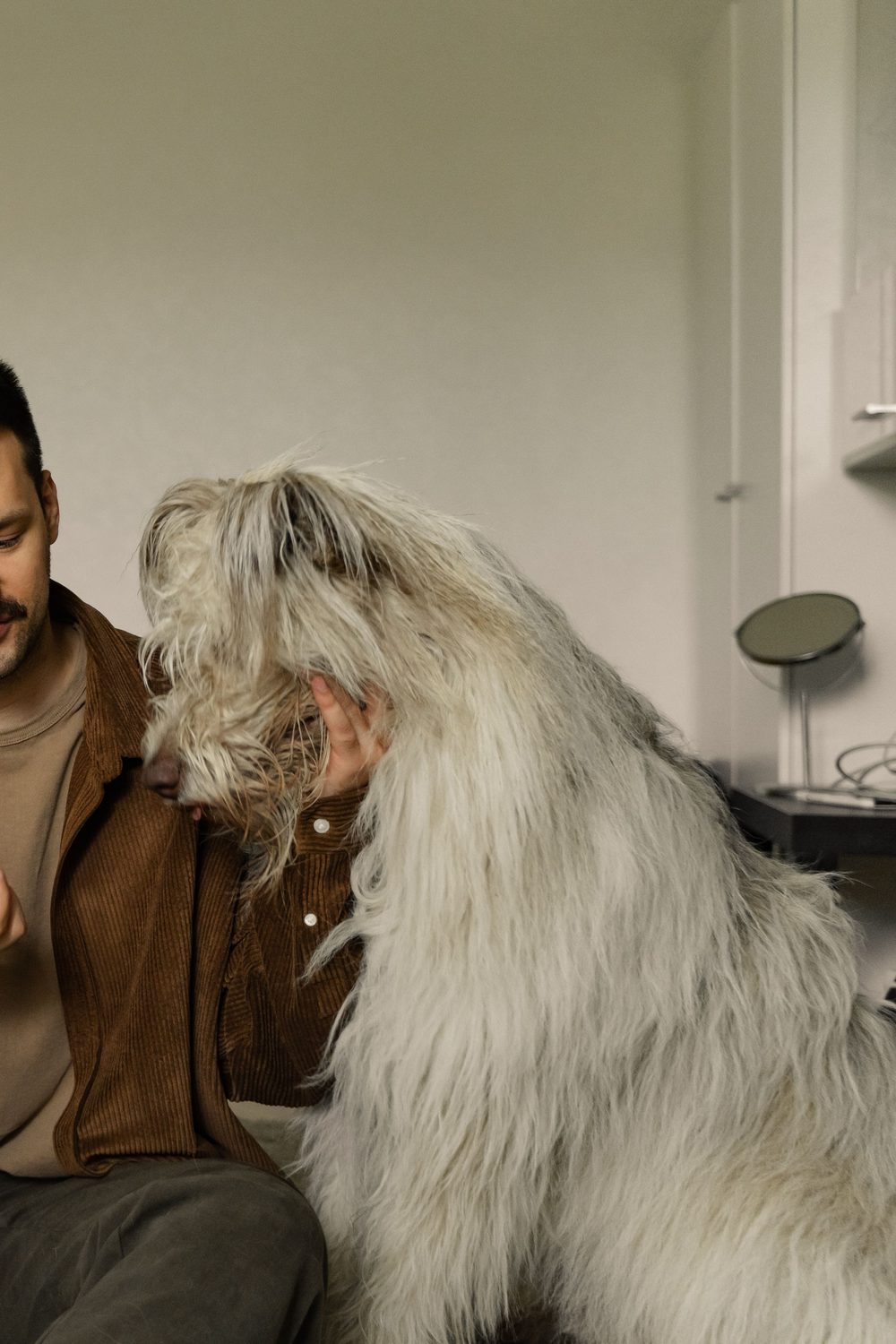
- Record or ring your doorbell, or have a family member knock. Put treats by the door.
- Ask for a sit, then mark and reward before you touch the handle.
- Open the door one inch, close it if he stands, and reward when he sits again.
- Open fully, have your helper walk in, and reward calm behavior for 5 seconds.
- Repeat 8 to 10 times, then stop on a success.
Run drills daily for two weeks. Most Bloodhounds show clear improvement by day 10.
But what if the doorbell makes him bay and bolt? Bloodhounds are vocal. Start with a quiet knock instead of the bell, and reward silence with a treat. Add volume over several sessions.
Ask a friend to be your practice guest. Brief them: stand still, no eye contact, no talking until he is seated.
Trick 7: Teach “Place” So He Has Somewhere to Go
Telling a dog what not to do leaves a gap. “Place” fills it. He learns to go to a mat or bed and stay there while the excitement unfolds.
Building the behavior in 4 steps
- Buy a raised cot or thick mat, such as the Kuranda dog bed ($60 to $90) or a simple $15 yoga mat.
- Lure him onto it with a treat and mark the moment all four paws land.
- Add the word “place” as he steps on.
- Build duration: 3 seconds, 10 seconds, 30 seconds, then 2 minutes, rewarding every few seconds at first.
Once he holds place reliably, move the mat near the front door. When the bell rings, send him to it.
But what if he breaks and rushes the guest? Calmly walk him back, no scolding, and restart. If the visitor arrival is too exciting, practice with a leash attached to the mat until his impulse control improves.
Success looks like this: he parks himself on the mat, tail wagging, and waits for your release word.
Trick 8: Compare Your Tools Before You Buy Them
The right gear speeds up training, and the wrong gear can backfire. Here is how the most common options stack up for a strong, scent-driven hound.

| Tool | Cost | Control Level | Risk | Best For |
|---|---|---|---|---|
| Flat collar + 6-ft leash | $15 to $25 | Low | Neck strain if he lunges | Calm adult hounds with solid sit |
| Front-clip harness (Blue-9, Ruffwear Front Range) | $40 to $50 | High | Low if fitted properly | Puppies and adolescents who pull toward guests |
| Head halter (Gentle Leader) | $20 to $30 | Very high | Neck jerk if he lunges; needs 1 to 2 weeks of acclimation | Strong adult dogs with severe jumping |
| Baby gate or pen | $40 to $80 | Total (physical barrier) | None, but does not teach | Visiting kids, elderly guests, or parties |
Recommendation: Start with a front-clip harness for daily training, add a baby gate for high-risk visitors, and reserve the head halter for adult dogs over 70 pounds who have not responded to the first two. Avoid prong and shock collars entirely.
Trick 9: Reward Calm Greetings Outside the Home Too
Many owners train inside and then wonder why the dog leaps at strangers on walks. Dogs do not generalize well. A sit in the kitchen does not automatically transfer to the sidewalk.
Take the practice on the road in stages:
- Week 1: Your own driveway or backyard with one familiar person.
- Week 2: A quiet park bench at off-peak hours (try 7 a.m. on a weekday).
- Week 3: Pet-friendly stores like Tractor Supply, Petco, or Home Depot, where employees often welcome polite dogs.
- Week 4: Busier sidewalks, with you holding a treat pouch at hip height.
Ask strangers to wait until he sits before petting. Many will happily oblige if you say, “He is learning to say hello politely. Would you mind waiting for a sit?”
But what if people ignore you and pet him mid-jump? It happens. Step between them, say a cheerful “sorry, he is in training,” and move on. You are not obligated to let anyone undo your progress.
Carry high-value treats outside. Boiled chicken or freeze-dried liver beats a dry biscuit when competing with a new smell.
Trick 10: Stay Consistent for 6 to 8 Weeks (and Get Everyone on Board)
The most common reason jumping training fails is not the method. It is the household. If you ignore the jump but your teenager laughs and your spouse pats his chest, the dog learns that jumping works sometimes, and sometimes is enough to keep the habit alive.
Create a one-page household rule sheet
- The rule: Four paws on the floor earns attention. Paws up earns nothing.
- The cue: Everyone uses “sit” and the same hand signal.
- The reward: Treat pouches near every entry door.
- The ban: No pushing, no kneeing, no “down!” shouted across the room.
Print it and stick it on the fridge.
Expect a realistic timeline: noticeable improvement in 2 weeks, reliable behavior at home by week 6, and dependable greetings with new people by week 8 to 12. Adolescent Bloodhounds (8 to 18 months) may regress for a few weeks, so do not panic.
But what if progress stalls? Book a session with a certified trainer (CPDT-KA credential) for $75 to $120. Look for someone with scent hound experience.
Common Mistakes That Make Jumping Worse
Even well-meaning owners sabotage progress. These three mistakes show up in almost every case.
- Greeting him excitedly at the door. If you coo “hello, baby!” in a high-pitched voice, you pump up the very energy you want to calm. Fix it: ignore him for the first 60 seconds after you walk in, then greet calmly once he is settled.
- Using “off” or “down” as a correction. It is a reward, because you looked at him and spoke to him. “Down” also means lie down in many households, so you confuse him. Fix it: use the silent turn-away and reward the sit instead.
- Training in short bursts then dropping it. Doing three days of drills and then skipping a week resets progress. Fix it: set a phone alarm for two 5-minute sessions a day and stick to them for 8 weeks.
A fourth mistake worth flagging: kneeing the dog in the chest. It was once recommended, but it can injure ribs and teaches dogs to fear hands. Skip it.
Objections and “What If” Scenarios Answered
“What if my Bloodhound is already 2 years old and has jumped his whole life?” It takes longer, usually 8 to 12 weeks instead of 4 to 6, but adult dogs learn just fine. Habits are strong, not permanent.
“What if he only jumps on one person?” That person is likely giving him mixed signals, like laughing or petting his chest. Coach them directly: stand still, fold arms, wait for a sit.
“What if I have small kids or an elderly parent at home?” Use management first. A baby gate or a leash tether protects vulnerable family members while training catches up. Never rely on training alone around people who could be seriously hurt.
“What if he jumps only when he is overexcited?” Then lower the excitement level before the greeting. Ask for a 5-minute sniff walk or a snuffle mat session first, and practice with a calm friend who stays low-key.
“What if treats do not motivate him?” Bloodhounds can be picky when stuffed. Train before meals, use higher-value treats like cheese cubes or boiled chicken, and keep rewards tiny, about the size of a pea.
Your First Step: Start Tonight with One Doorway
Do not try all ten tricks at once. Pick one door in your home, put a small container of pea-sized treats on a shelf beside it, and commit to the sit-before-greeting rule for the next seven days. Tonight, when you walk in, stay silent, wait for four paws on the floor, and reward the calm.
Write the date on your calendar. In seven days, check whether he is hesitating before he jumps. That small pause is the proof that your Bloodhound is learning, and it is your cue to add the next trick on this list.