Ultimate Guide: St. Bernard Puppy Crate Training Tips That Work in 14 Days
A St. Bernard puppy gains roughly 4 to 6 pounds per week, which means the crate you buy on day one can be too small by month three. That single fact trips up more owners than any whining or midnight accident. This Ultimate Guide: St. Bernard Puppy Crate Training Tips gives you the sizes, schedules, and step-by-step fixes to get a 12-week-old giant-breed pup sleeping through the night in about two weeks.
Why Crate Training Matters More for a 150-Pound Dog Than a Beagle
A 10-pound puppy that chews a sofa leg is an annoyance. A 140-pound adult St. Bernard that learned to panic when alone can bend a wire crate, rip a door off its hinges, or injure itself trying to escape. Training early shapes behavior while the dog is still small enough for you to manage.
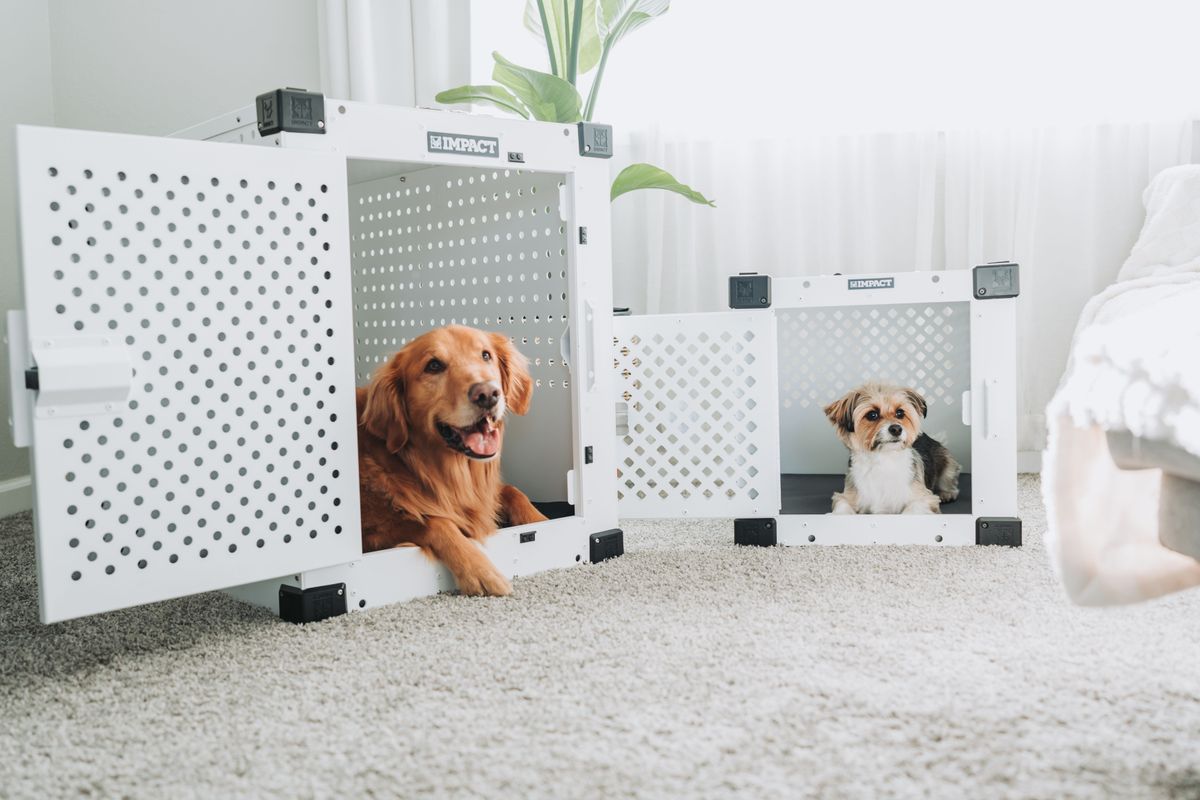
Crates also solve three practical problems specific to giant breeds:
- Safety during growth: St. Bernard puppies have soft, fast-growing joints. A crate prevents the stair-jumping and furniture-leaping that stress hips and elbows before growth plates close at roughly 14 to 18 months.
- Housetraining speed: Dogs avoid soiling where they sleep. A properly sized crate can cut housetraining time from months to weeks.
- Vet and travel readiness: A dog comfortable in a crate handles surgery recovery, car trips, and boarding with far less stress.
A crate is not a jail. Think of it as a bedroom: quiet, safe, and associated with good things. If your puppy only enters the crate right before you leave, it becomes a signal of abandonment. We will fix that with the steps below.
How to Choose the Right Crate Size and Type (and Avoid Buying Three)
Adult St. Bernards stand 26 to 30 inches at the shoulder and weigh 120 to 180 pounds. Most owners eventually need a 54-inch crate (an XXL size). The smart move is buying that one now and shrinking it with a divider.
The Divider Method
Buy a 48-inch or 54-inch wire crate with a removable divider panel. Block off the back so your puppy has just enough room to stand, turn around, and lie down, and no more. Extra space invites a potty corner. Move the divider back every 3 to 4 weeks as your puppy grows.
But what if the crate is already too big and my puppy keeps having accidents? Cut a piece of plywood or buy a divider insert and shorten the space immediately. Accidents usually stop within 3 to 5 days of shrinking the area.
Crate Comparison
| Crate Type | Typical Price | Durability for Giant Breeds | Best For |
|---|---|---|---|
| Wire crate with divider (e.g., MidWest Ginormus 54″) | $130 to $180 | Good; can bend under determined escape attempts | Best overall for puppies; adjustable and well ventilated |
| Heavy-duty steel crate (e.g., Lucky Dog or ProSelect Empire) | $250 to $450 | Excellent; resists bending and bolting | Best for escape artists and anxious dogs |
| Plastic airline crate (e.g., Petmate Giant) | $150 to $220 | Moderate; cozy but traps heat | Best for air travel; poor choice for a heavy-coated breed at home |
| Soft-sided fabric crate | $60 to $120 | Poor; chewed through quickly | Avoid for puppies entirely |
My recommendation: start with a wire crate with a divider, and upgrade to heavy-duty steel only if your dog shows escape behavior. St. Bernards run hot, so skip plastic for daily use.
The Supplies That Make Crate Training Faster (With Exact Prices)
You need less than you think, but a few items genuinely speed things up. Here is a realistic shopping list for a St. Bernard puppy.
- Crate pad or bed ($35 to $70): Choose a chew-resistant, washable mat such as the K9 Ballistics or Orvis ToughChew. Skip fluffy beds until your pup stops shredding bedding, usually around 6 to 8 months.
- Interactive chew toys ($10 to $20): A large Kong Extreme or West Paw Toppl is sized for giant breeds. Small versions are a choking risk.
- High-value treats ($8 to $15): Freeze-dried liver or small soft training treats under 5 calories each. St. Bernards are prone to obesity and bloat, so measure portions.
- Enzyme cleaner ($15 to $25): Nature’s Miracle or Rocco and Roxie. Regular cleaners leave scent traces that invite repeat accidents.
- Crate cover ($25 to $45): A breathable cover on three sides creates a den feel. Leave the front uncovered at first.
- Cooling mat ($30 to $60): Optional but helpful for a heavy-coated breed in summer.
Total starter cost lands between $250 and $400 including the crate. Skip heavy blankets, plush toys left unsupervised, and anything with stuffing for the first month.
Your 14-Day St. Bernard Puppy Crate Training Schedule
Start at 8 to 12 weeks old if possible. Here is a day-by-day structure that builds comfort gradually.
Days 1 to 3: Make the Crate Wonderful
Place the crate in a family area, such as the living room. Leave the door open. Toss treats inside and let your puppy wander in and out. Feed all meals inside the crate with the door open. Success looks like: your puppy walks in voluntarily to grab a treat.
Days 4 to 7: Add the Door and Short Durations
Feed meals with the door closed, opening it the moment your puppy finishes eating. Extend the closed-door time by 1 minute each meal until you reach 10 minutes. Stay in the room. Success looks like: your puppy eats calmly with the door shut and does not paw or whine.
But what if my puppy cries as soon as the door closes? You moved too fast. Return to door-open meals for one day, then restart with 10-second closures.
Days 8 to 11: Leave the Room
Give a stuffed Kong, close the door, and walk out of sight for 30 seconds. Return, reward quietly, and release. Build to 5 minutes, then 15, then 30 over four days. Vary your departures so the pattern is unpredictable.
Days 12 to 14: Overnight Introduction
Move the crate next to your bed. Take your puppy out for a potty break right before bed, then crate. Expect one to two night wake-ups for bathroom trips. Your puppy hears you nearby and settles faster.
How Long Can a St. Bernard Puppy Stay in the Crate?
A common rule says one hour per month of age, plus one. For a 3-month-old puppy, that means roughly 4 hours maximum, but I suggest staying under that during daytime. A St. Bernard puppy is still developing bladder control and emotional resilience.
Use this table as a practical ceiling during the day, not a goal:
- 8 to 10 weeks: 1 to 2 hours
- 11 to 14 weeks: 2 to 3 hours
- 15 to 20 weeks: 3 to 4 hours
- 5 to 6 months: 4 to 5 hours
- Adult dogs: 6 to 8 hours maximum, with a midday break
Overnight, young puppies often sleep 5 to 7 hours without a break once settled, but a 9 or 10 week old may need a 2 a.m. trip outside.
Never crate for a full workday plus commute. If you work 9 hours away from home, hire a midday dog walker (typically $20 to $30 per visit) or use a puppy-safe exercise pen for longer stretches.
Potty Training in the Crate: A Timing System That Prevents Accidents
Crate training and housetraining work together, but only if you control the clock. A giant-breed puppy needs to go out far more often than an adult.

The Take-Out Rule
Take your puppy out:
- Immediately after waking from any nap
- 10 to 15 minutes after eating or drinking
- After 15 to 20 minutes of play
- Right before crating and right after release
Walk to the same spot every time, wait up to 5 minutes, and say a cue word like “go potty.” Reward within 3 seconds of finishing with praise and a treat. Timing matters: reward late and your puppy links the treat to coming back inside.
But what if my puppy refuses to go outside, then pees in the crate? Bring the puppy back in, put it in the crate for 10 minutes, then try outside again. Do not give free run of the house after a failed potty trip.
Expect reliable control by 4 to 6 months, though accidents can continue until 8 months. Do not punish accidents. Clean with enzyme cleaner and tighten your schedule.
7 Common Crate Training Mistakes (And How to Fix Each One)
Most failures come from a handful of predictable errors. Here are the ones I see repeatedly with giant breeds.
- Using the crate as punishment: If your puppy chews a shoe and you shove them in the crate while angry, the crate becomes a bad place. Use a calm “time out” in a different area instead.
- Buying the adult crate without a divider: A huge empty space becomes a bathroom. Always block it down to puppy size.
- Letting the puppy out while whining: This teaches that crying works. Wait for 5 to 10 seconds of quiet, then open the door. Start with short whines and extend gradually.
- Skipping exercise: A bored, under-exercised puppy will not settle. Give 10 to 15 minutes of play or a short walk before crating. Do not over-exercise: too much running stresses growing joints.
- Feeding a large meal right before crating: Giant breeds face bloat risk, a life-threatening stomach twisting. Wait at least 60 minutes after a meal before crating or vigorous play.
- Leaving a collar on inside the crate: Tags and collars can snag on wire. Remove them for unsupervised crate time.
- Making goodbyes dramatic: Long, emotional farewells raise anxiety. Drop a treat, say nothing, and leave.
Fix one mistake at a time instead of changing everything at once, so you can see what actually improves behavior.
Stopping Whining, Barking, and Chewing: What Works and What Doesn’t
Some crying is normal for the first 3 to 5 nights. The goal is to tell the difference between a puppy who needs something and a puppy who is testing you.
Is It a Need or a Protest?
If your puppy cries 2 to 4 hours after the last potty break, or whimpers with a stiff, urgent pace, take them out. If the cry is intermittent and drops off within minutes, it is protest. Ignore it. Responding rewards the noise.
Chewing the Crate Pad or Bars
Chewing peaks during teething, around 4 to 6 months. Remove the bedding if it is destroyed and replace it with a rubber mat. Offer a frozen Kong stuffed with wet food. Frozen stuffing takes 20 to 40 minutes to finish, which occupies the crate period.
Drooling and Heat
St. Bernards drool heavily and overheat easily. Keep the room between 65 and 72 degrees F, place the crate away from sunlight, and use a cooling mat in warm months. Keep a spare towel nearby for drool cleanup.
Avoid bark collars and spray collars. They suppress the symptom without addressing the anxiety and often make crate fear worse.
Objections and “What If” Scenarios: Is Crate Training Cruel or Necessary?
Let’s answer the doubts directly, because they stop a lot of owners from trying.
“Isn’t crating cruel?” Not when done correctly. Dogs are den animals and often choose enclosed spaces. The cruelty is in over-crating: 10-hour stretches, no exercise, or using the crate for punishment. A properly trained dog treats the crate like a favorite bed.
“What if my puppy panics and hurts themselves?” True separation distress is different from ordinary protest. Signs include bleeding gums, broken nails, soaked bedding from drool, or escape attempts that last over 30 minutes. If you see this, stop and consult a veterinarian or certified trainer (CPDT-KA credential). Some dogs need a puppy-safe pen instead.
“What if I work full-time?” Use a combination: an exercise pen (36-inch height works for young puppies) with a crate on one side and a potty area on the other, plus a midday dog walker. Do not rely on the crate alone for 8-plus hours.
“What if my puppy hates the crate after a week?” Go back to day one. Remove the door, feed meals inside, and rebuild slowly. Most dogs recover within 3 to 5 days of a reset.
“What if I adopted an adult St. Bernard?” It still works. Allow 3 to 4 weeks instead of 2, and use a heavy-duty crate. Adult dogs need patience, not pressure.
When to Stop Crating: Phasing Out Without Chaos
Most St. Bernards can graduate from the crate between 18 and 24 months, though many choose to keep sleeping in one voluntarily. Do not rush it. Chewing and counter-surfing can persist well into the second year.
Follow this graduation plan:
- Prove reliability: Your dog should go 60 days without any accident or destructive chewing while loose in your supervision.
- Test short periods: Leave your dog out of the crate in a dog-proofed room for 15 minutes. Use a pet camera such as Furbo or Wyze Cam ($30 to $170) to watch behavior.
- Extend gradually: Add 15 minutes every few days up to 2 hours.
- Try overnight: Leave the crate door open at night. Many dogs still wander in on their own.
- Keep the crate available: Leave it set up for travel, recovery from surgery, or when visitors come over.
If your dog regresses by chewing or having accidents, return to crating for 2 to 4 weeks before testing again. A setback is data, not failure.
Your First Step Tonight: Set Up the Crate in 15 Minutes
Do not wait until your puppy is a loud, 60-pound problem. Tonight, set up the crate in your living room, install the divider so your puppy has just enough room to stand and turn, and drop in a mat and two treats. Leave the door open and let your puppy discover it on their own. Tomorrow morning, feed breakfast inside it, and you have officially started day one of the 14-day plan.