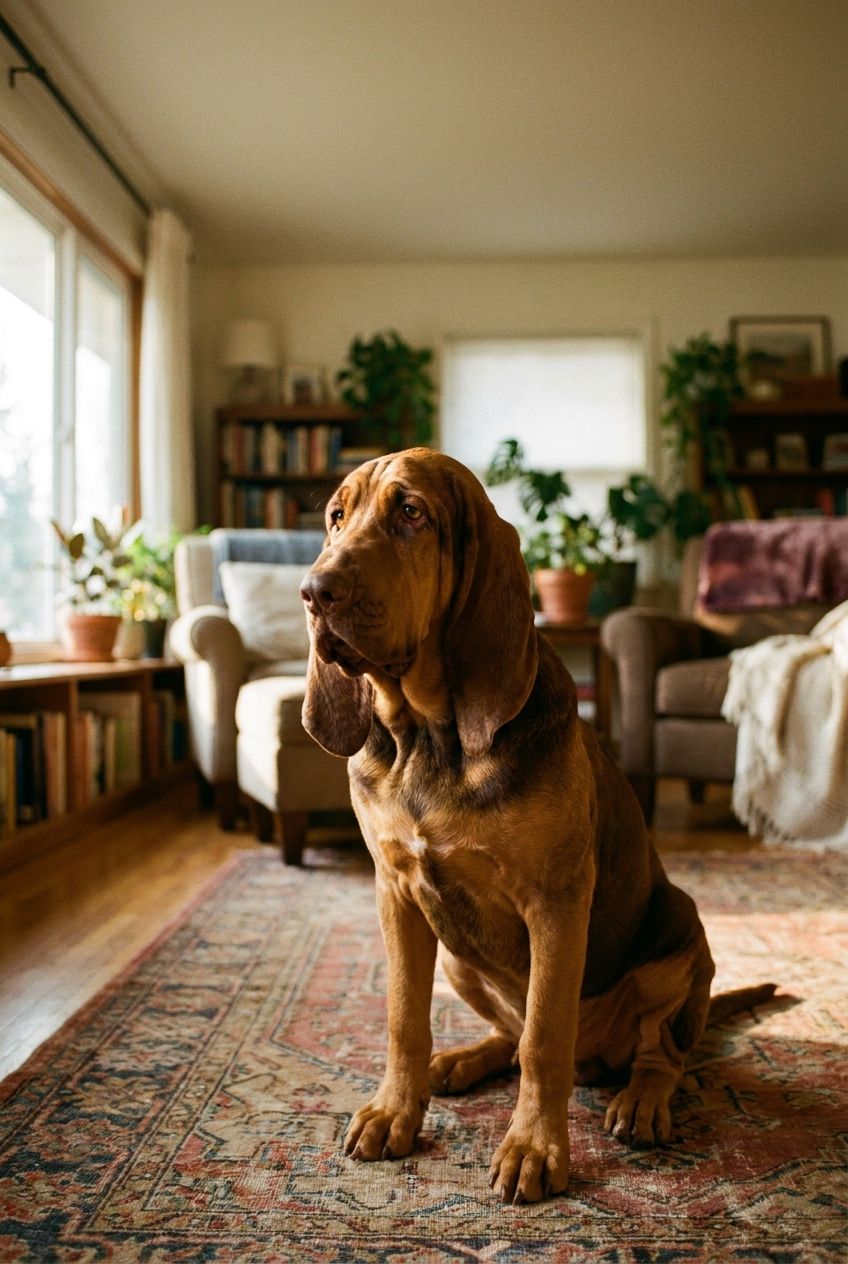
Stop Puppy Biting: Expert Tips for Training Your Bloodhound
Stop Puppy Biting: Expert Tips for Training Your Bloodhound
A Bloodhound puppy has roughly 230 million scent receptors, 42 sharp baby teeth, and zero natural understanding that your hands are not chew toys. Most owners wait for the biting to fade on its own, and by month five they are bandaging forearms and wondering why the sweet drooler has turned into a land shark. This guide shows you how to stop puppy biting in your Bloodhound with a week-by-week plan, exact tools, and fixes for the mistakes that make it worse.
Why Bloodhound Puppies Bite (and Why It Feels Worse Than Other Breeds)
Biting is not aggression. It is how a puppy explores the world, relieves teething pain, and plays. Every puppy does it. But Bloodhounds add a few breed-specific twists that make the behavior feel relentless.
The Three Drivers Behind the Mouthing
Exploration. Bloodhounds were bred to follow scent trails for miles. Their mouths work alongside their noses, so everything interesting gets sniffed, then tasted, then chewed. Your sleeve, the couch leg, and your ankles all qualify.
Teething. Puppies get their 28 baby teeth around 3 weeks of age and begin losing them at roughly 12 to 16 weeks. All 42 adult teeth are in by about 6 to 7 months. The peak pain window, and the peak biting window, runs from about 12 to 24 weeks.
Play style. Littermates teach each other bite limits by yelping and walking away. A puppy separated from the litter at 8 weeks still has much of that lesson left to learn, and you are now the teacher.
Why Bloodhounds Test Your Patience
A Bloodhound puppy can weigh 25 to 35 pounds by 4 months. Those are big jaws on a still-clumsy body. They are also famously independent and slow to “care” what you want, because they were bred to work far ahead of a human handler. Expect a puppy who understands your cue perfectly and chooses to sniff the carpet instead.
The good news: this independence responds to the right motivator. Food, used correctly, works better than any other tool for this breed, and the plan below is built around it.
The Biting Timeline: What to Expect From 8 Weeks to 7 Months
Knowing where you are in the timeline keeps you from panicking at week 14 or relaxing too early at week 20. Here is the realistic arc for a Bloodhound.
- 8 to 12 weeks: Frequent, shallow mouthing. Needle-sharp teeth, but a soft jaw. Most bites are play or exploration. This is the easiest window to teach bite inhibition (learning to control bite pressure).
- 12 to 16 weeks: Peak intensity. Baby teeth loosen and fall out, gums ache, and chewing increases sharply. You may find tiny teeth on the floor or see pink-tinged saliva on a toy. That is normal.
- 16 to 24 weeks: Adult teeth push through. Bite force grows fast, so lapses hurt more. This is when owners who skipped early training feel the pain.
- 6 to 7 months: Teething ends. Biting drops sharply if you stayed consistent. Chewing remains a habit to manage, not a problem to eliminate.
What if your puppy is still biting hard at 7 months? Check three things first: Is anyone still roughhousing with their hands? Is the puppy getting enough exercise and sleep? Is there a gap in your consistency, such as one family member who laughs or plays along? One inconsistent person can undo weeks of progress.
Teach Bite Inhibition in 5 Steps (The Foundation Skill)
Bite inhibition is the single most valuable thing you can teach. The goal is not zero mouthing on day one. It is a dog who learns that gentle is the only acceptable pressure. Work in this order.
- Let the puppy mouth your hand during calm play. Use a relaxed hand. Success looks like a puppy chewing without clamping down hard.
- The moment the bite hurts, say “Ouch!” in a sharp, high voice and pull your hand away. Do not yank. Just freeze and go limp. Success looks like the puppy pausing and looking at you. But what if the yelp makes the puppy more excited? Some Bloodhounds treat squeals as a game. Switch to a low, flat “Too bad” and calmly disengage instead.
- Wait 10 to 20 seconds, then offer your hand again. If the next mouthing is softer, praise quietly and say “Gentle.”
- Raise your standard gradually. After about a week, any pressure that registers as a pinch earns an “Ouch.” After two to three weeks, even light teeth contact on skin ends the play.
- If the puppy bites hard again within a few seconds, end the session. Stand up and leave the room for 30 to 60 seconds. Success looks like a puppy who sits or follows you calmly when you return. But what if they cry at the door? Wait for a two-second pause in the crying before you reopen it, or you will teach them that noise opens doors.
Run three to five short sessions of two to three minutes each per day. Short and frequent beats long and tiring.
Redirect the Bite: Chew Tools That Work for Bloodhound Jaws
Punishing a bite without offering an alternative leaves the urge unmet. Redirection means swapping your skin for something that is legal to chew. Have the right tools within arm’s reach in every room.
Choose by Chew Style and Size
Bloodhound puppies are strong and persistent, so flimsy plush toys vanish in minutes. Pick items rated for a heavy chewer and big enough that the puppy cannot swallow them whole. A rule of thumb: the toy should be longer than the puppy’s muzzle width.
- Frozen rubber chews: A KONG Puppy toy stuffed with a spoonful of wet food and frozen overnight numbs sore gums and holds attention for 20 to 40 minutes. Cost: about $10 to $15.
- Rope toys: A 15 to 20 inch cotton rope toy gives the puppy something to grab and pull. Cost: roughly $8 to $12. Retire it once strands fray, so threads are not swallowed.
- Textured teething toys: Nylabone Puppy Teething rings or Benebone options offer a firm surface for sore gums. Cost: about $8 to $14.
- Frozen washcloths: Wet a clean washcloth, twist it, and freeze it. It costs almost nothing and soothes teething pain well. Supervise, and discard it once pieces tear off.
The redirect step: the instant teeth touch you, say “Ouch,” remove your hand, and place the toy in front of the puppy. Praise calmly the moment the puppy bites the toy. What if the puppy ignores the toy and goes straight back to your hand? Rub a little low-sodium chicken broth on the toy, or wiggle it along the floor like prey to trigger interest.
Use Your Bloodhound’s Nose: Scent Games That Burn Off Biting Energy
Here is where Bloodhound training diverges from generic puppy advice. A tired body is not enough for this breed. Their brain craves scent work, and mental fatigue calms biting faster than a long walk in many cases.
Ten minutes of sniffing can tire a Bloodhound puppy more than 30 minutes of fetch. Use that.
Three Scent Games You Can Start Today
The scatter feed. Instead of using a bowl, toss a handful of the puppy’s kibble across a patch of grass or a clean rug. Let the puppy hunt it down one piece at a time. This turns a 2-minute meal into a 10-minute task.
Find the treat. Show the puppy a pea-sized treat, then hide it under one of three upside-down plastic cups. Say “Find it.” Start with the treat visible, then move to fully hidden. Success looks like the puppy nosing the correct cup within 5 seconds.
The short trail. Drag a hot dog slice or a bit of cheese along the floor in a 10-foot line, with a jackpot at the end. Lengthen the trail to 30 feet over a week. But what if your puppy loses interest halfway? You started too long. Cut the trail in half and rebuild.
Run one scent game before the times your puppy bites most, which is usually early evening, the classic “witching hour,” when many puppies get a burst of frantic energy.
The Time-Out Method: Exactly How to Use It Without Backfiring
A time-out is not punishment. It is the removal of the one thing the puppy wants, which is your attention. Done right, it teaches fast. Done wrong, it teaches nothing or makes the puppy anxious.
Follow these specifics:
- Pick a boring spot. A hallway or a bathroom works. Remove toys and water bowls so the space is dull, not fun.
- Keep it short. 30 to 60 seconds is plenty for a puppy under 16 weeks. Longer periods confuse them, since a puppy cannot link a 5-minute isolation to a bite from earlier.
- Stay calm. No scolding, no eye contact, no drama. Say “Too bad” once and leave.
- Let the puppy back in and restart. If biting resumes, repeat. Most puppies connect the pattern within 5 to 8 repetitions.
Use a baby gate or a closed door rather than crating the puppy as the punishment. The crate should stay a safe place, never a penalty box. What if your puppy screams and howls? Bloodhounds are vocal, and the baying can start young. Ignore it until you get a brief pause, then open the door. Never open it mid-howl.
5 Mistakes That Make Puppy Biting Worse (and the Fix for Each)
These errors show up in almost every household dealing with a biting puppy. Spot yours and fix it.
- Mistake 1: Using your hands as toys. Wrestling with bare hands teaches the puppy that skin is a plaything. Fix: Use a tug rope or a toy for all rough play, always.
- Mistake 2: Yelling or smacking. Physical corrections can make a puppy fearful or handshy, and a Bloodhound’s sensitive temperament can sour fast. Fix: Withdraw attention instead, and reward the behavior you want.
- Mistake 3: Inconsistent household rules. If one person allows mouthing and another says “ouch,” the puppy learns nothing. Fix: Hold a 10-minute family meeting. Agree on the same cue words and the same response.
- Mistake 4: Skipping naps. An overtired puppy bites more, much like an overtired toddler. Puppies this age need 18 to 20 hours of sleep a day. Fix: Enforce a nap in a crate or pen after every 60 to 90 minutes of awake time.
- Mistake 5: Repeating cues until they become noise. Saying “no no no no” ten times teaches the puppy to ignore you. Fix: Say it once, then act. Redirect or remove yourself.
Fix just the first two and you will see change within a week.
Bite Training Tools Compared: Which One Fits Your Situation?
Not every tool suits every puppy or household. This table compares the most common options on cost, effort, and results for a Bloodhound.
| Method | Approx. Cost | Speed of Results | Best For |
|---|---|---|---|
| Yelp-and-withdraw (bite inhibition) | Free | 2 to 4 weeks | Every puppy; the core skill for all households |
| Frozen KONG or chew redirect | $10 to $15 | Immediate relief; habit in 1 to 3 weeks | Teething puppies and busy owners needing a quick fix |
| Scent games (scatter feed, find it) | Free to $5 | Calmer evenings within days | High-energy Bloodhounds with the evening “zoomies” |
| Puppy playpen ($40 to $80) | $40 to $80 | Instant management; no training required | Households with kids or when you cannot supervise |
| Group puppy class (6 weeks) | $120 to $200 | 4 to 6 weeks, plus socialization | First-time owners who want guidance and peer play |
Recommendation: Start with the free options (yelp-and-withdraw plus scent games) for everyone. Add a frozen KONG for peak teething. Choose a playpen if you have toddlers, and enroll in a puppy class if this is your first dog.
Biting Around Kids, Guests, and Other Dogs: Handling the Tricky Situations
Training in a quiet living room is one thing. Real life is another. Here is how to handle the situations that trip owners up.
Children Under 10
Kids run, squeal, and flail, which is exactly what triggers a puppy’s chase-and-grab instinct. Never leave a child alone with a Bloodhound puppy, even a gentle one. Teach children to stand still like a tree when the puppy mouths them, then hand over a toy. Keep sessions under 5 minutes, and use a baby gate to give the puppy a break.
Guests and Visitors
Excited puppies bite more. Keep a jar of treats by the front door. Ask guests to ignore the puppy until it settles, then reward four paws on the floor. Or put the puppy on a leash or in a pen with a stuffed chew while people arrive.
Play With Other Dogs
Healthy dog play includes mouthing, but watch for bullying. If your puppy pins another dog or the other dog tries to escape, call a break after 30 seconds and let both dogs reset. Seek out a vaccinated, gentle adult dog, since good adult dogs correct puppies fairly and teach bite limits better than we can.
“What If It Doesn’t Work?” Answers to Real Objections
Even with a solid plan, doubts creep in. Here are the most common ones.
“My puppy bites harder when I say ouch.” Some puppies read the yelp as play. Drop the yelp. Go silent, stand up, and walk away calmly. The loss of attention does the work without the excitement.
“He’s drawing blood and my arms are shredded.” Wear long sleeves and sturdy pants during play sessions, and use toys as a buffer. Cut sessions shorter and increase naps. A puppy who draws blood is almost always overtired or overstimulated.
“Is this normal, or is my puppy aggressive?” Normal puppy biting involves a loose, wiggly body, play bows, and a soft face. Warning signs for a professional evaluation include stiff posture, a hard stare, growling over food or objects, and biting that gets worse with calm handling. If you see these, book a certified trainer (look for CPDT-KA credentials) or a veterinary behaviorist within a week.
“Will my Bloodhound ever grow out of it?” Most puppies reduce biting dramatically once teething ends at 6 to 7 months, but only when you teach alternatives. Dogs left untrained may carry mouthy habits into adulthood, and a full-grown Bloodhound can weigh 80 to 110 pounds.
Your Next Step: Start a 7-Day Bite Plan Tonight
Skip the research spiral and commit to one week of focused practice. Tonight, put a chew toy within reach in every room you use, and freeze one stuffed KONG for tomorrow afternoon. Tomorrow, hold your family meeting and agree on a single phrase, either “Ouch” or “Too bad,” along with one shared response: freeze, withdraw, redirect. Through the week, run three short bite-inhibition sessions a day and one scent game before the evening witching hour.
On day seven, count how many times you got bitten compared to day one. Write the number down. Most owners who follow this plan see a clear drop, and that number is your proof the approach works for your dog.