10 Tips for Silencing Your Chesapeake Bay Retriever’s Barking
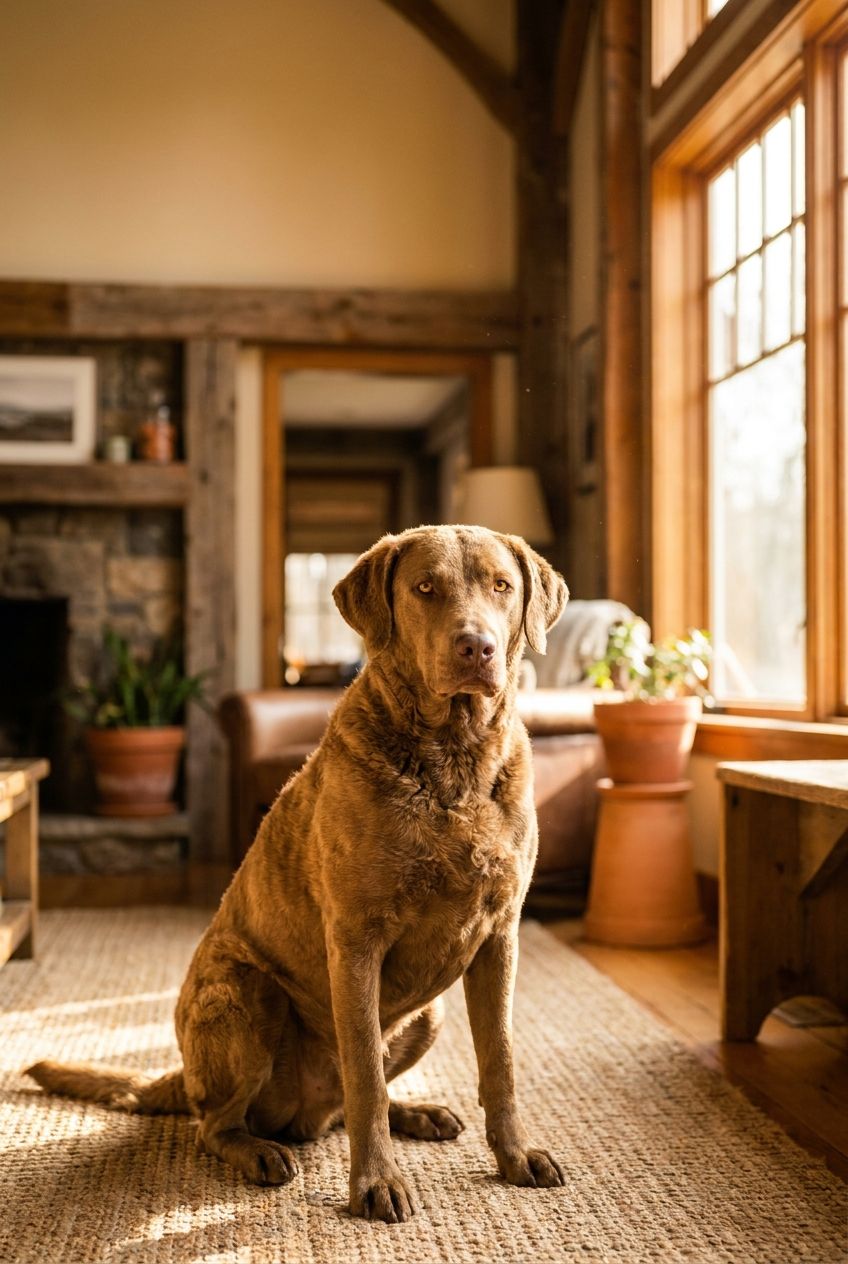
Your Chesapeake Bay Retriever was bred to bark at waterfowl in freezing surf, guard duck blinds overnight, and work for hours without quitting. That is why a bored Chessie can out-bark nearly every other retriever on your street, and why the usual advice to just ignore it fails so often. This guide gives you 10 tips for silencing your Chesapeake Bay Retriever’s barking, each with exact steps, timeframes, and the “but what if it doesn’t work” caveat built in.
Why Chesapeake Bay Retrievers Bark More Than Labs and Goldens
Before fixing the noise, you need to know where it comes from. Chessies were developed in the 1800s along Maryland’s Chesapeake Bay to retrieve ducks from icy, rough water, sometimes making 100 or more retrieves in a single day. They were also expected to guard the boat and the catch. Alertness and vocal warning were selected for, not bred out.

The Four Most Common Bark Triggers
- Territorial barking: Triggered by people, dogs, or vehicles passing the house. The bark is sharp and repeated, and the dog’s body stays stiff and forward-leaning.
- Boredom barking: Monotone, rhythmic, and usually happens when the dog is alone or ignored for more than 2 to 3 hours.
- Demand barking: Aimed directly at you, often with eye contact, because it has worked before to get food, a toy, or attention.
- Excitement barking: High-pitched and fast, seen before walks, at the sight of a ball, or during greetings.
Identify which type you are dealing with before trying any fix. Film your dog for a day using a $25 to $40 pet camera or an old phone on a shelf. Note the time, the trigger, and what happened right before each barking burst. Most owners discover that 70 to 80 percent of the noise comes from just one or two triggers.
But what if you can’t pinpoint the trigger? Pick the loudest hour of the day and start there. Fixing one pattern usually shrinks the others.
Tip 1: Give Your Chessie 90 Minutes of Real Exercise Daily
A Chesapeake Bay Retriever is a working dog, and a 20-minute leash stroll does almost nothing for it. Adults need roughly 60 to 90 minutes of vigorous activity every day, split into at least two sessions. A tired Chessie barks far less because the energy that fuels barking simply isn’t there.
A Weekly Template That Works
- Morning (30 to 40 minutes): Fetch with a ball launcher like the Chuckit! Sport (about $15) or a brisk run or bike ride. Success looks like heavy panting and a dog that lies down willingly afterward.
- Midday (10 to 15 minutes): A short training session or scent game to burn mental energy.
- Evening (30 to 40 minutes): A long walk, hike, or swim. Chessies love water, so a lake or creek visit twice a week is ideal.
Success looks like this: within 7 to 10 days of consistent exercise, most owners notice a clear drop in boredom and demand barking.
But what if you work long hours? Hire a dog walker for a midday run ($18 to $30 per walk in most US cities) or enroll your dog in daycare 2 to 3 days a week ($30 to $45 per day). Do not skip this tip. Every other tip works better on a tired dog.
Tip 2: Teach the “Quiet” Cue in 5 Steps and 10 Days
You cannot reward silence if you never capture it. The most reliable method is to teach “Speak” first, then “Quiet,” so that you control both. Use pea-sized soft treats such as Zuke’s Mini Naturals or boiled chicken.
- Trigger a bark on purpose. Knock on a wall or ring the doorbell. Say “Speak” the instant your dog barks, then reward.
- Hold a treat to the nose. A dog cannot bark and sniff at the same time. The moment barking stops, say “Quiet” and give the treat.
- Extend the silence. Wait 2 seconds before rewarding, then 5, then 10. Work up to 30 seconds over several sessions.
- Remove the lure. Say “Quiet” with an open palm, and reward only if the dog stops on the verbal cue alone.
- Add real triggers. Practice with the doorbell, a passerby, or a squirrel visible from the window.
Run three sessions of 5 minutes each per day. Most Chessies learn the basics in 7 to 10 days, though reliability against real distractions takes 4 to 6 weeks.
But what if your dog just keeps barking at you? You are probably moving too fast. Go back one step and keep sessions short. Never shout “Quiet” over the barking, because your dog will hear it as you joining in.
Tip 3: Use Puzzle Feeders to Fix Boredom Barking in Under 2 Weeks
Chessies are problem-solvers. If you don’t give them a puzzle, they invent one, and it is often your couch or the neighbor’s patience. Feeding meals from puzzle toys turns a 2-minute dinner into a 20-minute job.
Specific Tools That Hold Up to a Chessie
- Kong Classic (Large or XL, about $15 to $18): Stuff with kibble, a spoon of plain yogurt, and freeze overnight for a 30 to 45 minute project.
- Snuffle mat (about $20 to $30): Scatter a half cup of kibble in the fabric folds. Great for a quick 10 to 15 minute workout for the nose.
- Nina Ottosson puzzle toys (about $15 to $30): Sliding and lifting puzzles that need real thinking. Start with Level 1 and work up.
Success looks like a dog that settles on its bed after the puzzle, not one that comes looking for trouble.
But what if your dog destroys the toy in 5 minutes? Choose heavy-duty rubber options like Kong Extreme (black) and always supervise. Rotate toys every 2 to 3 days so they stay interesting.
Tip 4: Block the View and Sound That Set Off Territorial Barking
If your Chessie patrols the front window and barks at every delivery truck, you have a rehearsal problem. Every bark at a passerby feels like a win to the dog, because the person always walks away. Cut off the audience and the behavior loses its payoff.
Start with these changes, listed from cheapest to most involved:
- Frosted window film ($10 to $20 per roll): It lets light in but blocks the sight line. Apply it to the bottom 3 feet of the glass.
- Move furniture: Pull sofas and chairs back from windows so the dog can’t perch on them.
- White noise: A small fan or white noise machine ($20 to $30) masks street sounds, especially during evenings and while you’re out.
- Close doors or use a baby gate: Keep your dog out of front rooms while you are not home.
Expect to see improvement in 3 to 5 days, since the dog no longer gets the chance to practice.
But what if your dog barks in the backyard at fence-line dogs? Use solid privacy panels or add a 3-foot strip of bamboo fencing along the lower section ($40 to $80 for a typical run) so the dog loses visual contact. Limit unsupervised yard time to 15 minutes at a stretch.
Tip 5: Stop Rewarding Demand Barking Without Triggering an Extinction Burst
Demand barking lives or dies by what you do in the first 3 seconds. If barking ever earns a treat, a glance, a “shh,” or even a scolding, you have paid the dog for it. Dogs treat any reaction as a reward, including negative attention.

The Exact Steps
- Go completely neutral. No eye contact, no talking, no touching. Turn your body sideways.
- Wait for 2 to 3 seconds of silence. The instant it arrives, calmly mark with “Yes” and reward.
- Increase the quiet window to 5, then 10, then 20 seconds before rewarding.
- Reward quiet requests. Teach your dog to sit or bring a toy instead as the polite way to ask for something.
Expect an extinction burst, which is a temporary spike where the barking gets louder and longer just before it fades. This usually lasts 3 to 7 days. It means the strategy is working, so hold the line.
But what if you can’t ignore it, for example in an apartment? Put the dog in a calm, comfortable space such as a crate or a room with a puzzle toy while you wait out the burst, and consider warning close neighbors. Giving in once, even to stop 30 seconds of noise, resets weeks of progress.
Tip 6: Desensitize Your Chessie to the Doorbell in 3 Weeks
Doorbell barking is the classic Chessie complaint: a protective dog meets a high-value trigger. The fix is to make the sound predict something calm and rewarding rather than threatening. This is counterconditioning, which means changing how your dog feels about a trigger by pairing it with good things.

- Record the doorbell or use a phone sound app. Play it at the lowest volume your dog barely notices.
- Pair with treats. Sound plays, treat arrives within 1 second. Repeat 10 times per session, twice a day.
- Increase volume gradually. Raise it a notch every 2 to 3 days only if your dog stays relaxed.
- Add a mat command. Teach your dog to run to a mat 10 feet from the door. Doorbell rings, dog goes to mat, dog gets rewarded.
- Use a real helper. Have a friend ring the bell while you reward on the mat, then add a door opening.
Most dogs show clear progress in 2 to 3 weeks. Full reliability with visitors can take 6 to 8.
But what if your dog is already over threshold, meaning too wound up to take treats? Lower the volume or distance until your dog eats happily again. Training only works when the dog is calm enough to learn.
Tip 7: Compare Anti-Bark Tools Before You Spend a Dollar
Gear can help, but it can also backfire. Here is how the most common options stack up for a strong-willed, intelligent breed like the Chesapeake.
| Tool | Typical Cost | Effectiveness for Chessies | Risk Level | Best Use Case |
|---|---|---|---|---|
| Citronella spray collar (e.g., PetSafe) | $40 to $60 | Moderate; some dogs adapt in 1 to 2 weeks | Low to medium; can cause stress or eye irritation | Last resort for chronic, non-fear barking |
| Ultrasonic bark deterrent (e.g., Bark Control Pro) | $30 to $50 | Low to moderate; many dogs ignore it | Low | Yard barking at fixed spots |
| Positive training plus puzzle toys | $30 to $100 | High and lasting | Very low | Best for nearly every case |
| Static shock collar | $50 to $150 | Variable; can increase fear and aggression | High | Not recommended without a certified trainer |
My recommendation: start with positive training plus puzzle toys. If you need extra help in the yard, try an ultrasonic deterrent first. Use a citronella collar only after consulting a trainer and ruling out anxiety. Avoid shock collars. Chessies can be sensitive and stubborn, and punishment often pushes them into more reactive behavior.
Tip 8: Build a Crate Routine That Ends Separation Barking
Chessies bond hard and can struggle when left alone. If your dog barks within the first 10 to 15 minutes after you leave, you may be dealing with separation distress rather than simple boredom. The treatment is gradual independence training.

A 10-Day Starter Plan
- Days 1 to 3: Feed all meals in the crate (a 42-inch crate is typical for an adult Chessie). Leave the door open. Success is your dog walking in willingly.
- Days 4 to 6: Close the door for 5 to 10 minutes while you sit nearby. Reward calm behavior only.
- Days 7 to 10: Leave the room for 1 minute, then 3, then 5, returning before barking starts. Add a frozen Kong.
Build absences up by 5 to 10 minutes per day until you reach 30 to 60 minutes. Keep arrivals and departures low-key by skipping the long goodbyes.
But what if your dog panics, drools heavily, or tries to escape the crate? That points to a true anxiety problem. Stop the plan and consult a veterinarian or a certified behavior consultant (look for CAAB or DACVB credentials). Some dogs need a medication plan alongside training, and pushing a panicking dog makes it worse.
Tip 9: Avoid These 4 Mistakes That Make Chessie Barking Worse
Well-meaning owners often make the problem bigger. Watch out for these common traps.
- Yelling “Quiet!” over the barking. Your dog hears you joining in. Instead, use a calm, low voice and reward silence the moment it happens.
- Inconsistent rules. If your partner lets the dog bark at the window while you correct it, the dog learns it is a coin toss. Write down the rules and make sure everyone in the house follows them.
- Skipping exercise on busy days. Two skipped days can bring back habits you spent two weeks erasing. Keep a 15-minute backup plan, like a ball session in the yard.
- Quitting at the extinction burst. The barking spike in week one is a sign of progress. Most owners stop right when the behavior is about to fade.
Fix one mistake at a time. If you are making all four, start with consistency, because it multiplies the effect of everything else.
Tip 10: Answer the “What If It Still Doesn’t Work?” Objections
Even with a solid plan, some situations need extra thought. Here are the most common objections.

“My Chessie Is Already 5 Years Old. Is It Too Late?”
No. Adult dogs learn just fine, though old habits take longer to fade. Expect 6 to 10 weeks instead of 3 to 4 for deeply ingrained barking. Consistency matters more than age.
“What If My Dog Barks Because of a Medical Problem?”
A sudden increase in barking can signal pain, hearing loss, thyroid problems, or cognitive decline in senior dogs. If the barking changed abruptly, book a vet exam first. A basic checkup runs about $60 to $100 and can save months of wasted training.
“Should I Hire a Trainer?”
Consider it if you see no improvement after 4 weeks of steady work, or if the barking comes with growling, lunging, or panic. Group classes cost around $120 to $200 for 6 weeks. Private sessions run $75 to $150 per hour. Look for trainers certified by CPDT-KA or the Karen Pryor Academy who use reward-based methods.
“What About a Bark Collar When I Live in an Apartment?”
If you face a lease warning, buy time with white noise, window film, and daycare while you train. Collars are a short-term patch, not a fix, and should never replace the underlying work.
Your Next Step: Run a 7-Day Bark Log Starting Tonight
Do not try all ten tips at once. Tonight, set up a phone or camera in the room where your Chessie spends the most time. For the next 7 days, write down every barking burst: the time, the trigger, and what you did in response.
At the end of the week, pick the single biggest pattern. If it is a boredom problem, start with Tip 1 and Tip 3. If it is territorial, jump to Tip 4 and Tip 6. If it is demand barking, begin with Tip 5. Commit to just that one fix for 14 days, then add the next.
One tired, mentally challenged, consistently trained Chesapeake Bay Retriever is a calm one. Start the log tonight.