Potty Train Your Giant Schnauzer Puppy Like a Pro! (Complete 2024 Guide)
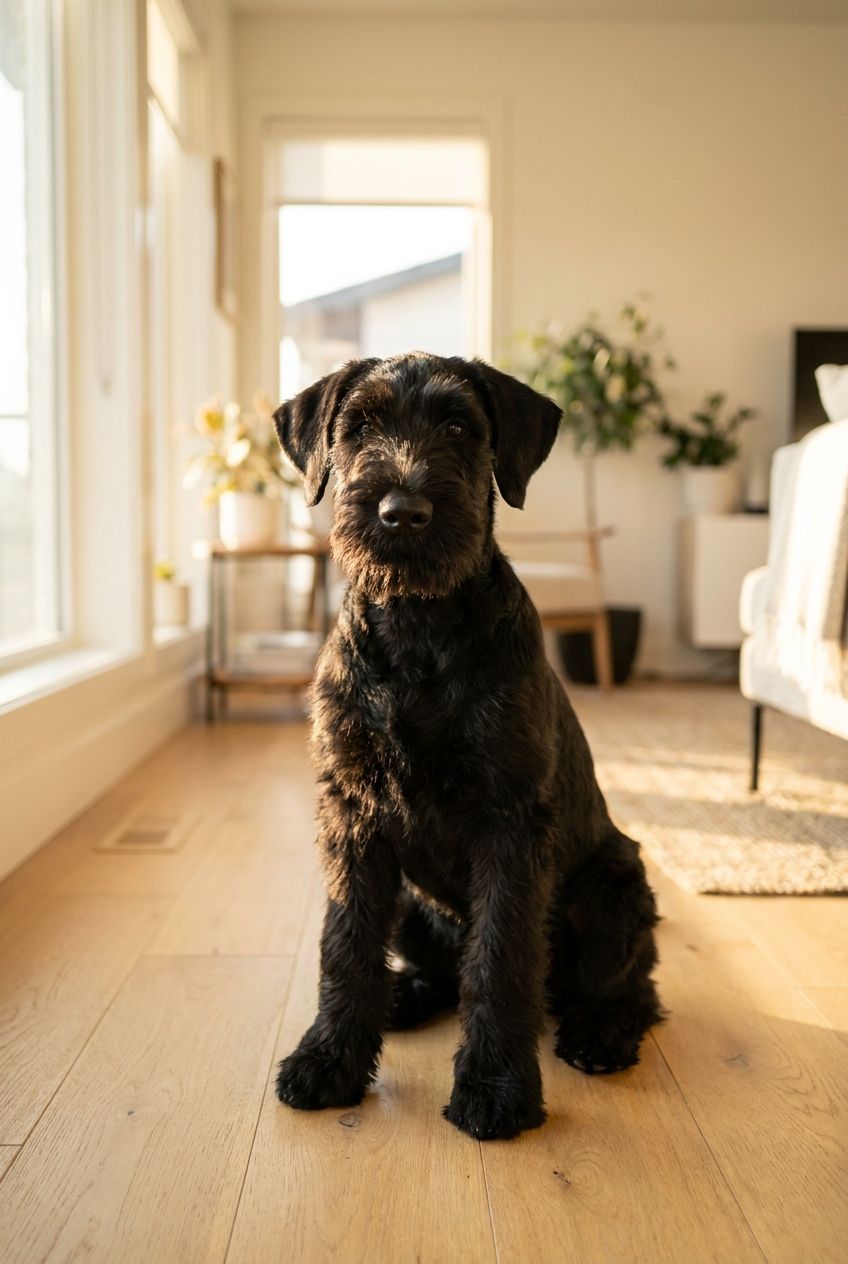
Your Giant Schnauzer puppy just peed on your $300 rug for the third time this week, and you’re starting to wonder if this breed is even trainable. Here’s the truth: Giant Schnauzers are whip-smart working dogs bred to think independently, which means the cookie-cutter potty training advice you’ve read online probably isn’t working because it wasn’t written for a dog this intelligent and this stubborn. This guide gives you the exact framework that works with a Giant Schnauzer’s brain, not against it.
Why Giant Schnauzers Need a Different Potty Training Approach
Giant Schnauzers were bred in Bavaria in the 1800s to drive cattle and guard breweries—jobs that required independent decision-making, not blind obedience. This matters enormously for potty training because a Giant Schnauzer puppy will test whether your rules actually apply to him before he commits to following them.
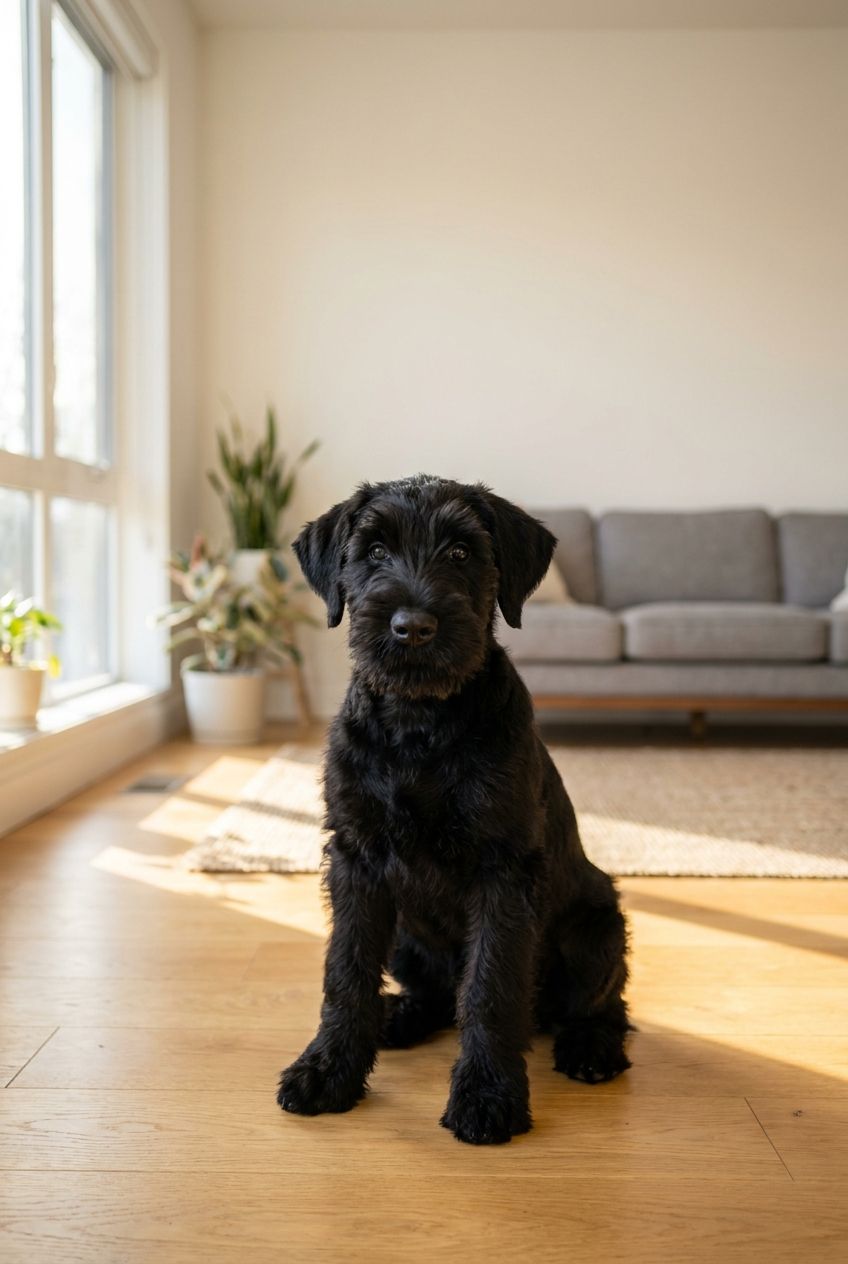
Unlike a Labrador or Golden Retriever who potty trains largely to please you, a Giant Schnauzer potty trains because the routine makes sense to him and because you’ve made the correct behavior the path of least resistance. This is why generic “just take them out every hour” advice often fails with this breed by week three—the puppy gets bored of the routine and starts testing edges.
Giant Schnauzers also mature slower physically than their intelligence suggests. Full bladder control typically doesn’t arrive until 5-6 months, even though your puppy may seem to “get it” mentally by 10 weeks. This gap between mental understanding and physical capability is where most owners get frustrated and assume training has failed when it’s actually just biology.
Realistic Timeline: What to Expect Week by Week
Before you can potty train your Giant Schnauzer puppy like a pro, you need accurate expectations. Here’s the actual timeline based on veterinary bladder development data combined with breed-specific behavior patterns:
8-10 Weeks Old
Bladder capacity is roughly 1 hour per month of age, so an 8-week-old puppy can hold it for about 2 hours max during the day. Expect 15-20 accidents total in the first two weeks. This is normal, not a training failure.
10-14 Weeks Old
Your puppy starts recognizing the potty spot and may walk toward the door. Nighttime stretches extend to 4-5 hours. You’ll still see 5-8 accidents weekly if the schedule isn’t tight.
14-20 Weeks Old
This is the critical consolidation phase. Daytime holding extends to 3-4 hours. Most owners see an 80% reduction in accidents if they’ve been consistent. Giant Schnauzers often have a brief regression around 16 weeks tied to teething discomfort.
5-6 Months Old
Full bladder control typically develops. Reliable dogs have zero accidents for 2+ consecutive weeks. Some Giant Schnauzers, being a giant breed, take until 7 months to be fully reliable—this is still within normal range.
Building the Non-Negotiable Potty Schedule
A rigid schedule is the single highest-leverage tool you have. Giant Schnauzers respond to structure because it removes ambiguity—there’s no decision for them to “test.”
The Core Schedule (8-16 weeks)
- Immediately upon waking — before anything else, straight outside
- Within 5-10 minutes of eating — food moves through puppies fast
- After every nap, even 15-minute ones
- After 10-15 minutes of active play — excitement stimulates the bladder
- Last thing before bed, no exceptions
- Every 2 hours during waking hours as a baseline, tightened to 90 minutes if accidents are frequent
Feed your puppy on a fixed schedule—three meals a day at 7am, 12pm, and 5pm for puppies under 4 months—rather than free-feeding. Free-feeding makes elimination unpredictable, which sabotages your entire schedule. Pick up water 2 hours before bedtime to reduce overnight accidents, but never restrict water during the day.
Crate Training: Your Most Powerful Tool
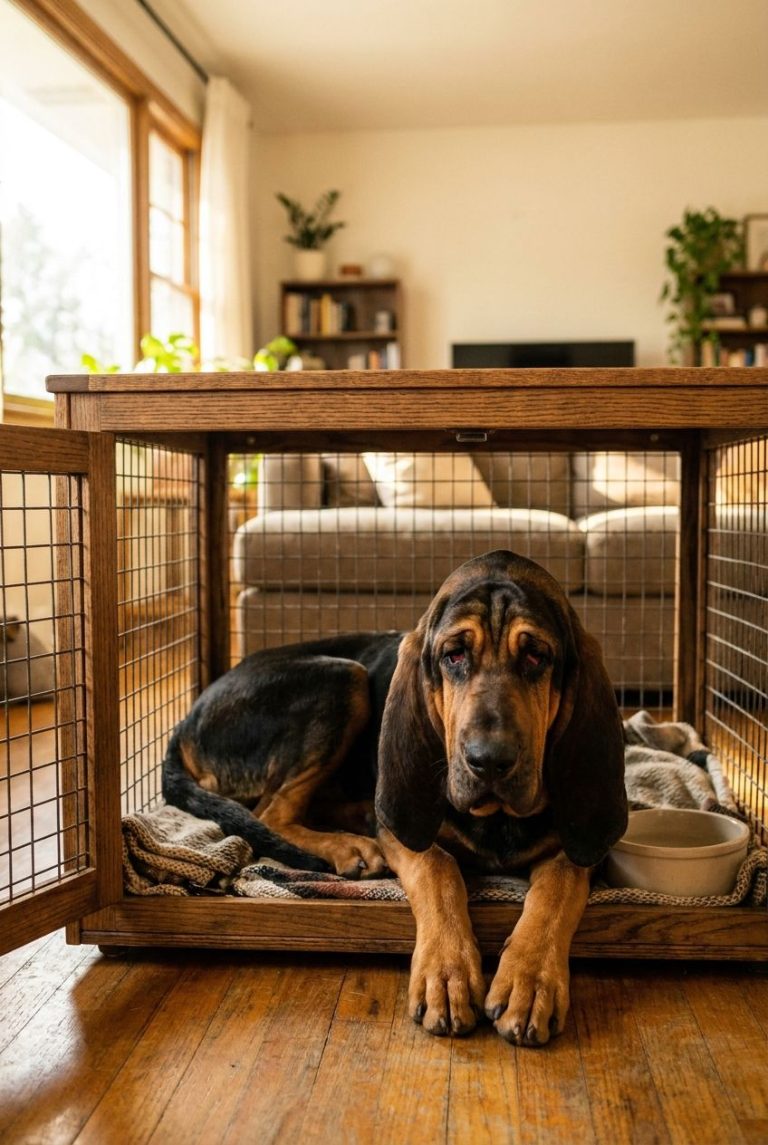
Dogs instinctively avoid soiling their sleeping area, and crate training leverages this instinct better than any other method for Giant Schnauzers specifically, because this breed will otherwise find a quiet corner of the house to use as a bathroom out of sheer independence.
Choosing the Right Crate
Giant Schnauzers reach 60-85 lbs and 25-27.5 inches at the shoulder as adults, so buy a 48-inch crate with a divider panel rather than a puppy-sized one. A used adjustable crate (like a MidWest iCrate 48-inch, roughly $90-120 new) saves you from buying three crates as your dog grows. The divider is critical: too much space and your puppy will potty in one corner and sleep in the other, defeating the entire purpose.
Crate Schedule for a 10-Week-Old Puppy
- Crate for naps between play sessions (30-90 minutes)
- Crate overnight, with one bathroom break around the 4-5 hour mark initially
- Crate for short independence practice while you’re home (20-30 minutes, 2-3x daily)
- Never crate longer than 3-4 hours during the day for puppies under 4 months—this exceeds their physical capability and forces accidents that damage the den instinct you’re relying on
Reading Your Giant Schnauzer’s Potty Signals
Giant Schnauzers are notoriously subtle communicators compared to breeds like Beagles who howl their needs. You have to actively watch for signals rather than wait for obvious cues.
Early Signals (Act Within 30 Seconds)
- Sudden sniffing in circles, particularly along baseboards or rug edges
- Abruptly stopping play or ceasing to engage with a toy
- Wandering toward a doorway or previously-used accident spot
- A brief, stiff-legged stance different from normal standing
- Whining that’s lower and more insistent than attention-seeking whines
If you catch any of these signals, interrupt immediately with an upbeat “outside!” and physically move the puppy—don’t wait to see if he finishes the thought. Giant Schnauzer puppies give you a 10-20 second window between signal and action, shorter than many breeds.
The Outdoor Routine That Actually Works
Where and how you handle the outdoor portion determines how fast your puppy connects the dots.
Pick One Spot
Choose a single designated potty area no larger than 6×6 feet. Scent cues from previous eliminations speed up the association. Moving locations constantly confuses a puppy who relies on smell to understand what this outing is for.
The 5-Minute Rule
Give your puppy exactly 5 minutes on leash in the potty spot. If nothing happens, go back inside and crate for 10-15 minutes, then try again. Don’t extend the outdoor time into playtime—this teaches the puppy that outside means fun and games, not business first.
Reward Timing
Praise and treat within 3 seconds of your puppy finishing elimination, not after you’ve walked back inside. Use a small, high-value treat (pea-sized pieces of freeze-dried liver work well) rather than kibble. The reward must happen in the exact location, or the puppy won’t connect the treat to the specific act of eliminating outside.
Common Mistakes That Sabotage Potty Training
Even experienced dog owners make these errors with Giant Schnauzers because the breed’s intelligence creates false confidence.
- Mistake: Punishing accidents after the fact. If you find a puddle 10 minutes old and scold your puppy, he connects the punishment to whatever he’s doing right now (usually being near you), not to the elimination itself. Fix: only correct if you catch the act in progress, and even then use a simple interrupt, not anger.
- Mistake: Giving too much freedom too soon. Owners see two clean weeks and let their 12-week-old puppy roam the house unsupervised. Giant Schnauzers will absolutely regress under unearned freedom. Fix: earn freedom in 15-minute increments over weeks, not all at once—require 30 consecutive accident-free days before removing supervision in a new room.
- Mistake: Using ammonia-based cleaners on accidents. Ammonia smells like urine to a dog’s nose, which reinforces the spot as an acceptable bathroom. Fix: use an enzymatic cleaner like Nature’s Miracle or Rocco & Roxie ($12-18 per bottle) that breaks down the actual proteins in urine.
- Mistake: Inconsistent schedules between household members. If one person takes the puppy out every 90 minutes and another waits 3 hours, the puppy never forms a reliable pattern. Fix: post a written schedule on the fridge with checkboxes for every outdoor trip.
Potty Training Methods Compared
Not every method suits every household. Here’s how the main approaches stack up specifically for Giant Schnauzer temperaments.
| Method | Best For | Timeline to Reliability | Downsides for This Breed |
|---|---|---|---|
| Crate Training | Most households, apartment or house | 4-6 months | Requires consistent schedule; fails if crate is too large |
| Potty Pads | High-rise apartments, extreme weather climates | 3-4 months, but often needs re-training for outdoor transition later | Giant Schnauzers can become confused switching from pad to grass; breed’s size makes pads impractical past 12 weeks |
| Bell Training | Owners who work from home | 5-7 months (added learning curve) | Smart Schnauzers learn to ring the bell for attention, not just bathroom needs—requires strict reinforcement |
| Umbilical Cord Method (leashed to you indoors) | First-time puppy owners, single-dog homes | 3-5 months | Labor-intensive; not practical for households with young kids or multiple dogs |
Most successful Giant Schnauzer owners combine crate training with the umbilical cord method for the first 8 weeks, then transition to supervised freedom.
What If Scenarios: Troubleshooting Real Problems
What if my puppy potties immediately after coming back inside?
This usually means you didn’t wait long enough outside, or your puppy is anxious about something indoors (a new visitor, a loud noise). Extend your outdoor waiting window to a full 8-10 minutes and observe body language before heading back in.
What if my puppy only goes on walks, never in the yard?
Giant Schnauzers are scent-driven and often need the stimulation of new smells to trigger elimination. Walk the same 5-10 minute loop around your yard perimeter rather than standing still in one spot—movement combined with novel scents often solves this within a week.
What if there’s sudden regression after being fully trained?
Rule out a UTI first—this is common enough in puppies that it’s worth a $50-80 vet visit and urine test before assuming it’s behavioral. If medically clear, look for recent changes: new food, a move, a new pet, or a schedule disruption. Giant Schnauzers are sensitive to household stress and will regress as a stress response.
What if I work full-time and can’t maintain a 2-hour schedule?
Hire a midday dog walker (average cost $20-25 per 20-30 minute visit) for at least the first 12 weeks, or use an indoor exercise pen with a potty pad section as a bridge—understanding this will likely add 3-4 weeks to your overall timeline compared to a stay-at-home schedule.
Nighttime Potty Training Specifics
Nighttime accidents frustrate owners more than daytime ones because everyone’s asleep and messes go undiscovered for hours.
Setting Up for Success
- Last potty break should happen within 15 minutes of actual bedtime, not an hour before
- Keep the crate in your bedroom for the first 8-10 weeks—hearing your puppy stir lets you catch pre-accident signals before they escalate
- Set an alarm for a middle-of-the-night bathroom break at the 4-hour mark for puppies under 12 weeks; you can usually drop this by 14-16 weeks
- Keep nighttime bathroom trips boring: no play, minimal talking, dim lights only. This teaches the puppy that nighttime wake-ups aren’t fun, which naturally reduces unnecessary requests
When to Call in Professional Help
If your Giant Schnauzer is past 6 months old with daily accidents and you’ve been consistent with scheduling, crate training, and supervision, something beyond normal puppy learning curve is happening. A veterinary behaviorist consultation (typically $200-400 for an initial session) can identify whether you’re dealing with submissive urination, separation anxiety, or a medical issue like incomplete bladder emptying. Don’t wait past the 7-month mark to seek help—the longer an inappropriate elimination pattern continues, the more it becomes a learned habit rather than a developmental stage.
Conclusion: Making It Stick
Potty training a Giant Schnauzer puppy isn’t about finding one magic trick—it’s about stacking small, consistent decisions until your puppy’s brain does the math on its own. The owners who succeed fastest are the ones who track accidents in a simple notebook for the first month, noting time, location, and what happened right before, because patterns emerge within a week that make the schedule adjustments obvious. Give this breed the structure its intelligence deserves, stay boring and consistent during nighttime trips, and resist the urge to grant freedom before it’s earned. Most Giant Schnauzer owners who follow this framework see real reliability by month five, with the sharpest improvement happening right around week 10 of consistent effort—not because the dog suddenly “gets it,” but because you finally gave him a system worth trusting.