Crate Training Your Bloodhound Puppy Like a Pro: The Complete Step-by-Step Guide
A Bloodhound puppy can howl for 40 minutes straight on night one, and most owners respond by doing the one thing that guarantees night two will be worse. This ultimate guide to crate training your Bloodhound puppy like a pro gives you the exact crate size, daily schedule, and step-by-step method to get your pup sleeping through the night, typically within 2 to 4 weeks.
Bloodhounds are not Labradors. They are scent-driven, stubborn, and deeply social, bred over centuries to track a trail for 100+ miles and then sit patiently at a handler’s feet. That temperament makes crate training both more necessary and more nuanced. Here is how to do it right.
Why Crate Training Your Bloodhound Puppy Is Worth the Effort
A crate is not a cage. For a dog descended from den-dwelling wolves, a properly introduced crate becomes a private bedroom: quiet, predictable, and safe. Bloodhounds in particular benefit because their noses will pull them into trouble the moment you look away.
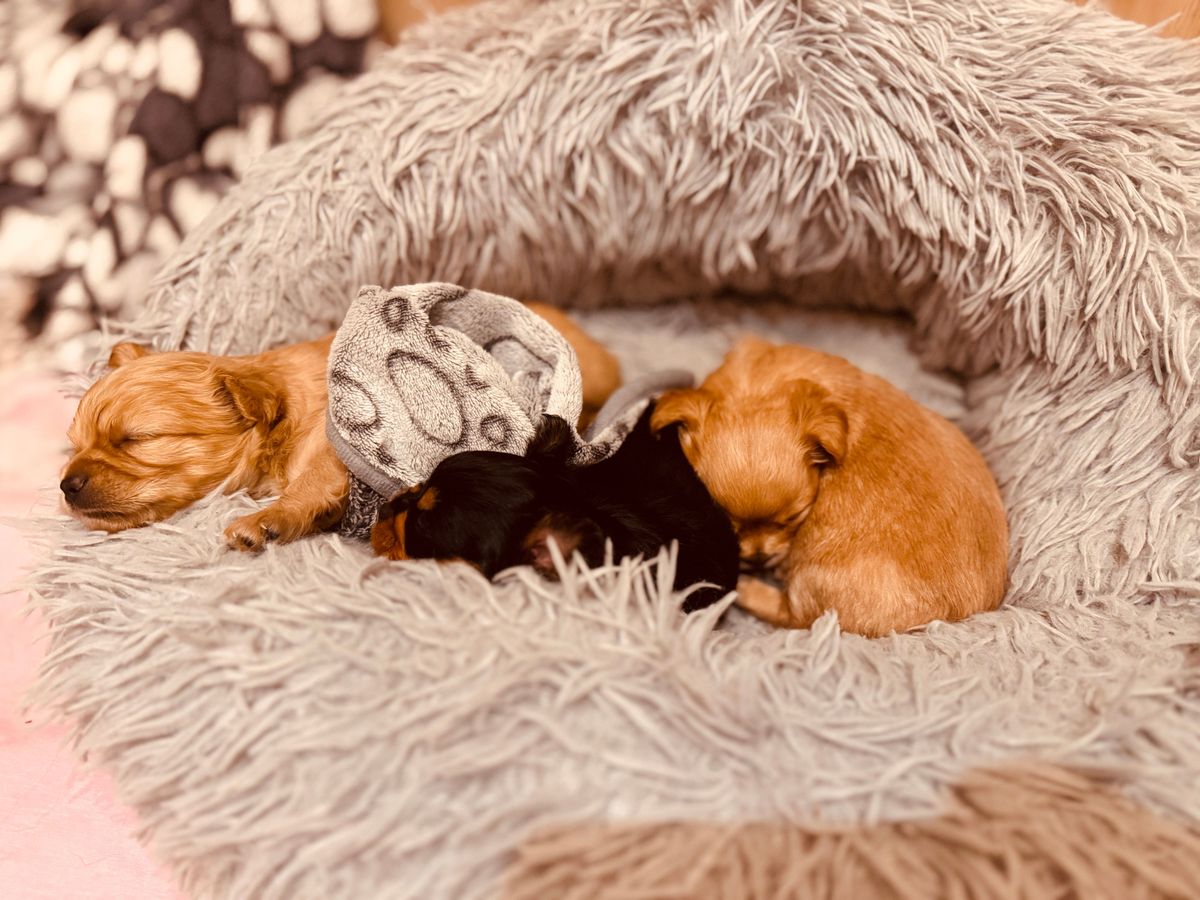
Consider what an unsupervised Bloodhound puppy can do. They counter-surf (steal food from counters) at 4 months old, once they can reach, and they can sniff out a dropped pill or a chocolate bar from another room. A single 100-gram bar of dark chocolate can be dangerous for a 20-pound puppy, and a vet emergency visit often runs $300 to $1,500.
Crate training also protects your sanity and your house. Puppies instinctively avoid soiling the space where they sleep, which makes the crate your best housebreaking tool. Most Bloodhound owners who crate train consistently report full house-training by 5 to 6 months, versus 8 to 12 months without a structure.
There is a health angle too. Bloodhounds are prone to bloat (gastric dilatation-volvulus), a life-threatening stomach twist affecting deep-chested breeds. Enforced calm time in the crate after meals, around 60 to 90 minutes, reduces the risk of a stuffed, sprinting puppy.
- Safety: Prevents chewing electrical cords, swallowing socks, and counter-surfing.
- Housebreaking: Leverages the instinct not to soil the sleeping area.
- Travel and vet visits: A crate-comfortable dog stays calm at the clinic and in the car.
- Recovery: If your dog needs rest after surgery, crate calm is already a learned skill.
Choosing the Right Crate Size and Type: Get It Right the First Time
Bloodhounds grow fast. An adult male stands 25 to 27 inches at the shoulder and weighs 90 to 110 pounds; females run 23 to 25 inches and 80 to 100 pounds. Buy for the adult, then shrink the space while they are small.
The Right Dimensions
For an adult Bloodhound, you need a 48-inch crate (48″ L x 30″ W x 33″ H). A 42-inch crate works for smaller females, but most owners outgrow it. Buying one 48-inch crate and using a divider panel saves roughly $60 to $100 compared with buying two crates.
The Divider Trick
A puppy needs just enough room to stand, turn around, and lie down. Any extra space becomes a bathroom corner. Use the divider to start at about 24 inches of usable length for a 10-week-old pup, then move it back every 3 to 4 weeks as they grow.
Crate Type Comparison
| Crate Type | Price Range | Durability | Best For |
|---|---|---|---|
| Wire (MidWest Ultima Pro 48″) | $110-$150 | High; folds flat | Home use and house-training. Top pick for most owners. |
| Plastic airline-style (Petmate Sky Kennel XL) | $90-$140 | Medium; cozy den feel | Car and air travel, anxious pups who want a darker space |
| Heavy-duty steel (Lucky Dog or Impact Collapsible) | $250-$800+ | Very high | Escape artists and destructive chewers |
| Soft-sided fabric | $50-$90 | Low | Not recommended; puppies chew through zippers |
Recommendation: Start with the MidWest Ultima Pro 48-inch wire crate with the included divider. It has double-latch doors and a leak-proof pan, which matters for a drooling, accident-prone puppy. Add a plastic travel crate later if you fly or road-trip often.
Setting Up the Crate So Your Bloodhound Actually Wants to Go In
Location matters more than most owners realize. Bloodhounds are pack dogs, so a crate in a distant garage or basement guarantees howling. Place it in a quiet corner of the living room during the day and in your bedroom at night, within arm’s reach of your bed for the first 2 to 3 weeks.

Here is the exact setup, in order:
- Assemble and position the crate away from direct sunlight, heating vents, and drafts. Success looks like a spot where the temperature stays between 65 and 75°F.
- Add a washable bed or crate mat (the K&H or Kuranda-style mats run $30 to $70). But what if your puppy shreds it? Use a thin vet bedding pad or an old towel until chewing stops, usually around 6 to 8 months.
- Cover three sides with a crate cover or light blanket to create a den feel. Leave the front open for airflow.
- Add one safe chew toy, such as a Kong Classic (Large, about $15) stuffed with a spoonful of plain canned pumpkin or wet food and frozen for 4 hours.
- Place an item that smells like you, like a worn T-shirt. A Bloodhound’s nose finds comfort in your scent.
Skip the water bowl for overnight stays after a 7 p.m. cutoff, but offer water freely during the day. For daytime crating over 2 hours, clip a small no-spill bowl to the crate door.
Leave the door open, with treats scattered inside, for the first 2 days of arrival so the crate is simply part of the furniture before it ever becomes a rule.
The 7-Step Method to Crate Train Your Bloodhound Puppy in 2 to 4 Weeks
Consistency beats cleverness. Follow these steps in order, and do not advance until your puppy succeeds at the current one for at least 2 to 3 sessions in a row.
- Toss treats inside (Days 1-2). Use pea-sized pieces of boiled chicken or Zuke’s Mini Naturals. Let the puppy walk in and out freely. Success: the pup enters voluntarily without hesitation. But what if your pup refuses to enter? Place the treat right at the door, then gradually move it deeper over several sessions.
- Feed meals inside the crate (Days 2-4). Put the food bowl at the front first, then at the back. Success: your pup finishes the meal calmly inside.
- Close the door for 5 seconds while they eat (Days 3-5). Open it before they finish. Build to 1, 2, then 5 minutes. Success: no whining when the door shuts.
- Add a cue word. Say “Kennel up” (or “Bed”) as they walk in, then treat. By week 2, they should go in on cue.
- Stay in the room, then step out (Days 5-10). Sit nearby reading for 10 minutes. Then leave for 1 minute, return, and calmly let them out. Never open the door during whining.
- Extend duration gradually. Aim for 30 minutes by day 10 and 1 to 2 hours by week 3. But what if they cry at minute 20? Wait for a 5-second pause in the noise, then reward and release. Otherwise you teach that crying works.
- Practice overnight crating (Weeks 2-4). Keep the crate near your bed, then move it gradually toward its permanent spot, about 3 feet every 3 nights.
Keep every session positive. The crate must never be a punishment, or your Bloodhound will associate it with isolation and stress.
A Daily Crate Schedule for Bloodhound Puppies (By Age)
Puppies have tiny bladders. A common rule: they can hold it for one hour per month of age, plus one. A 2-month-old holds it about 3 hours; a 4-month-old about 5 hours. Never exceed these limits, even if your pup seems fine.

Sample Schedule for a 10-Week-Old Pup
- 6:30 a.m.: Straight outside to potty, then breakfast.
- 7:15 a.m.: Potty again, 30 minutes play, then crate nap for 2 hours.
- 9:30 a.m.: Potty, short training session, then crate for 1.5 to 2 hours.
- 12:00 p.m.: Potty, lunch, play, then crate nap.
- 3:00 p.m.: Potty, walk or sniff time, then crate rest.
- 6:00 p.m.: Potty, dinner, 60 to 90 minutes of calm time.
- 8:30 p.m.: Final potty trip, then bedtime in the bedroom crate.
- Middle of the night: One trip out at about 2 to 3 a.m. for the first 2 weeks.
Maximum Crate Time by Age
At 8 to 10 weeks, limit daytime crating to 2 hours. At 3 to 4 months, extend to 3 to 4 hours. At 6 months, 5 to 6 hours is the ceiling. Adult Bloodhounds should not spend more than 6 to 8 hours crated in a day, excluding overnight sleep.
Puppies sleep 18 to 20 hours daily, so crate time is not as long as it sounds. The trick is making sure naps happen in the crate, not on your lap, so the habit forms early.
How to Stop Howling, Whining, and Barking in the Crate
Bloodhounds are among the most vocal breeds. Their baying is genetic, and it carries across a quarter mile. Quiet does not come from ignoring a puppy who truly needs to go out, but from learning which cry means what.
Decode the Cry
A sharp, repetitive yelp after 2 to 3 hours of sleep usually means potty. A rhythmic, drawn-out howl at 5 minutes in means protest. A frantic, panicked scream that escalates means true distress, and you should slow down your training.
The 4-Part Fix
- Tire the nose, not just the body. A 15-minute sniff walk, or scattering kibble in a snuffle mat ($15 to $25), tires a Bloodhound more than 30 minutes of fetch.
- Pause before you respond. Wait for 5 seconds of quiet, then open the door. You are rewarding silence.
- Use a white noise machine or soft classical music to mask household sounds.
- Try an Adaptil collar or diffuser ($20 to $35) containing synthetic calming pheromones, which helps about 60 to 70 percent of anxious puppies according to manufacturer-cited studies.
If your puppy howls for more than 20 minutes straight, do not punish. Reset: take a step back to the previous training stage, shorten the duration, and add a high-value stuffed Kong.
7 Common Crate Training Mistakes (and Exactly How to Avoid Them)
These errors derail more Bloodhound training plans than any behavior problem. Fix them early.

- Using the crate as punishment. Never send your pup to the crate after misbehaving. Instead, say “Kennel up” cheerfully with a treat, so the crate stays a happy place.
- Letting the puppy out while crying. This teaches that noise opens the door. Wait for even a 3 to 5 second pause, then release.
- Crating too long too soon. A 9-week-old left 5 hours will have accidents and become anxious. Follow the age-based limits above.
- Buying a crate that is too big. A 48-inch crate without a divider invites a bathroom corner. Always use the divider until at least 5 months.
- Skipping exercise. A Bloodhound with pent-up energy will bark. Provide 20 to 30 minutes of sniff-based activity before every long crating stretch.
- Making big departures dramatic. Long, emotional goodbyes spike anxiety. Drop a treat, say nothing, and leave calmly.
- Leaving a collar on inside the crate. Tags and loose collars can snag on wires. Remove it, or use a breakaway safety collar.
The most expensive mistake is the first one. A dog who fears the crate may need weeks of retraining, plus potentially a trainer at $75 to $150 per session.
Crate Training Questions and Objections: What If It Doesn’t Work?
Even with perfect execution, you may hit a wall. Here are the most common “what if” scenarios, answered directly.
What if my Bloodhound puppy truly hates the crate? Go back to feeding meals inside with the door open for 3 to 5 days. Some dogs need a slower introduction; breeds with strong pack drives often take 4 to 6 weeks rather than 2.
What if I work full-time? A puppy cannot be crated for 8 hours. Hire a midday dog walker ($15 to $25 per visit), use a puppy playpen with a potty pad zone, or arrange a neighbor or family member to visit. Daycare runs $30 to $45 per day and also helps socialization.
What if my pup has accidents in the crate? First rule out a medical cause, since a urinary tract infection can cause repeated accidents. Then clean thoroughly with an enzymatic cleaner like Nature’s Miracle ($10 to $20), shorten crate time, and reduce the crate size.
Isn’t crating cruel? Not when done properly. Dogs seek out enclosed spaces; many Bloodhounds will choose to nap in an open crate unprompted. It becomes cruel only if overused or used as punishment.
What if my pup panics and hurts themselves? This is separation anxiety, which differs from normal protest. Signs include bleeding paws, bent wires, or drooling to the point of soaking the bedding. Stop crate training and consult a veterinarian or certified behaviorist, who may recommend structured desensitization or medication.
Handling Bloodhound-Specific Challenges: Drool, Ears, and Escape Attempts
Few breeds present the particular quirks of the Bloodhound. Planning for them keeps crate time comfortable and clean.
Managing the Drool
Bloodhounds drool, especially after drinking or eating, and flews (the loose, hanging upper lips) fling saliva onto walls and crate bedding. Keep a stack of 3 to 4 washable towels near the crate, and wipe the pup’s mouth with a damp cloth before crating. Use a waterproof crate pan liner so saliva does not seep through.
Protecting Those Long Ears
Bloodhound ears can reach 10 inches or more and often drag in water and food, which breeds ear infections. Wipe the ears weekly with a vet-approved cleaner such as Zymox ($12 to $20). Using a ceramic or stainless steel elevated bowl reduces ear dunking.
Escape Attempts and Sheer Strength
A determined Bloodhound can push open weak latches and bend thin wire. Choose a crate with at least two latches and 8-gauge or thicker wire. Check the crate weekly for bent bars, since broken wires can cut a pup’s tongue or paws.
Finally, watch for joint health. Rapid growth stresses a large breed’s joints, so avoid jumping in and out of tall crates, and use a ramp for adult dogs if needed.
Your Next Action: Start Tonight With a 10-Minute Crate Session
You do not need the perfect plan to begin. You need a crate, a handful of treats, and ten calm minutes. Set up the crate in your living room today, toss five pea-sized treats inside, and let your Bloodhound puppy wander in on their own.
Tonight, put the crate beside your bed, add a worn T-shirt and a frozen stuffed Kong, and settle in for the first of many small wins. Expect some howling. Wait out the pauses, reward the quiet, and keep a log of each night’s duration so you can see real progress.
By the end of week one, set a 7-day goal: your pup should enter the crate on cue and settle for 30 minutes. That single milestone is the foundation for every night of quiet sleep that follows.