German Wirehaired Pointer Puppy Crate Training Guide: A Step-by-Step Plan That Actually Works
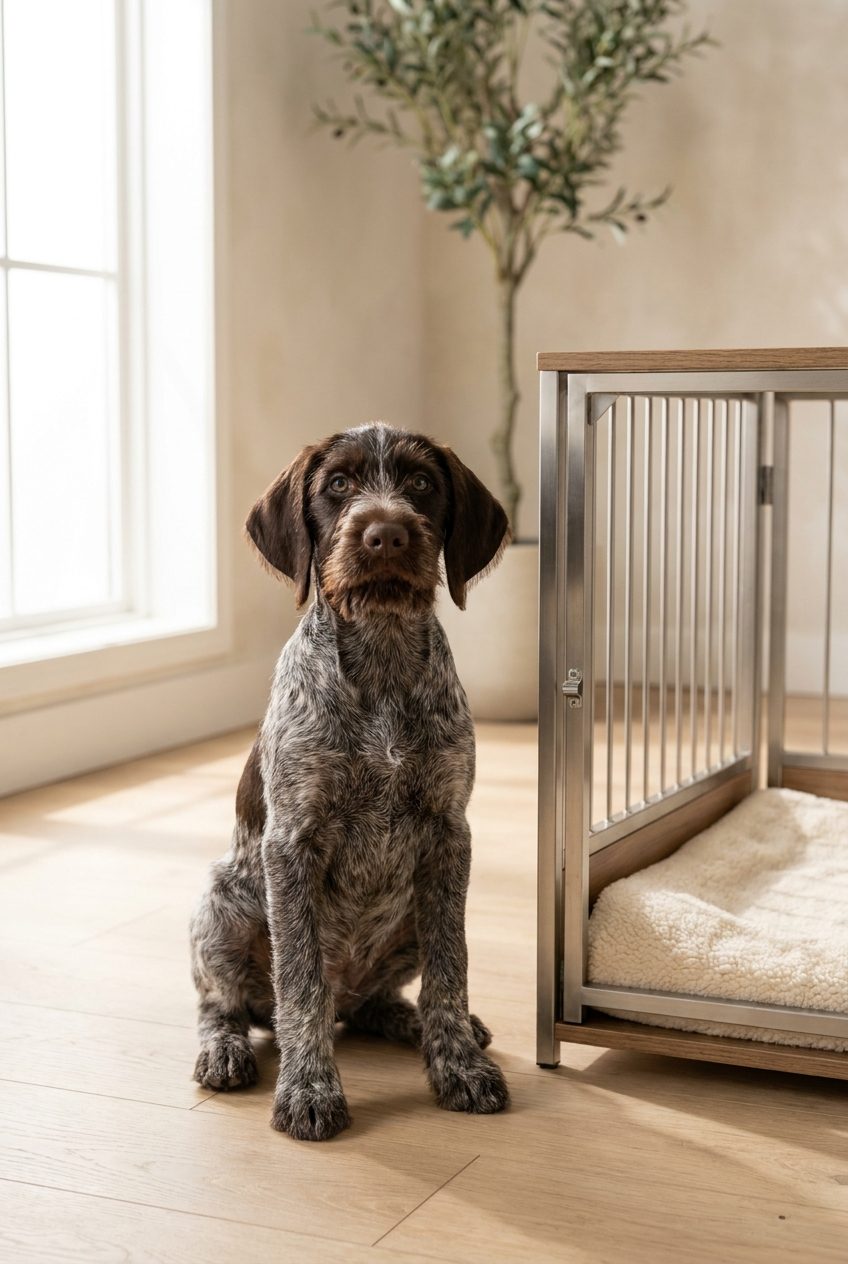
If you’ve just brought home a German Wirehaired Pointer puppy and it’s already chewed through a shoe, scaled the baby gate, or howled at 3 a.m. like it’s auditioning for a wolf documentary — welcome to the club. This breed is smart, stubborn, and wired for nonstop activity, which means crate training isn’t optional; it’s the single tool that will save your sanity and your furniture. This German Wirehaired Pointer Puppy Crate Training Guide gives you the exact timeline, gear, and troubleshooting steps that work for this specific high-drive breed.
Why Crate Training Matters More for German Wirehaired Pointers
German Wirehaired Pointers (GWPs) were bred to work 8-10 hour days in the field, which means they come pre-loaded with stamina, curiosity, and an above-average prey drive. Left uncrated and unsupervised, a GWP puppy under 6 months old will find something destructive to do within about 20 minutes — that’s not an exaggeration, it’s a pattern breeders and trainers see constantly.
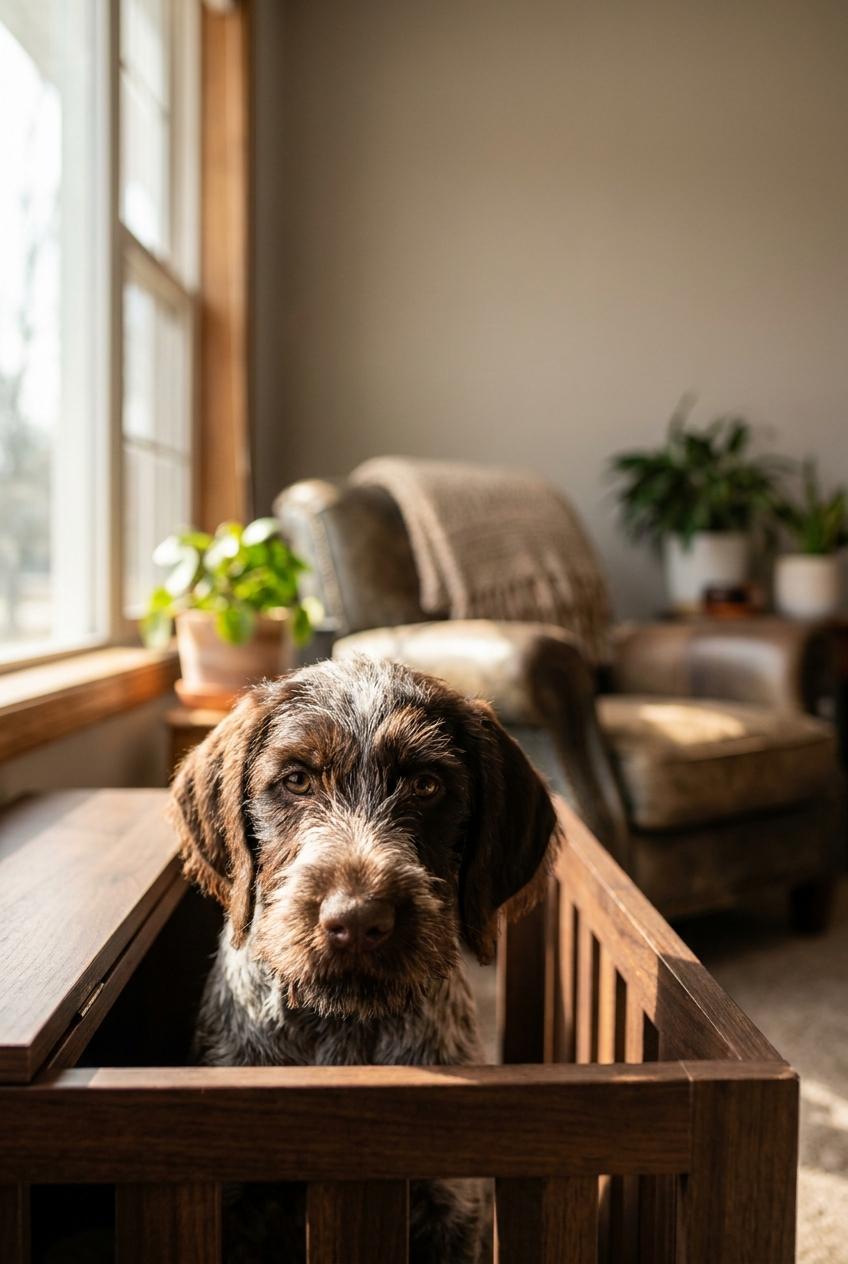
Crate training isn’t about punishment. It taps into the dog’s natural denning instinct, giving them a space that feels safe rather than restrictive. For a breed this active, a properly used crate also prevents four expensive problems: furniture destruction, ingestion of foreign objects (GWPs are notorious counter-surfers and object-eaters), unsupervised accidents that create long-term house-training setbacks, and separation-related anxiety that worsens without structure.
Done correctly, most German Wirehaired Pointer puppies are reliably crate trained between 8 and 14 weeks, with full nighttime independence (no whining, no accidents) by 4-5 months.
Choosing the Right Crate Size and Type
Size mistakes are the #1 reason crate training fails in this breed. GWPs grow fast — a puppy can go from 10 lbs at 8 weeks to 45+ lbs by 6 months, and adults typically land between 50-70 lbs, standing 22-26 inches at the shoulder. You have two real options: buy a crate sized for an adult and use a divider panel, or upgrade crates as the puppy grows.

Recommended Crate Dimensions by Age
- 8-12 weeks (10-20 lbs): 24″ crate with divider panel
- 3-5 months (20-40 lbs): 30″ crate with divider panel
- 6+ months to adult (45-70 lbs): 36″ crate, no divider needed
The rule of thumb: your puppy should be able to stand up without ducking, turn around fully, and lie down stretched out — but not have so much extra space that they designate one corner as a bathroom. That’s why dividers matter more than buying multiple crates.
Wire vs. Plastic vs. Soft-Sided: Comparison Table
| Crate Type | Best For | Approx. Price (36″ size) | Pros | Cons |
|---|---|---|---|---|
| Wire Crate (e.g., MidWest iCrate) | Home use, most GWP owners | $70-$110 | Good airflow, foldable, divider included, easy to see out | Not great for anxious chewers-on-bars |
| Plastic/Travel Crate (e.g., Petmate Sky Kennel) | Car travel, air travel, GWPs prone to anxiety | $60-$130 | Den-like security, airline compliant, sturdier | Less ventilation, harder to clean, heavier |
| Soft-Sided Crate | Fully trained adult dogs only | $50-$90 | Lightweight, portable | GWP puppies will destroy it in one afternoon — avoid until 1+ years old |
For most German Wirehaired Pointer puppies, a wire crate with a divider panel from a brand like MidWest, Frisco, or Carlson offers the best balance of price, durability, and visibility.
German Wirehaired Pointer Puppy Crate Training Guide: Week-by-Week Timeline
Here’s what a realistic progression looks like. Every puppy is different, but GWPs are food-motivated and intelligent, so they typically train faster than average once the routine is consistent.

- Week 1 (8-9 weeks old): Crate door stays open during the day. Feed all meals inside the crate. Toss treats in randomly. No forced closing yet.
- Week 2 (9-10 weeks): Start closing the door for 2-5 minutes while you’re in the room. Gradually extend to 15-20 minutes. Begin nighttime crating next to your bed.
- Week 3 (10-11 weeks): Extend daytime crate periods to 30-45 minutes while you leave the room. Practice leaving the house for 5-10 minute increments.
- Week 4-5 (11-13 weeks): Puppy should tolerate 1-2 hours crated during the day and a full night (6-8 hours) with one nighttime bathroom break.
- Week 6-8 (14-16 weeks): Extend to 3-4 hour daytime stretches. Move crate location from bedroom to a more permanent spot if desired.
- Month 4-5: Most GWPs can handle a full night (7-8 hours) with no breaks, and 4-hour daytime crating with proper exercise beforehand.
Never jump straight to 8-hour workday crating with a young puppy — a GWP under 4 months physically cannot hold their bladder that long, and forcing it guarantees accidents and stress.
Step-by-Step: The Actual Training Process
Step 1: Introduce the Crate as a Positive Space
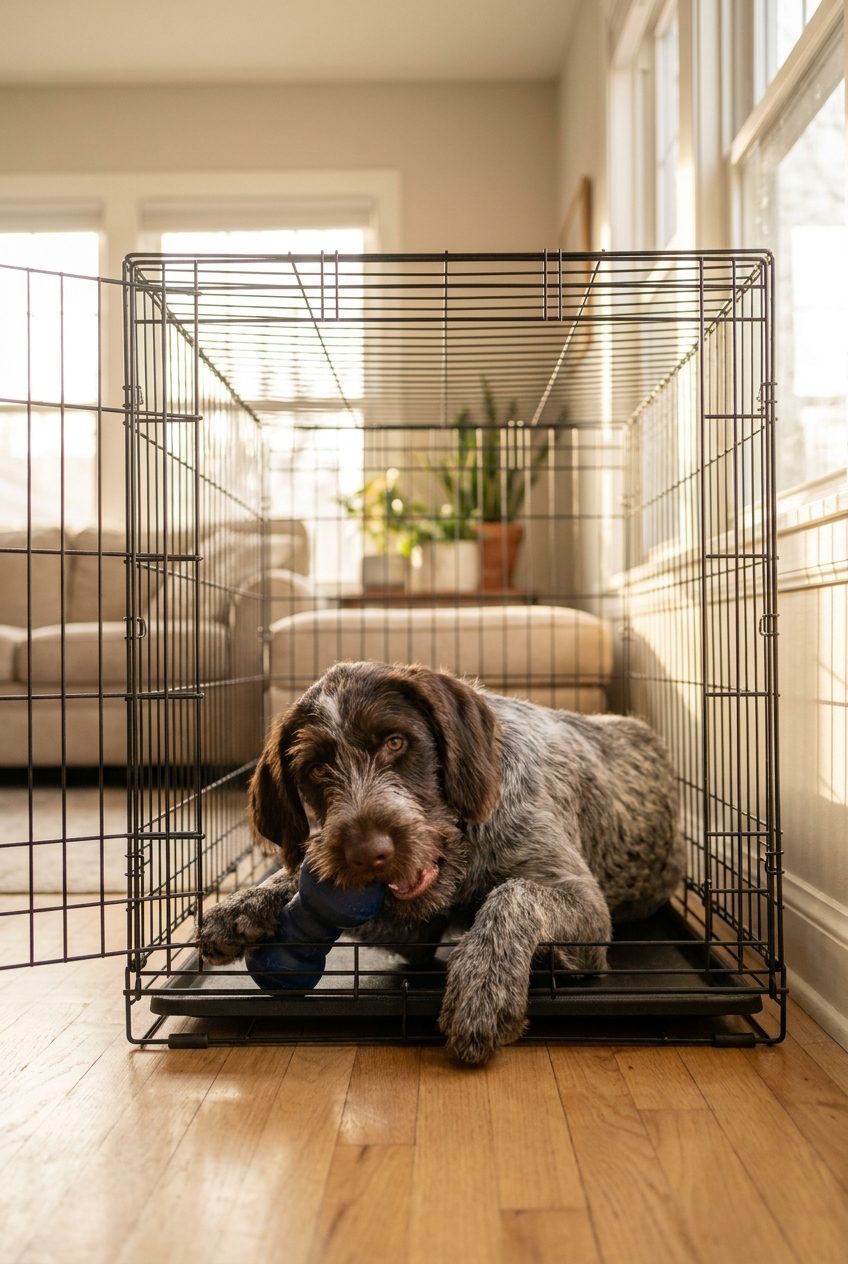
Place the crate in a high-traffic area like the living room. Toss high-value treats (small pieces of cooked chicken or a training treat like Zuke’s Mini Naturals) inside, several times a day, without closing the door. Let the puppy walk in and out freely for 3-4 days.
Step 2: Add a Command Word
Choose one word — “kennel,” “crate,” or “place” — and say it every single time the puppy enters, followed immediately by a treat. Consistency here matters more than the word itself.
Step 3: Close the Door in Short Bursts
Once the puppy enters willingly on command, close the door for 30 seconds while you sit next to the crate. Open it before any whining starts — this is critical. Rewarding calm silence, not fussing, is what builds tolerance.
Step 4: Extend Duration and Distance
Gradually increase time crated and your physical distance from the crate. Move to another room for 2 minutes, then 5, then 10. Always return calmly — no big excited greetings that teach the puppy your return is the exciting part.
Step 5: Practice Real Departures
Start leaving the house for genuinely short errands (5-15 minutes) once the puppy tolerates 30+ minutes of alone crate time inside the house. Build from there.
Nighttime Crate Training and Sleep Schedules
Nighttime is where most owners struggle, mainly because GWP puppies are vocal and persistent when they want attention. Here’s the schedule that minimizes disruption:

- Last meal: 3 hours before bedtime (e.g., 6:30 PM meal for a 9:30 PM bedtime)
- Last water access: 1.5-2 hours before bed, then remove the water bowl
- Final potty break: Directly before crating, no play in between — go straight from outside to the crate
- Crate location: Bedroom, within arm’s reach, for at least the first 3-4 weeks
- Nighttime wake-up: Expect one bathroom break around week 2-4 (typically 4-5 hours after bedtime for an 8-10 week old puppy)
Keep nighttime bathroom breaks boring: no lights, no talking, no play. Straight outside, straight back to the crate. This teaches the puppy that nighttime wake-ups aren’t fun, which speeds up the process of sleeping through the night.
Common Mistakes That Sabotage Crate Training
These three mistakes account for the majority of crate training failures with German Wirehaired Pointers specifically:

- Letting the puppy out during whining or barking. GWPs are smart enough to learn cause-and-effect within 3-5 repetitions. If whining gets the door opened, you’ve just taught them that whining works — and this breed will escalate persistently. Wait for 10-15 seconds of quiet before releasing, even if it means waiting through a tantrum first.
- Using the crate as punishment. Sending a puppy to the crate after scolding them for chewing something creates a negative association that undoes weeks of progress. The crate must always feel neutral-to-positive, never like a timeout box.
- Skipping exercise before crating. This is the single biggest GWP-specific error. This breed needs 45-60 minutes of real exercise (not just a backyard potty break) before being expected to settle calmly for hours. A crated GWP with pent-up energy will bark, dig at the crate liner, and potentially injure their nails or gums trying to escape.
Crate Training During Work Hours: Is It Realistic?
A common objection: “I work a 9-hour day, can I still crate train a GWP puppy?” The honest answer is not without help, at least not until the puppy is 5-6 months old. Here’s how owners make it work:
Under 4 Months Old
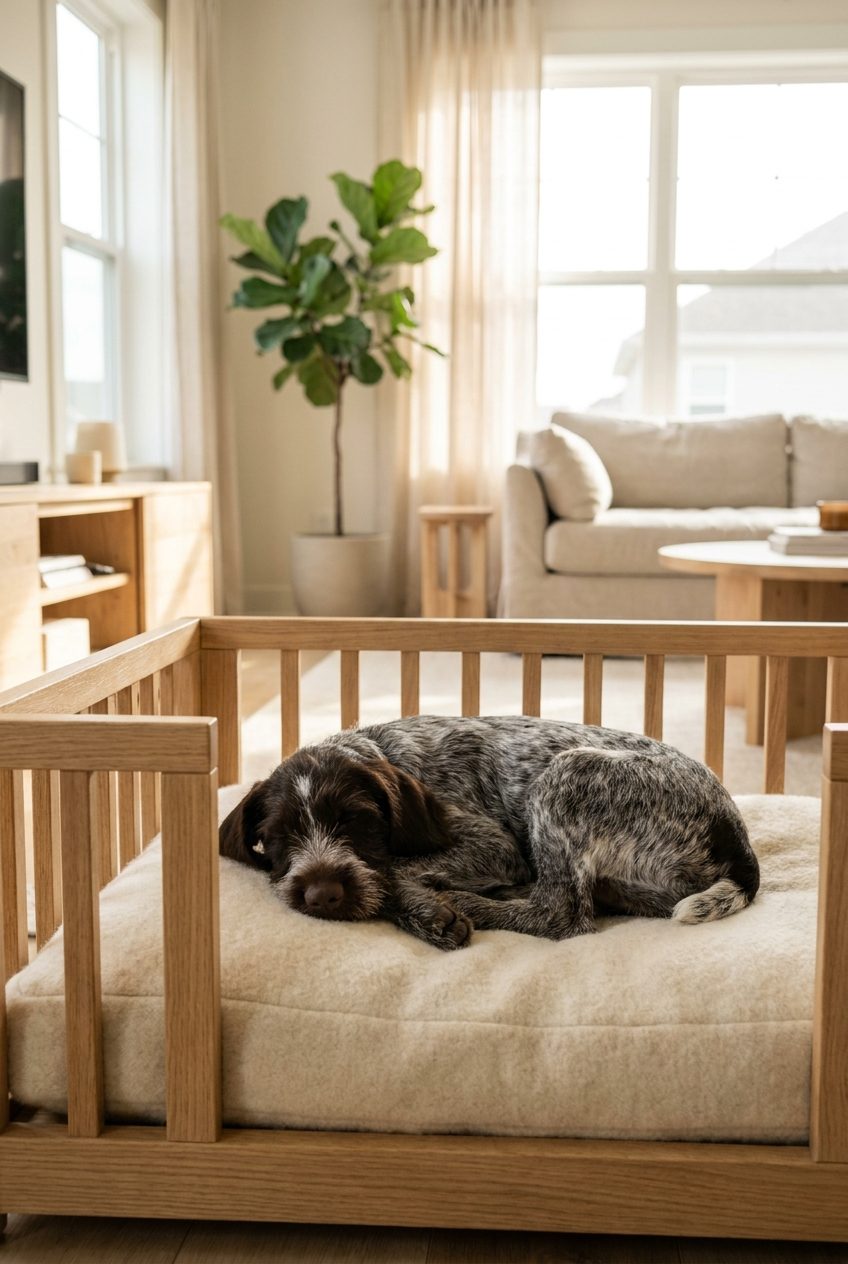
Hire a midday dog walker (average cost $20-$35 per 30-minute visit in most U.S. cities) or use a trusted neighbor. Puppies this age genuinely cannot hold their bladder for a full workday — expecting it leads to accidents and a puppy that learns to associate the crate with distress, not comfort.
4-6 Months Old
Transition to a puppy daycare 2-3 days a week (roughly $25-$45/day) combined with crate time on off days, gradually extending solo crate stretches to 4 hours with a walker breaking up the middle.
6+ Months
Most GWPs can handle a full 8-hour workday in the crate IF they get 60-90 minutes of vigorous exercise (running, fetch, structured play) before you leave. Skipping this step is the #1 reason “crate trained” GWPs suddenly start destroying bedding or barking excessively during the day.
What If Scenarios: Troubleshooting Real Problems
“My puppy screams the second I close the door”
Back up several steps. Go back to open-door feeding and short 10-second closures. You likely progressed too fast. Rushing is the most common reason for regression in GWPs specifically, since their intelligence makes owners assume they’re ready sooner than they are.

“My puppy is crate trained but has separation anxiety when I leave the house”
These are two different problems. Crate comfort inside the home doesn’t always transfer to being alone in the house. Practice “fake departures” — grab your keys, put on shoes, open the front door, then sit back down. Do this 10-15 times a day until the ritual stops triggering anxiety.
“My puppy had 3 weeks of success and is suddenly regressing”
This is extremely common around 4-5 months old, often coinciding with teething (which peaks around 12-16 weeks) or a fear period. Don’t panic or punish — simply shorten crate durations for 5-7 days and rebuild gradually.
“Can I skip crate training entirely and use an exercise pen instead?”
You can, but it’s not recommended for this breed. GWPs are talented escape artists and jumpers — many can clear a 36″ exercise pen by 5-6 months. A crate provides more reliable containment and, done right, becomes the dog’s preferred resting spot for life.
Essential Supplies for Crate Training Success
Beyond the crate itself, a few products make a measurable difference in training speed:
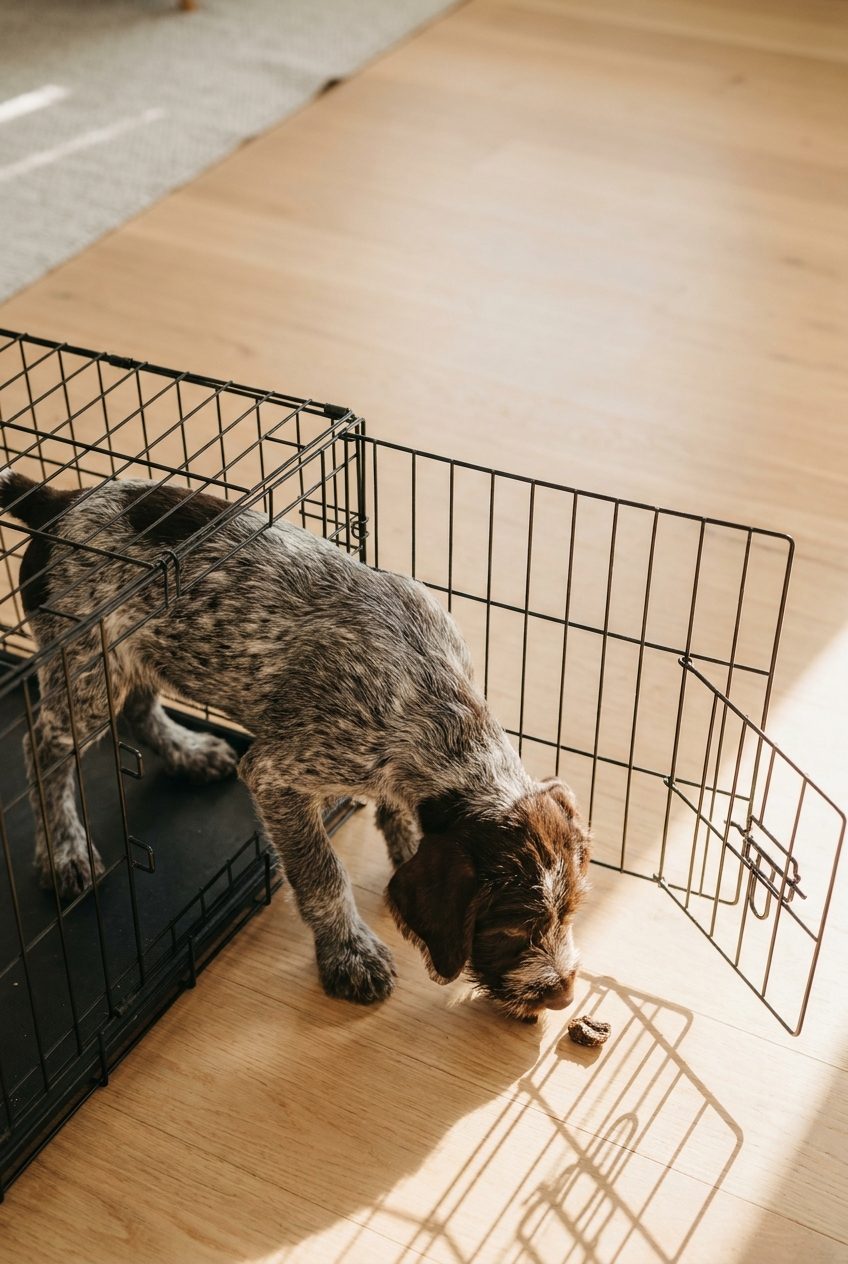
- Crate divider panel – usually included with MidWest or Frisco crates, essential to prevent bathroom-corner habits
- Chew-resistant bed – something like a Kuranda elevated bed ($60-$100) holds up better than stuffed beds, which GWP puppies shred within days
- Frozen stuffed Kong – peanut butter or wet food frozen inside keeps a puppy occupied for 20-30 minutes during initial crate sessions
- Crate cover or blanket – reduces visual stimulation and helps some GWPs settle faster, especially in bright rooms
- Puppy-safe chew toys – Nylabone or West Paw Zogoflex items rotated every few days to prevent boredom-driven barking
Practical Conclusion: Making Crate Training Stick Long-Term
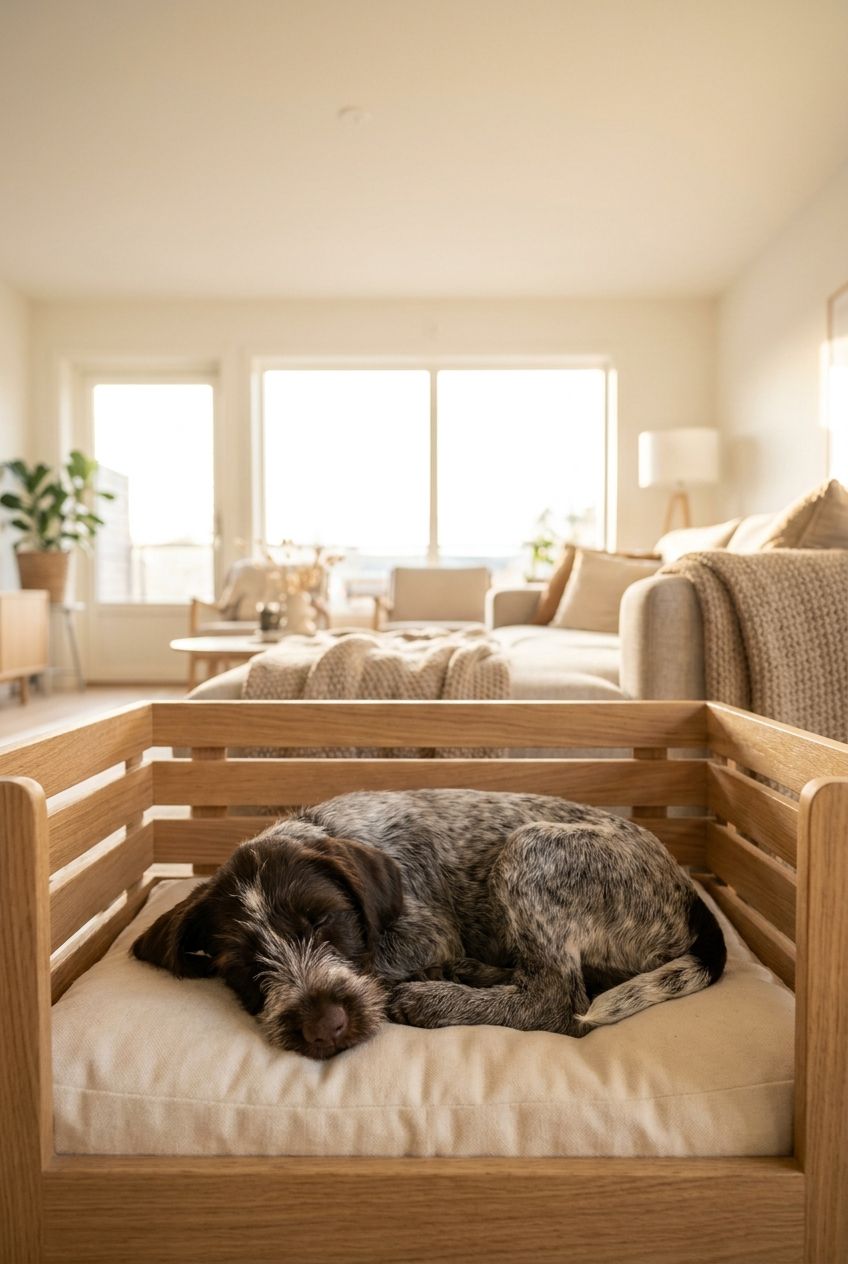
Crate training a German Wirehaired Pointer puppy isn’t a two-week project you finish and forget — it’s a foundation that keeps paying off for the dog’s entire life, especially for a breed this active and intelligent. The owners who succeed are the ones who match the training pace to the puppy’s actual bladder capacity and energy needs, not to an arbitrary schedule found online. Expect real progress by week 3, expect a few setbacks around the 4-month teething mark, and expect that a tired GWP is a calm GWP — exercise before crating will solve more problems than any training technique alone. Once the crate becomes your dog’s own space rather than a containment tool, you’ll notice something telling: they’ll start wandering in on their own to nap, door wide open, simply because it feels like home.