Potty Train Your German Wirehaired Pointer Puppy: Top Tips & Tricks!
Your German Wirehaired Pointer puppy just left you a puddle on the kitchen floor for the third time today, and you’re starting to wonder if this dog will ever be housebroken. Here’s the truth: GWPs are smart enough to learn potty training in 4-6 weeks flat, but their high prey drive and independent streak mean generic puppy training advice often falls short. This guide gives you the specific, breed-tailored system that actually works.
Why German Wirehaired Pointers Have Unique Potty Training Needs
GWPs were bred to work independently in the field for hours, tracking scent and making their own decisions without constant handler input. This same independence that makes them exceptional hunting dogs can translate into stubbornness during house training. Unlike more people-pleasing breeds like Golden Retrievers, a GWP puppy might decide that going potty in the living room is perfectly acceptable if you haven’t clearly established the rules.
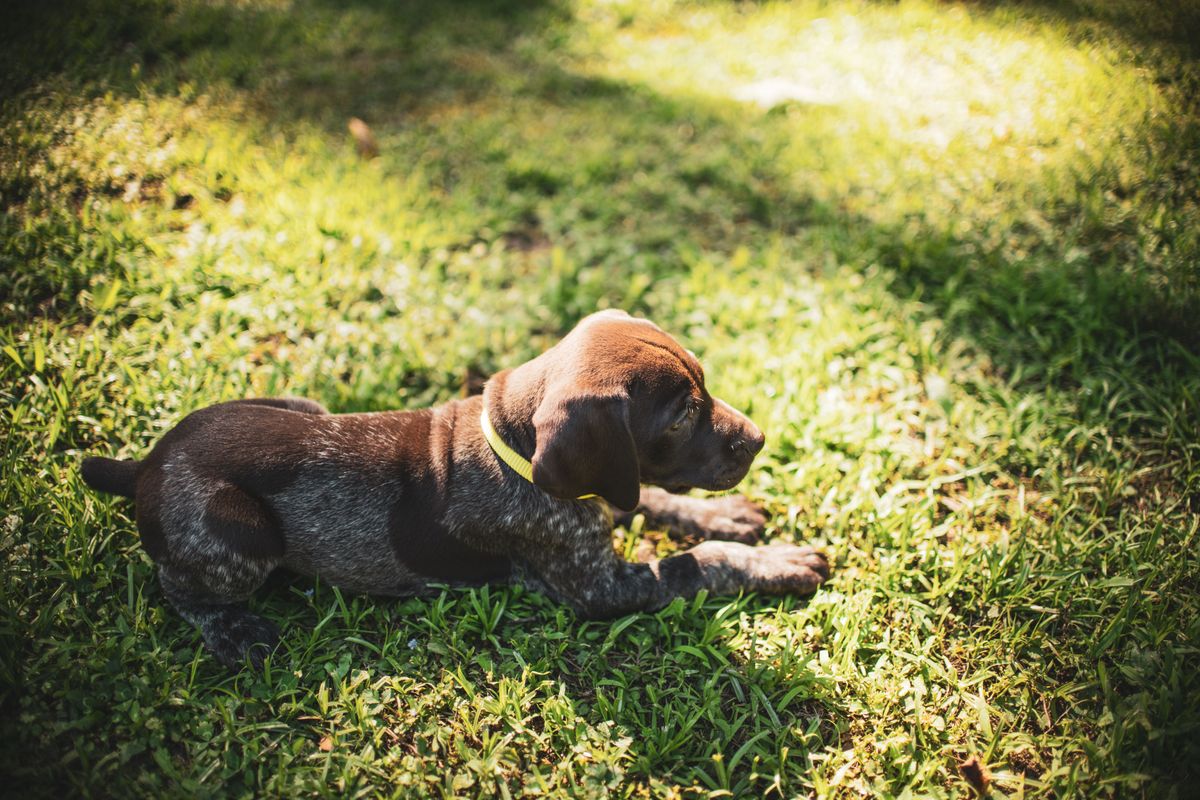
They also mature physically faster than many sporting breeds, often reaching 40-55 pounds by 6 months old, which means their bladder capacity increases quickly. However, mental maturity lags behind physical growth until around 10-12 months. This gap is where most owners get frustrated—the dog looks grown but still acts like a puppy when it comes to impulse control.
Additionally, GWPs have an intense nose-driven personality. They will sniff out and remember scent marks from previous accidents, which is why enzymatic cleaners aren’t optional for this breed—they’re essential.
Age-Based Bladder Capacity: What’s Realistic to Expect
Understanding your puppy’s physical limitations prevents you from setting unrealistic expectations that lead to frustration on both ends of the leash.
The General Bladder Rule
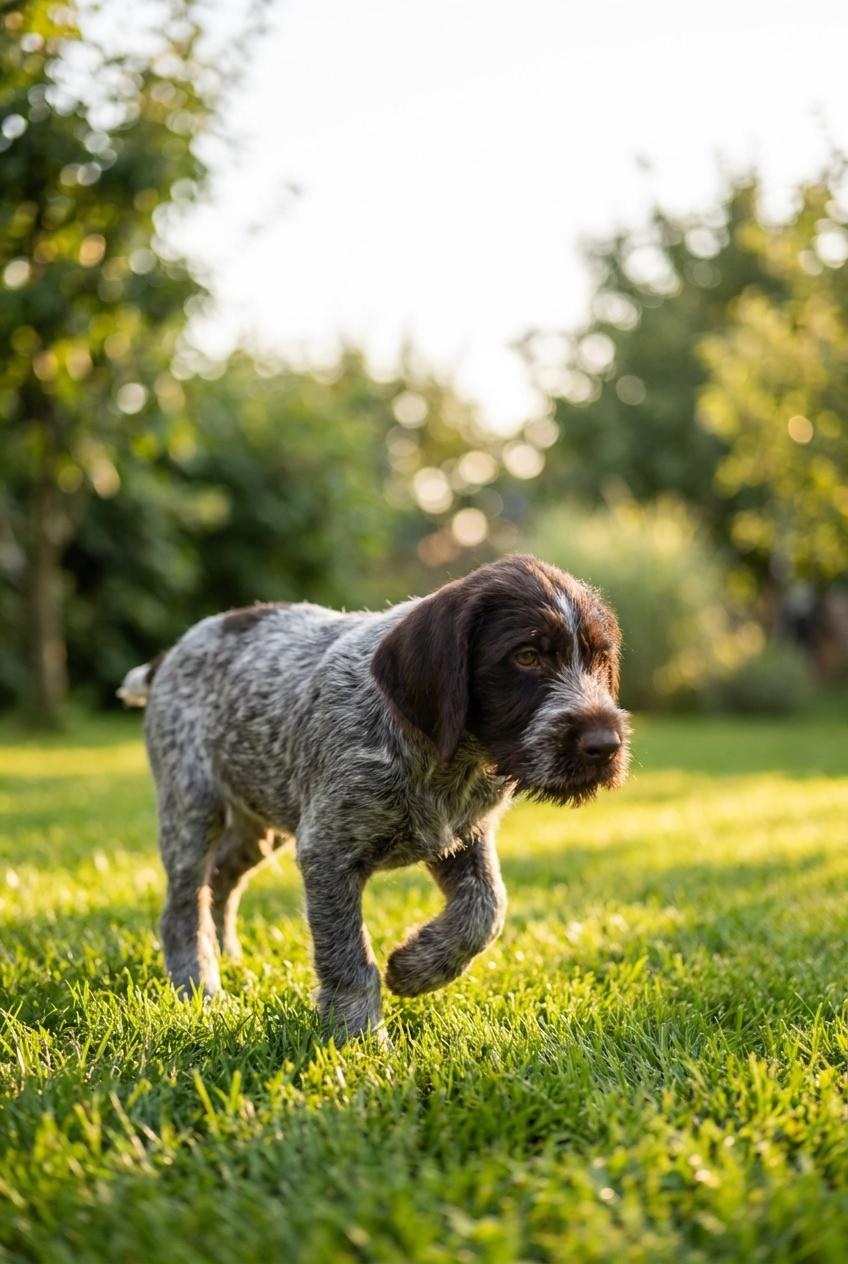
A widely used formula among veterinarians is: age in months + 1 = maximum hours a puppy can hold it during the day. So an 8-week-old (2-month-old) GWP puppy can typically hold their bladder for about 3 hours max during waking hours. At night, puppies can often stretch this by 1-2 additional hours because their metabolism slows during sleep.
Timeline by Age
- 8-10 weeks: Potty breaks every 30-45 minutes while awake; 8-10 trips outside per day
- 10-12 weeks: Every 1-2 hours; 7-8 trips per day
- 3-4 months: Every 2-3 hours; 6 trips per day
- 4-6 months: Every 3-4 hours; 4-5 trips per day
- 6+ months: Every 4-6 hours; 3-4 trips per day
Don’t expect full nighttime bladder control (6-8 hours) until at least 4-5 months of age. Even then, some GWPs need a middle-of-the-night bathroom break until 6 months.
Building Your Potty Train Your German Wirehaired Pointer Puppy Schedule
Consistency is the single biggest factor in successful potty training. GWPs thrive on structure, and an inconsistent schedule confuses them about when and where they’re supposed to go.
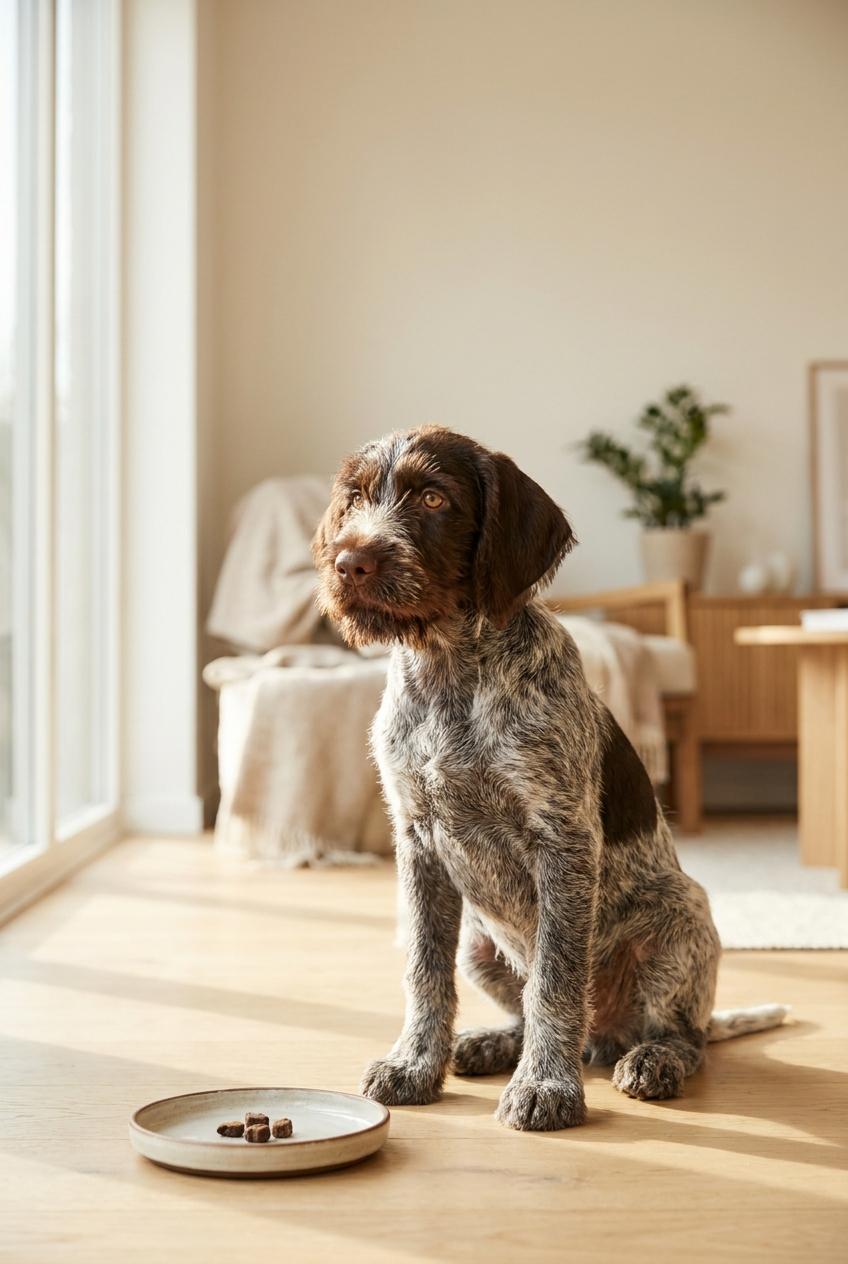
Non-Negotiable Trigger Times
Take your puppy out immediately during these windows, every single time, without exception:
- Within 5 minutes of waking up (including naps)
- Within 10-15 minutes after eating or drinking
- After any play session lasting more than 10 minutes
- Before crating for any period longer than 30 minutes
- Last thing before bed, ideally after a 10-minute wind-down period with no water access
Sample Daily Schedule for a 12-Week-Old GWP
6:00 AM: Wake, immediate potty trip
6:15 AM: Breakfast
6:35 AM: Potty trip #2
7:00 AM: Play/training session (15 min)
7:20 AM: Potty trip #3
9:30 AM: Potty trip #4
12:00 PM: Lunch, then potty trip #5 at 12:20 PM
2:30 PM: Potty trip #6
5:00 PM: Dinner, potty trip #7 at 5:20 PM
7:30 PM: Potty trip #8
9:30 PM: Water cutoff
10:00 PM: Final potty trip before bed
Write this schedule down and post it on your fridge. Every family member needs to follow the exact same timing—inconsistency between household members is one of the top reasons training stalls.
Crate Training as Your Foundation
Crate training isn’t cruel—it taps into a dog’s natural denning instinct and is the fastest path to reliable house training. GWPs, despite their energy, actually settle into crates well when introduced properly.
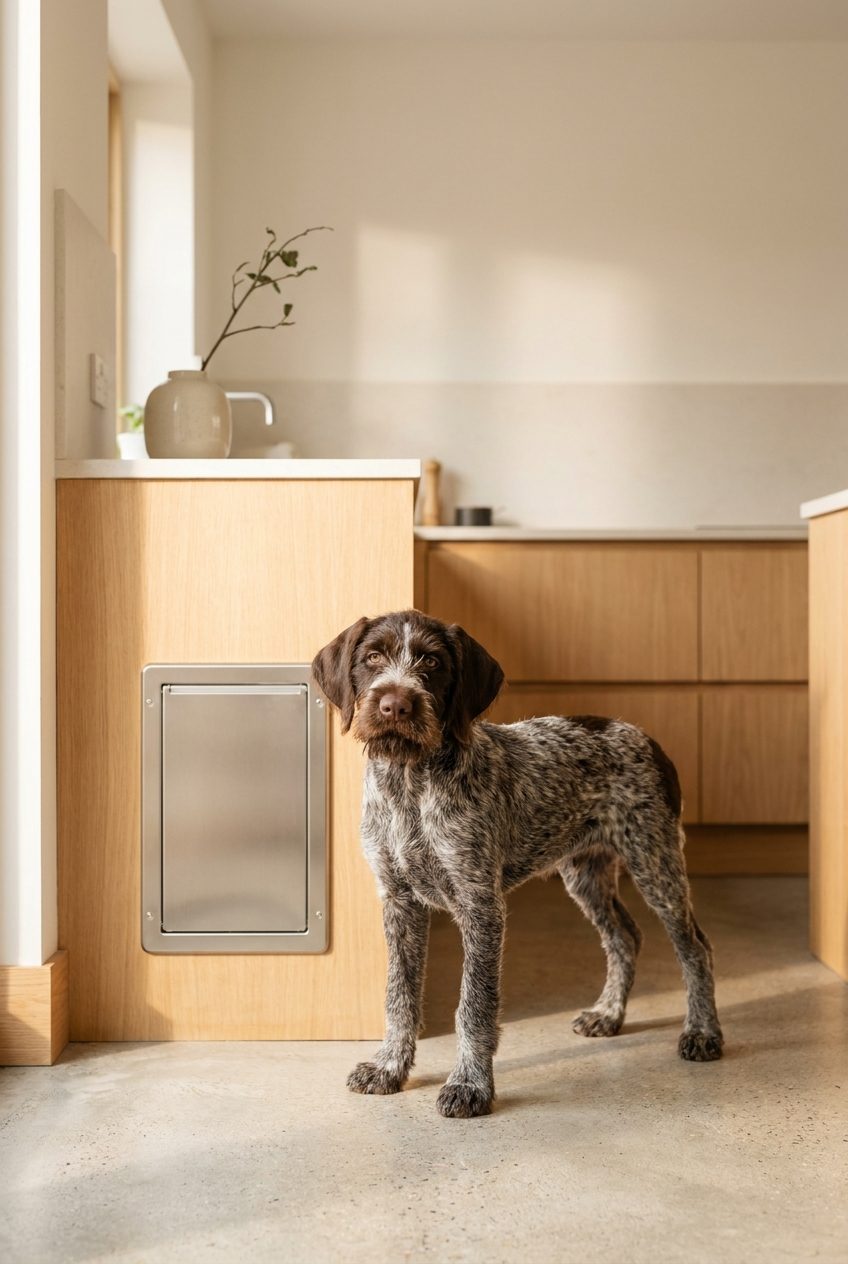
Choosing the Right Crate Size
Buy a crate with a divider panel so you can adjust the size as your puppy grows. A GWP will need a 42-inch crate as an adult (weighing 45-70 pounds), but an 8-week-old puppy should only have access to about 24×18 inches of space. Too much room allows them to potty in one corner and sleep in another—defeating the entire purpose. The MidWest iCrate 42-inch with a divider panel runs about $90-110 and will last through adulthood.
Crate Training Protocol
- Never use the crate as punishment—it should always have positive associations
- Feed meals inside the crate with the door open initially
- Start with 5-10 minute stays while you’re in the room, gradually extending
- Maximum crate time for a puppy under 4 months is 3-4 hours (except overnight)
- Place a worn t-shirt with your scent inside to reduce anxiety
A properly crate-trained GWP puppy will whine or scratch at the door when they need to go out, giving you a clear signal rather than a surprise puddle.
Reading Your GWP’s Potty Signals
GWPs are expressive dogs, but their signals can be subtle if you don’t know what to look for. Catching these cues before an accident happens is what separates fast learners from prolonged struggles.
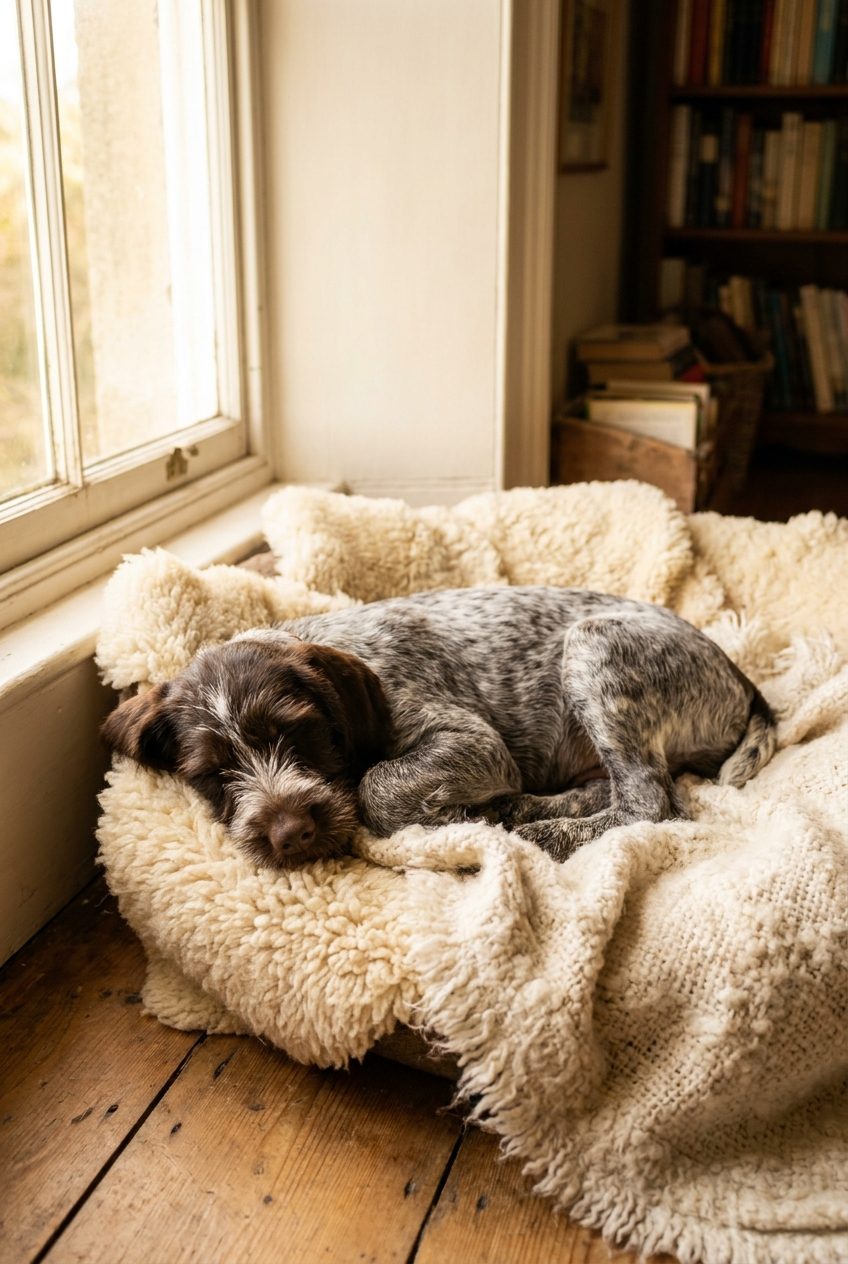
Physical Signs to Watch
Circling in one spot, sudden sniffing at the floor with intense focus, whining paired with pacing, standing by the door and staring at it, or abruptly stopping play and walking away from the group are all classic pre-potty behaviors. GWPs specifically tend to lower their head and sniff in tight circles right before squatting—this is different from their normal exploratory sniffing, which is broader and more relaxed.
The 3-Second Rule
If you notice any of these signals, you have roughly 3-10 seconds before an accident occurs in a young puppy. Don’t walk calmly to grab a leash—scoop the puppy up immediately and get outside. Speed matters more than technique at this stage.
Keep a training journal for the first two weeks, noting the time and behavior right before each potty trip. Within 5-7 days, you’ll start noticing your specific puppy’s individual pre-potty pattern, whether that’s a particular bark pitch or a habit of standing near a specific door.
Indoor vs. Outdoor Training Methods Compared
Some owners start with indoor potty pads before transitioning outside, especially in apartments or cold climates. Here’s how the two approaches stack up for this specific breed.
| Factor | Outdoor-Only Training | Indoor Pad Training |
|---|---|---|
| Time to full reliability | 4-6 weeks average | 6-10 weeks average (plus transition time) |
| Best for GWP temperament | Yes—matches their outdoor drive | Can create confusion about acceptable indoor spots |
| Apartment suitability | Requires 4-6 trips outside daily | More convenient short-term |
| Cost | Minimal (leash, treats) | $15-25/month for pads long-term |
| Long-term reliability | Higher, more consistent | Often requires re-training later |
| Ideal climate | Any, with proper gear | Extreme cold or high-rise living |
For most GWP owners, outdoor-only training produces faster, more permanent results because it aligns with the breed’s natural drive to be outside. If you must use pads temporarily, transition to outdoor training by 12 weeks at the latest to avoid confusing signals.
Common Potty Training Mistakes That Slow Progress
Even dedicated owners make these errors, which can add weeks to the training timeline.

Mistake #1: Punishing Accidents After the Fact
If you find a puddle and scold your puppy 5 minutes later, they cannot connect the punishment to the act of urinating. GWPs are sensitive to tone and may become anxious or start hiding to potty in secret spots instead of learning the right behavior. Only correct if you catch them in the actual act, and even then, use a calm interrupt like “outside!” rather than yelling.
Mistake #2: Inconsistent Enzymatic Cleaning
Regular cleaners like Windex or bleach-based products don’t fully break down the uric acid crystals in urine. Dogs can still smell residual scent markers even when the spot looks and smells clean to humans. Use a true enzymatic cleaner like Nature’s Miracle or Rocco & Roxie ($12-18 per bottle) and saturate the area completely, letting it air dry rather than blotting it up too soon.
Mistake #3: Free-Feeding Instead of Scheduled Meals
Leaving food out all day makes elimination timing unpredictable. Switch to two or three scheduled meals daily so you can anticipate potty needs within a 15-20 minute window afterward. This single change often cuts accident rates by 50% within the first week.
Mistake #4: Expanding Freedom Too Quickly
Owners often reward a few successful days with full house access. GWPs need at least 4-6 weeks of zero accidents before earning unsupervised roaming privileges. Expand territory gradually—one room at a time—rather than all at once.
What If Scenarios: Troubleshooting Setbacks
Even with a solid plan, real-life situations arise. Here’s how to handle the most common curveballs.
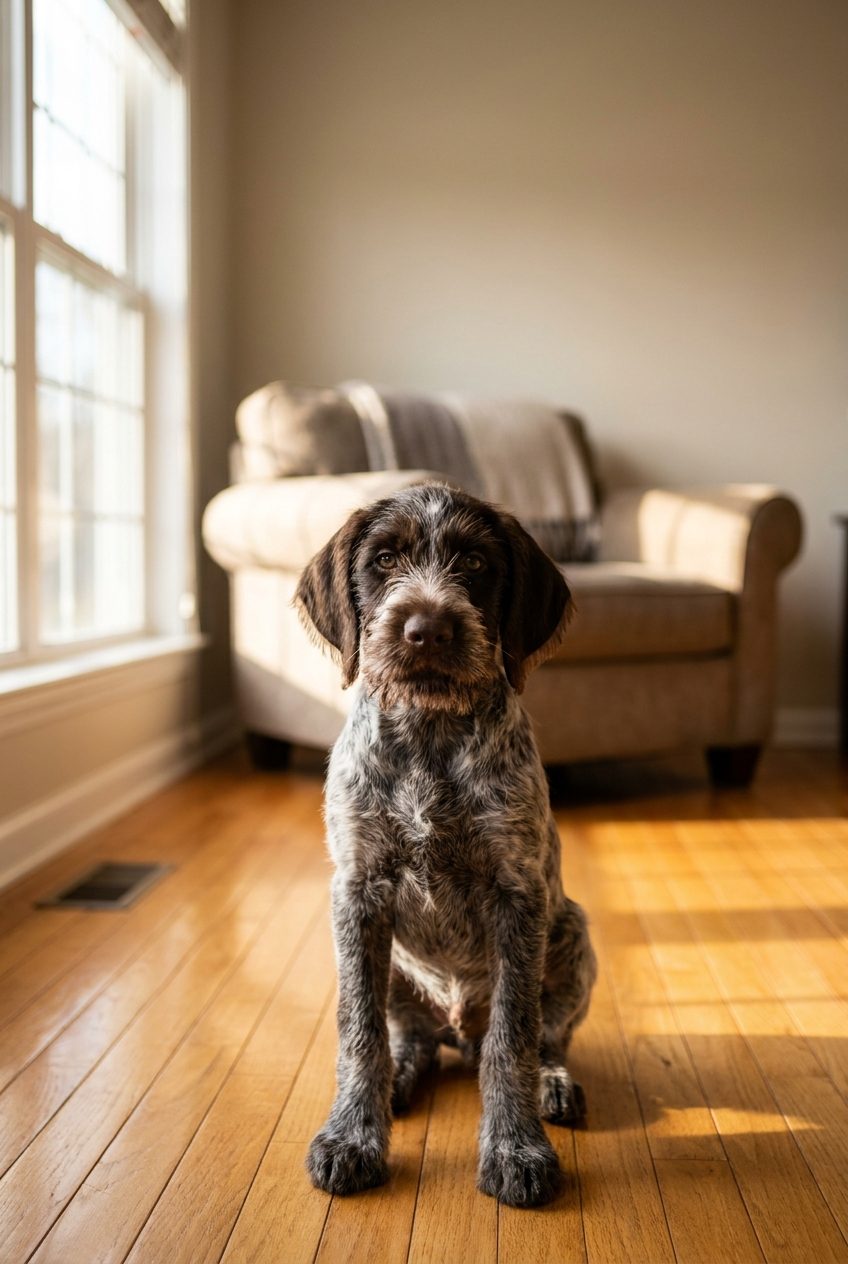
What if my GWP suddenly regresses after being fully trained?
Sudden regression after weeks of success often signals a UTI, especially in female puppies. Schedule a vet visit and request a urinalysis (typically $45-75) before assuming it’s behavioral. If health is ruled out, regression can also follow major changes like moving homes, new pets, or schedule disruptions—simply return to the basic schedule for 1-2 weeks.
What if my puppy only has accidents when left alone?
This usually points to separation anxiety rather than a true potty training gap. Try leaving for very short periods (2-3 minutes) and gradually increasing duration, while providing a stuffed Kong toy ($8-12) to create positive alone-time associations.
What if I work full-time and can’t maintain a 2-hour schedule?
Hire a midday dog walker (average $20-25 per visit) or use a puppy playpen with a designated potty pad area for young puppies under 12 weeks. This isn’t ideal long-term but bridges the gap until your puppy’s bladder capacity catches up around 4-5 months.
What if my GWP marks territory indoors even though they’re potty trained?
Marking is a different behavior than lack of house training and is common in intact males starting around 6-9 months. Neutering (typically $200-500 depending on location) often resolves this, combined with thorough enzymatic cleaning of previously marked spots.
Weather and Seasonal Considerations for This Breed
GWPs were developed in Germany for cold, wet hunting conditions, so they generally tolerate weather better than short-haired breeds—but puppies still need consideration.

Cold Weather Training
Their wiry double coat provides decent insulation, but puppies under 4 months lack full coat development and can get cold quickly in temperatures below 20°F. Keep outdoor sessions brief and functional during extreme cold—go out, do business, come back in—rather than lingering for play.
Hot Weather Adjustments
In summer heat above 85°F, schedule potty breaks during cooler parts of the day (early morning, evening) and always check pavement temperature with your hand before walks—if it’s too hot for your palm for 5 seconds, it’s too hot for paws.
Rain and Mud
Since GWPs are bred for wet field conditions, most genuinely don’t mind rain once acclimated. If your puppy resists going out in rain, use an umbrella held nearby (not over them) and offer high-value treats like small pieces of cooked chicken to build positive rain associations within 1-2 weeks.
Tools and Products Worth the Investment
The right equipment removes guesswork and speeds up the entire process.
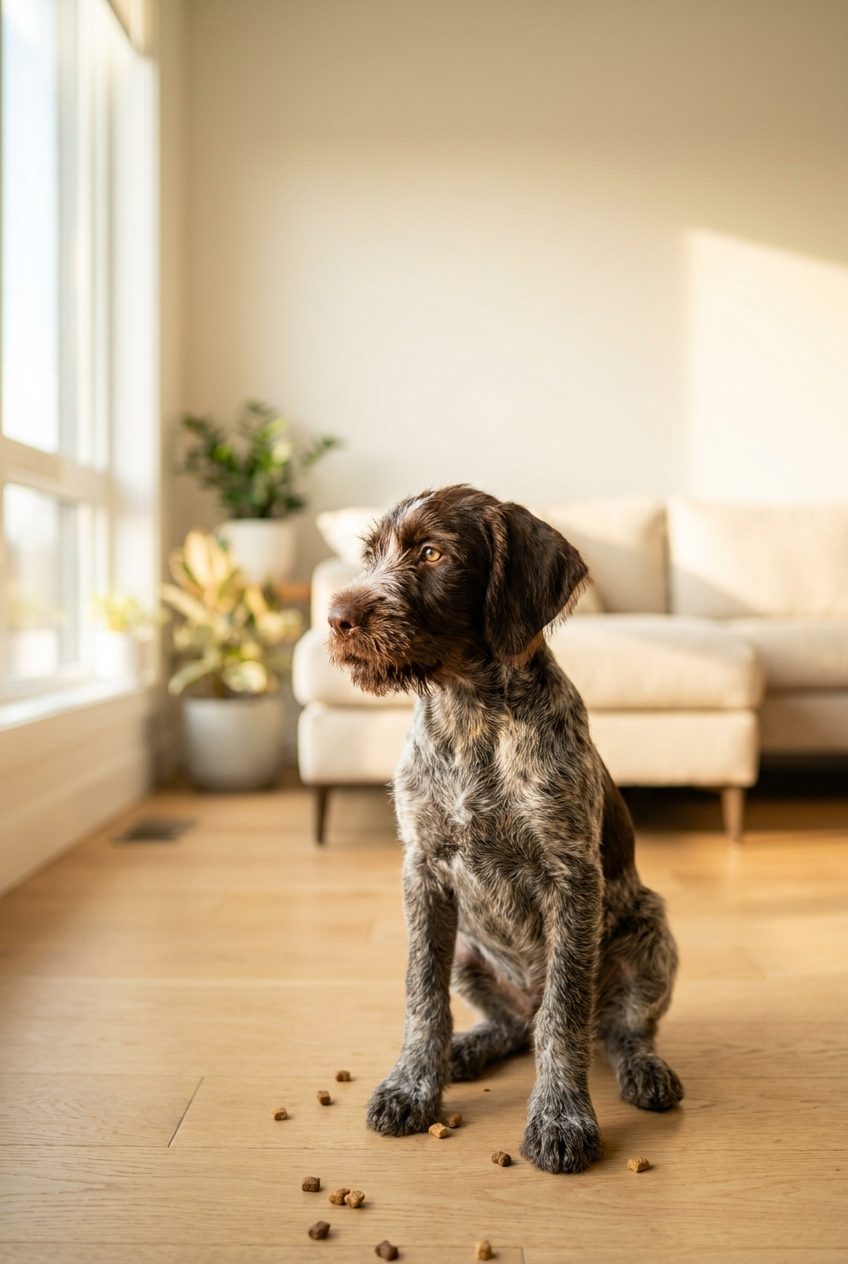
- Enzymatic cleaner: Nature’s Miracle or Angry Orange ($12-20)
- Adjustable crate: MidWest iCrate 42″ with divider ($90-110)
- Potty bells: Hang bells on the door at nose height so your puppy learns to ring them—most GWPs pick this up within 2 weeks with consistent guidance
- Long-line leash: A 15-foot leash ($15-20) for supervised yard access without full off-leash risk
- High-value treats: Freeze-dried liver treats ($10-15) reserved exclusively for potty success, never used for other training
- Puppy playpen: A 4×4 foot exercise pen ($40-60) for supervised indoor freedom during transition phases
Skip pheromone sprays and “potty training scent” products marketed for puppies—there’s limited evidence they speed up training, and the money is better spent on quality enzymatic cleaner.
Signs Your GWP Puppy Is Fully Potty Trained
Don’t declare victory too early. True reliability means your puppy meets all of these benchmarks consistently for at least 2 consecutive weeks:
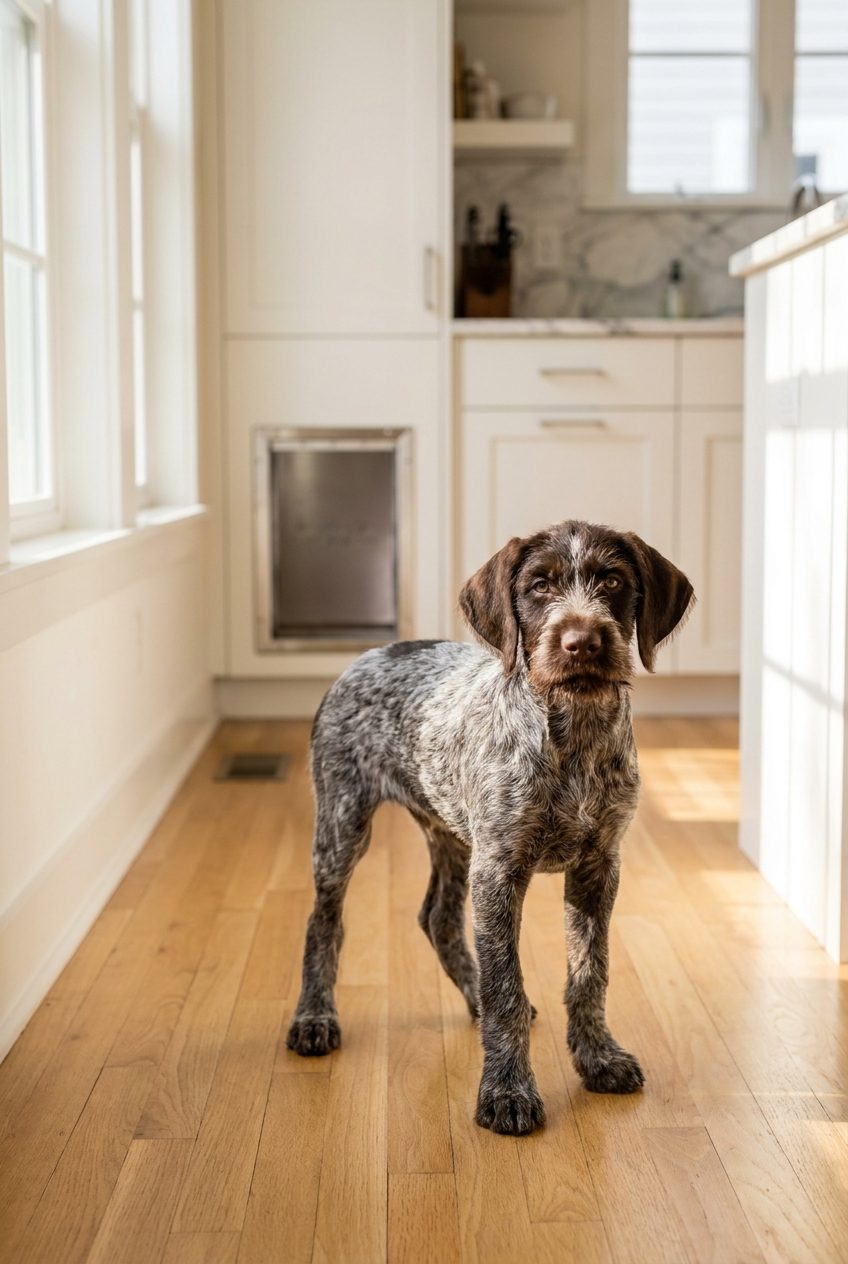
- No accidents even when left alone for 4+ hours
- Actively goes to the door or uses potty bells without prompting
- Holds it through the night (7-8 hours) without exception
- Doesn’t have accidents during high-excitement moments like guests arriving
- Can transition between rooms in the house without supervision
Most GWPs hit all five benchmarks between 4-6 months of age with consistent training, though some individual dogs take until 7-8 months, particularly if training started later or was inconsistent early on.
Potty training a German Wirehaired Pointer isn’t about finding one magic trick—it’s about stacking small, consistent decisions day after day until the behavior becomes automatic for both of you. Start today by writing out your specific schedule based on your puppy’s current age, buy the right-sized crate, and commit to the next 30 days without shortcuts. The dog who’s accident-free at 6 months is simply the dog whose owner didn’t skip steps at 10 weeks.