Stop Dalmatian Puppy Biting with These Training Tips: A Week-by-Week Plan That Works
A Dalmatian puppy can draw blood from your hands by week nine, and most owners respond in the one way that makes it worse: they yell, flick the nose, or pull away fast. If you want to stop Dalmatian puppy biting with these training tips, you need a plan built around how this specific breed is wired, because a Dalmatian is not a Labrador in a spotted coat. This guide gives you the exact steps, timelines, products, and fixes.
Why Dalmatian Puppies Bite More Than You Expected
Every puppy mouths things. A Dalmatian does it with extra intensity because the breed was built for stamina. Dalmatians were bred to trot beside horse-drawn carriages for miles, guarding the team and the cargo. That means a dog with high energy, strong jaws, and a stubborn streak.
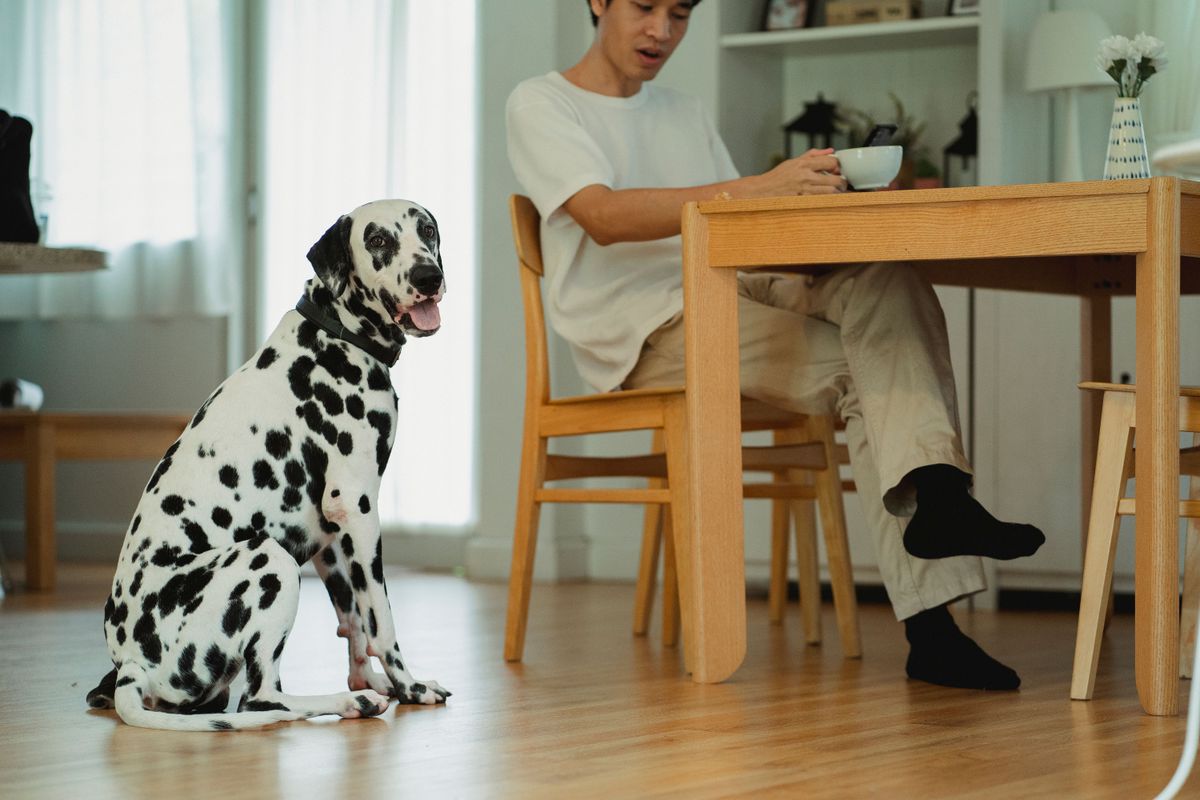
Biting at this age is normal, and it serves three purposes. Exploration: puppies have no hands, so the mouth is how they learn textures. Play: littermates bite each other constantly, and your hands are the replacement. Teething: puppies lose 28 baby teeth and grow 42 adult teeth between roughly 12 and 28 weeks, and chewing relieves the ache.
What Dalmatian-specific traits add to the problem
Dalmatians are slow to mature mentally. Many stay puppy-minded until 2 to 3 years old. They are also sensitive: harsh corrections often cause stubborn shutdown or a more frantic mouthy response, not obedience.
Finally, they are prone to overstimulation. A Dalmatian puppy who has been playing for 20 minutes without a break will often start biting harder, not softer. Recognizing that pattern early saves you weeks of frustration.
But what if my puppy is only biting me and not other people? That is common. Hands that have been used as toys during play teach the puppy that you are the preferred chew target. The training below fixes it, but everyone in the household must follow the same rules.
Bite Inhibition: How to Teach Your Puppy a Soft Mouth in 4 Steps
Bite inhibition means a dog learns to control how hard it bites. Adult dogs who never learned it can cause serious injury even in play. The goal is not zero mouth contact at first. The goal is a gradually softer mouth, then no teeth on skin at all.
- Let the puppy mouth your hand during calm play. Use a quiet moment, not a wild one. Success looks like gentle gumming with no pain.
- React to hard bites with a sharp, high “Ouch!” Say it once, then pull your hand away slowly and go still. Success: the puppy pauses and looks at you. What if the yelp excites them more? Some Dalmatians treat a squeal as a game. If so, skip the sound and go silent and still instead.
- Stop play for 10 to 20 seconds. Turn away or step over a baby gate. Success: the puppy realizes biting ends the fun.
- Resume play and repeat. After several repetitions, require softer mouthing to continue. Then require none.
Expect this to take 2 to 4 weeks of consistent practice, with 5 to 10 repetitions per play session. Progress is not a straight line, and a bad evening does not mean the training failed.
The Redirect Method: Swap Hands for Chew Toys in Under 5 Seconds
Redirection works because it gives the puppy something to do instead of just telling it what not to do. The key is speed. If you wait 10 seconds, the puppy has already rehearsed the biting.
Step-by-step redirection
- Keep a toy within arm’s reach in every room where you spend time. Stash one in your pocket on walks.
- The moment teeth touch skin, say “Ah-ah” in a flat tone and offer the toy.
- Wiggle the toy to make it more interesting than your hand.
- When the puppy bites the toy, praise warmly with “Yes, good!” and play for 30 to 60 seconds.
Success looks like the puppy choosing the toy within 2 or 3 seconds of being offered. Early on, you may need to repeat this 20 or more times a day. That is normal.
But what if the puppy ignores the toy and keeps going after my hand? Try a different texture. A frozen rubber toy, a rope, and a plush squeaker each appeal differently, and Dalmatians often have strong preferences. If nothing works, calmly end the session and use a timeout, covered below.
Toys that work for teething Dalmatians
Good options include a KONG Puppy toy (around $10 to $14), stuffed and frozen overnight; a Nylabone Puppy Teething ring (around $6 to $9); and a braided rope toy sized for medium breeds. Rotate toys every few days so they stay novel.
How to Use Timeouts Correctly: The 30-Second Reset
Timeouts are not punishment. They are a clear signal that biting makes the good stuff disappear. Used well, they work within days. Used badly, they confuse the puppy.
Here is the exact process. When your puppy bites hard after one “Ah-ah” and one redirect attempt, calmly stand up and leave the room, or place the puppy in a pen or behind a baby gate. Keep it to 30 to 60 seconds. Do not speak, scold, or make eye contact.
Then let the puppy back out and resume a calm activity. Success looks like the puppy settling quicker each time and approaching you more gently. Most Dalmatian puppies show clear improvement after 3 to 5 days of consistent timeouts.
What if my puppy screams or howls during the timeout? Wait for 3 to 5 seconds of quiet before letting them out. If you release them mid-tantrum, they learn that noise opens the door. If the screaming lasts over a minute, shorten future timeouts and make sure the puppy is not overtired.
Never use a crate for timeouts. The crate should stay a safe, positive place. Use an exercise pen (a 24-inch-high, 8-panel pen costs roughly $40 to $60) or a closed bathroom instead.
Exercise and Mental Work: The Hidden Fix for Dalmatian Puppy Biting
Many biting problems are really energy problems. A tired Dalmatian puppy bites less. But exercising a puppy correctly matters, because over-exercising damages growing joints.
A common guideline is 5 minutes of structured exercise per month of age, twice a day. So a 3-month-old gets about 15 minutes per session. A 6-month-old gets about 30. Free play in a fenced yard does not count the same as forced running, and you should avoid jogging with a puppy until growth plates close, usually around 12 to 18 months.
Mental work tires a Dalmatian faster than physical work. Try these:
- Snuffle mats: scatter 1/4 cup of kibble in a mat (around $15 to $20). Ten minutes of sniffing equals roughly 30 minutes of walking.
- Puzzle feeders: swap the food bowl for a Outward Hound Nina Ottosson puzzle or a stuffed KONG at mealtimes.
- Short training bursts: three 5-minute sessions per day teaching sit, down, and hand targeting.
- Scheduled naps: puppies need 18 to 20 hours of sleep daily. Enforce a crate or pen nap every 2 hours.
What if my puppy still has endless energy? Check the schedule first. Most “hyper” puppies are actually overtired and acting wild. A mandatory 30-minute nap in a quiet pen often ends the biting spree within minutes.
The Witching Hour: Handling the 5 PM to 8 PM Biting Spree
Almost every puppy owner reports a daily burst of frantic biting, usually in the early evening. This is not misbehavior. It is overtiredness combined with built-up energy.

Plan for it. About 30 minutes before it usually starts, take these steps in order:
- Do a 10-minute training session with high-value treats such as freeze-dried liver or small cubes of cooked chicken.
- Give a stuffed, frozen KONG in the pen or crate.
- Dim the lights and lower your own energy and voice.
- Allow 45 to 60 minutes of rest before the next play session.
Success looks like the puppy chewing the KONG for 10 to 15 minutes and then dropping into sleep. If the puppy refuses to settle, try covering the pen partially with a blanket to reduce stimulation.
What if the biting gets worse in the evening even with a plan? Look at the rest of the day. A puppy who got only 12 hours of sleep or skipped the afternoon nap will crash harder at night. Track naps for three days and you will usually find the gap.
Comparison: Which Anti-Biting Method Fits Your Situation?
Different methods fit different puppies and households. Use this table to match the approach to your situation.
| Method | Speed of Results | Effort Level | Best For |
|---|---|---|---|
| Yelp and Withdraw | 2 to 4 weeks | Low | Puppies under 12 weeks who respond to sound |
| Redirection to Toys | 1 to 3 weeks | Medium | Teething puppies and all-around daily use |
| 30-Second Timeout | 3 to 7 days | Medium | Puppies who escalate when excited or ignore yelps |
| Exercise and Enrichment | Immediate to 1 week | High | High-energy Dalmatians and evening biting sprees |
| Professional Trainer | 2 to 6 weeks | Low for you, $100 to $200 per session | Severe biting, children in the home, or no progress after 3 weeks |
My recommendation: combine redirection and timeouts for the first two weeks, add enrichment daily, and call a trainer only if you see no improvement by week three. Most Dalmatian owners do not need to hire help, but those with toddlers should consider it sooner.
5 Mistakes That Make Dalmatian Puppy Biting Worse
These errors are common, understandable, and fixable.
- Using hands as toys. Wrestling with your hands teaches the puppy that skin is fair game. Fix it: play only with toys like a flirt pole or tug rope, and keep hands out of the puppy’s mouth.
- Physical corrections. Flicking the nose, holding the mouth shut, or alpha-rolling the puppy damages trust and can cause fear biting. Dalmatians are especially sensitive. Fix it: use withdrawal of attention instead.
- Inconsistent rules. If one family member allows nipping and another punishes it, the puppy cannot learn. Fix it: hold a 10-minute family meeting, agree on the plan, and post it on the fridge.
- Skipping naps. An overtired puppy bites harder and longer. Fix it: set phone reminders for scheduled sleep every 2 hours.
- Expecting instant results. Most owners quit at day 4 when the biting seems unchanged. Fix it: commit to a full 14 days before judging the method.
A sixth mistake worth a mention is waiting until the puppy is older. Biting rarely disappears on its own, and a 25-pound, 5-month-old Dalmatian with sharp adult teeth coming in is far harder to manage than an 8-week-old.
A Week-by-Week Plan to Stop Dalmatian Puppy Biting
Training works best when you have a schedule. Here is a realistic timeline for a puppy starting at 8 to 10 weeks old.
Week 1: Set the foundation
Introduce the “Ah-ah” marker and redirection. Set up a pen and buy two or three chew toys. Aim for 10 to 15 redirections a day. Expect biting to stay the same or even increase slightly. That is normal.
Week 2: Add timeouts
Introduce the 30-second timeout after the redirect fails. Begin scheduled naps every 2 hours. Add one 10-minute snuffle mat or KONG session in the evening. By the end of the week, most puppies bite noticeably less.
Weeks 3 and 4: Raise the standard
Stop allowing any teeth on skin, even soft ones. Reward calm, gentle licking and nose touches. Practice handling exercises such as touching paws and ears for 30 seconds with treats.
Weeks 5 to 8: Generalize
Practice with visitors, children (supervised), and in different rooms. Enroll in a puppy socialization class, typically $120 to $200 for a 6-week course, once your vet clears vaccinations. Look for programs using reward-based methods only.
What if my puppy is already 5 or 6 months old? The same plan works, but expect it to take longer, since adult teeth are coming in and the habit is more established. Add extra chew options and be strict with timeouts.
Your Biggest Worries About Dalmatian Biting, Answered
“Is my Dalmatian aggressive?” Almost certainly not. Play biting is loose and bouncy, with a relaxed body. Aggression looks different: stiff posture, hard stare, growling over food or toys, and bites that break skin deeply with no play context. If you see those signs, contact a veterinary behaviorist.
“Will my puppy grow out of it?” Most puppies reduce mouthing around 5 to 6 months as teething ends, but only with consistent training. Without it, many keep nipping into adulthood.
“Do I have a deaf puppy that can’t hear my cues?” Roughly 30 percent of Dalmatians have some hearing loss, and about 8 percent are fully deaf in both ears. If your puppy does not react to a clap behind them, ask your vet about a BAER test, typically $100 to $300. Deaf Dalmatians can be trained very effectively with hand signals and a vibrating-collar-free approach, such as flashing a light or tapping the floor.
“What about children?” Never leave a puppy and a child under 8 unsupervised. Teach kids to stand still like a tree and give the puppy a toy instead of squealing and running, which triggers chase biting.
“When should I call a professional?” Call a certified trainer (look for CPDT-KA credentials) if there is no progress after three weeks, the puppy breaks skin regularly, or anyone in the home feels afraid of the dog.
Do This Tonight: Your First 24 Hours of Bite Training
Reading about training does nothing; practicing it does. Tonight, put one chew toy in every room your puppy uses, and keep a spare in your pocket. Write “Ah-ah, redirect, timeout” on a sticky note and put it on the fridge so every family member follows the same script. Then, tomorrow morning, time the first nap: when your puppy has been awake for 90 minutes, place them in the pen with a frozen KONG, even if they seem full of energy. Track how many times they bite you that day, and do it again on day seven. The number will tell you whether it is working.