Crate Train Your Chesapeake Bay Retriever Puppy Like a Pro: A Week-by-Week Plan
Most Chesapeake Bay Retriever owners wreck crate training in the first 72 hours, and they do it with kindness. They rescue the howling puppy at 2 a.m., and the Chessie learns that volume works. If you want to crate train your Chesapeake Bay Retriever puppy like a pro, you need a plan built for this breed’s brain: smart, strong-willed, and stubborn enough to outlast you.
This guide gives you the exact crate size, the daily schedule, the step-by-step introduction, and the fixes for every problem you will hit. Follow it and most Chessie puppies settle into their crates within 2 to 3 weeks.
Why Chessies Need a Different Crate Plan Than a Labrador
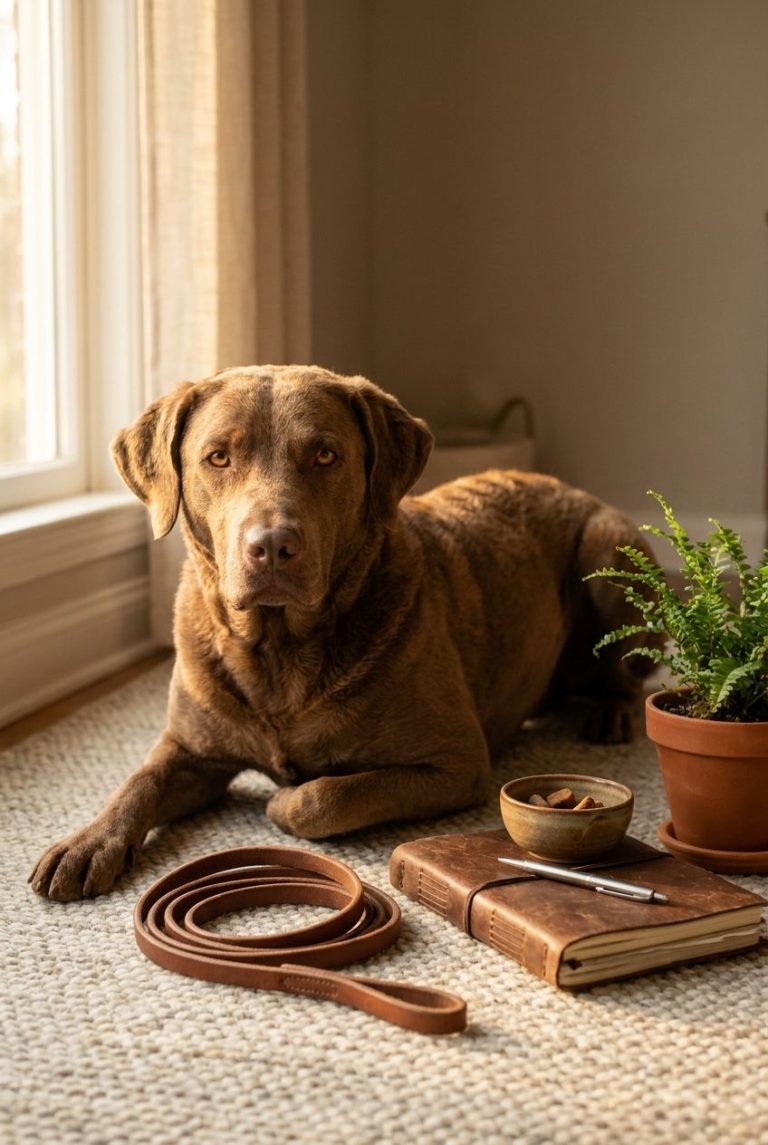
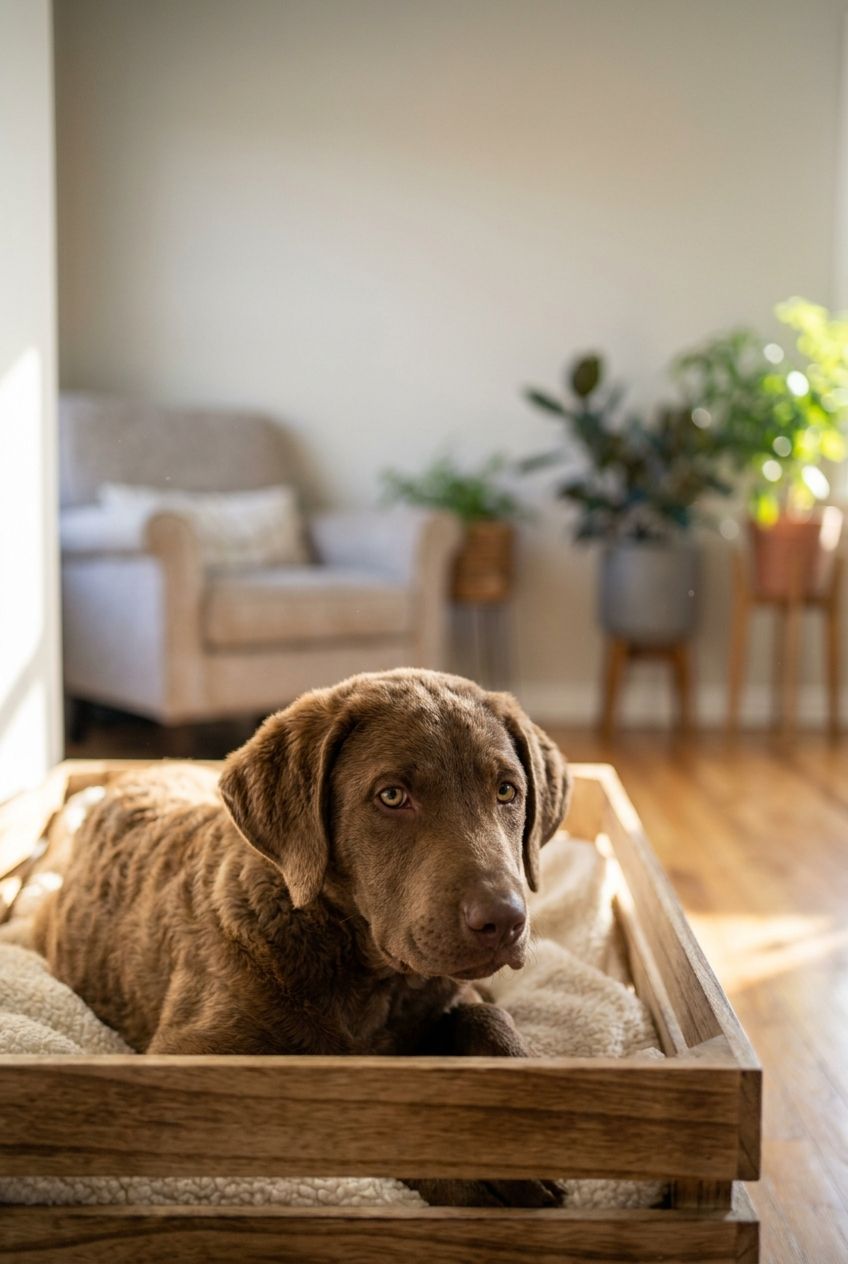
The Chesapeake Bay Retriever was bred in the 1800s to retrieve ducks from freezing Chesapeake Bay water, sometimes for hours. That job demanded independence, endurance, and a stubborn streak. The same traits that made them great hunters make them tricky crate students.
A Labrador often wants to please you right now. A Chessie wants to know what is in it for them. They are loyal and deeply bonded, but they test boundaries more than most retrievers, and they remember when a tantrum paid off.
What this means for crate training
- Consistency beats cleverness. One person caving to whining resets days of progress.
- Rewards must be meaningful. Dry kibble may not cut it; use pea-sized pieces of chicken, cheese, or freeze-dried liver.
- Exercise matters. A Chessie puppy who has not burned energy will treat the crate as a prison. A tired one treats it as a bedroom.
- Early structure pays off. Adult males reach 65 to 80 pounds and are powerful, so manners learned at 8 weeks save you at 8 months.
But what if your puppy seems too independent to care about treats? Try mealtime training: feed the whole meal inside the crate. Food is the one reward every Chessie respects.
The Right Crate: Exact Sizes, Prices, and What to Buy
The wrong crate causes more accidents than any training mistake. A crate that is too large lets your puppy pee in one corner and sleep in another. A crate that is too small is cruel and gets outgrown in weeks.
The right answer for a Chesapeake is a 42-inch crate with a divider panel. Adults typically need 42 inches long, roughly 28 inches wide and 30 inches tall. The divider lets you shrink the space to about 24 inches at 8 weeks and expand it as your puppy grows, so you buy once.
Crate options compared
| Crate Type | Typical Price | Durability | Portability | Best For |
|---|---|---|---|---|
| Wire crate with divider (e.g., MidWest Ultima Pro 42″) | $75-$110 | Good; fine for most puppies | Folds flat, moderate weight | Home use, growing puppies, best overall value |
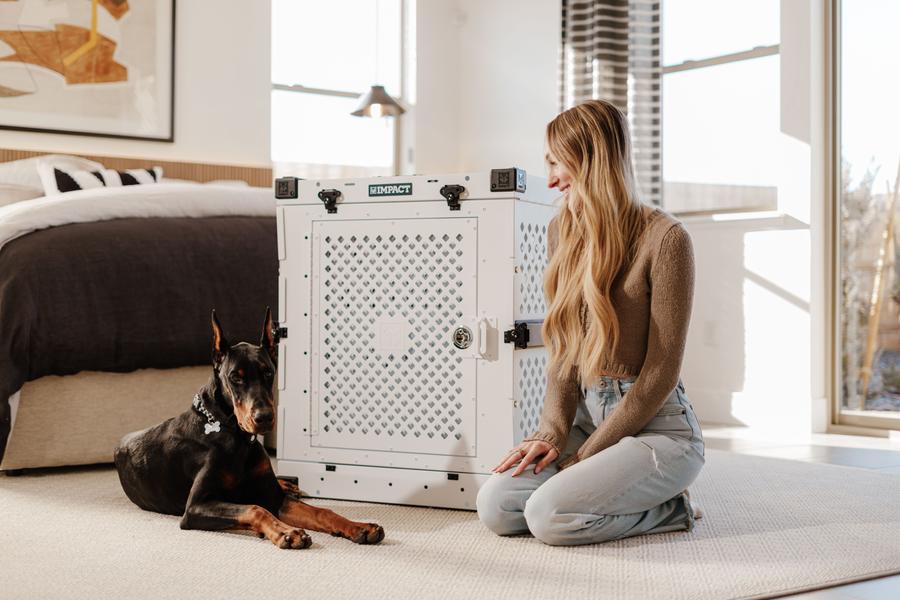
| Heavy-duty steel (e.g., Impact or Lucky Dog) | $180-$350 | Excellent; escape-resistant | Heavy, hard to move | Escape artists and chewers who bend wire |
| Plastic airline-style (e.g., Petmate Vari Kennel Ultra, Giant) | $90-$140 | Good; cozy den feel | Easy to carry, airline-approved | Car travel, flying, anxious puppies who like enclosed spaces |
Recommendation: Start with the wire crate with divider for your home. Add a plastic crate later for car rides. If your Chessie bends wire or bloodies their nose escaping, upgrade to heavy-duty steel.
Add a washable crate pad ($20-$40), but skip bedding for the first two weeks if your puppy shreds it. A bare tray beats a swallowed blanket.
Your Setup Checklist: What to Have Ready Before Puppy Comes Home
Prepare before day one. Scrambling for supplies at 9 p.m. is how bad habits begin. Gather these items first:
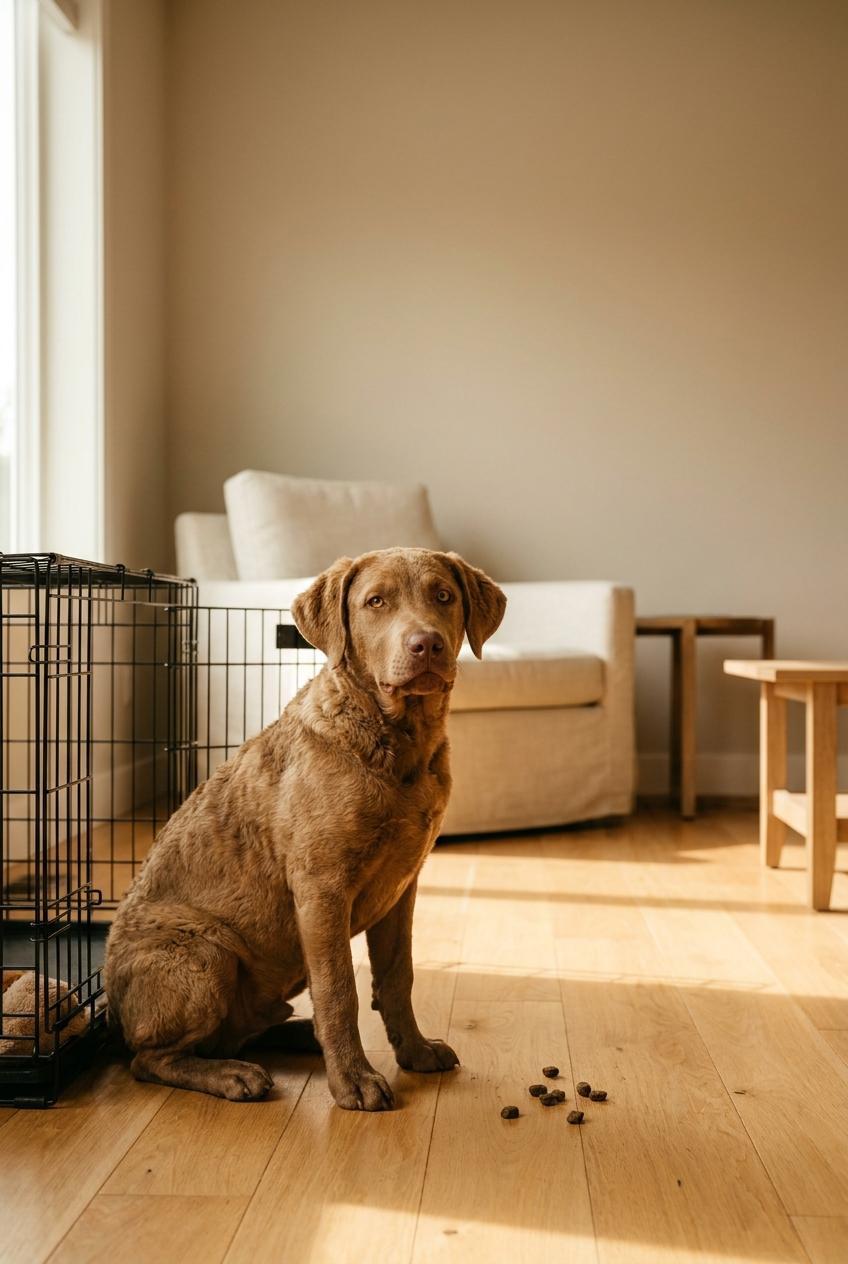
- The crate and divider. Set the divider so your puppy can stand, turn around, and lie down, with no more than a few extra inches of room.
- A crate cover. A breathable cover or a light blanket over three sides creates a den. Leave the front open.
- High-value treats. Buy a small bag of freeze-dried chicken or soft training treats, about $8-$12.
- Safe chew toys. A Kong Puppy toy (about $10-$14) stuffed with wet food and frozen for 4 hours is the best crate toy you can own.
- Enzyme cleaner. Nature’s Miracle or Rocco and Roxie (about $12-$20) removes odor so accidents do not become a bathroom target.
- A cue word. Choose “kennel” or “bed” and use only that. Everyone in the house must use the same word.
- A timer or phone alarms. You will need them for potty breaks.
Place the crate in the room where your family spends the most time, such as the living room or kitchen. At night, move it next to your bed. Puppies separated from the family at 8 weeks panic. Your presence is the best sedative you have.
But what if your house has no quiet corner? Use a baby gate or exercise pen to create a defined area around the crate so your puppy is near you but not underfoot.
How to Introduce the Crate in Under 30 Minutes Without Tears
The first introduction sets the emotional tone. Your goal is simple: the crate predicts good things. Never force your puppy inside, and never use the crate as punishment.
Follow these steps in order:
- Prop the door open and toss 5 treats inside, one at a time, deeper each time. Success looks like your puppy walking in voluntarily and walking back out.
- Add your cue word as they step in: say “kennel” in a happy voice, then treat. Repeat 10 times over 5 minutes.
- Feed the next meal inside. Place the bowl at the back. If your puppy refuses to go that far, set it at the entrance and move it back an inch each meal.
- Close the door for 10 seconds while they eat, then open it before they finish. Extend to 30 seconds, then 1 minute, over several meals.
- Sit beside the crate with the door closed for 2 to 5 minutes, then let them out calmly, with no big celebration.
Keep early sessions to 3 or 4 a day, each 5 to 10 minutes. Stop on a good note while your puppy is still relaxed.
But what if your puppy screams the second the door closes? You moved too fast. Go back to the last step where they stayed calm, shorten the duration, and rebuild. Do not open the door while they are mid-scream; wait for even a 2-second pause, then open it.
The Daily Crate Schedule for an 8-Week-Old Chessie Puppy
Puppies cannot hold their bladder for long. The old rule of thumb is one hour per month of age, plus one, but most 8-week-olds cannot reliably hold it more than 2 hours while awake and active. Follow a rhythm of eat, play, potty, sleep, repeat.
A sample day
- 6:30 a.m.: Straight outside to potty. Reward the second they finish.
- 7:00 a.m.: Breakfast in the crate, then 15 minutes of play, then potty.
- 8:00 a.m.: Crate nap for 1.5 to 2 hours.
- 10:00 a.m.: Potty, play, short training session.
- 12:00 p.m.: Lunch, potty, crate nap.
- 3:00 p.m.: Potty, supervised play, a short walk around the yard.
- 6:00 p.m.: Dinner, potty, family time.
- 9:30 p.m.: Final potty, then bed in the crate.
- 2:00 a.m.: One potty trip for the first 2 to 3 weeks. Keep it silent and boring.
Puppies sleep 18 to 20 hours a day, so most of their time should be crate naps. If your puppy is wired and nipping, they are probably overtired, not under-stimulated.
Keep a printed schedule on the fridge so every family member follows the same plan.
Crate Training Timeline: What to Expect Week by Week
Expect progress in stages, not in a straight line. Chessies often have a good week followed by a hard one, usually around the 4-month mark when adolescence hits.
Weeks 1-2: Building the foundation
Focus on positive association and the night routine. Expect 1 to 2 night wake-ups and some protest whining for 3 to 7 minutes at bedtime. Crate durations stay short: 15 to 60 minutes while you are home.
Weeks 3-4: Stretching the time
Most puppies now sleep 5 to 6 hours at night. Start practicing short absences: leave the room for 5 minutes, then 15, then 30. Always return when your puppy is calm, not mid-bark.
Weeks 5-8: Real independence
By 12 to 16 weeks, many Chessies handle 3 to 4 hours in the crate during the day. You can begin leaving the house for short errands of 20 to 45 minutes.
Months 4-6: The testing phase
Adolescent Chessies may resist the crate, rattle the door, or suddenly have accidents. Hold your standards. Increase exercise, add a daily 20-minute training session, and keep the crate boring and predictable.
But what if you are on week 6 and still seeing nightly accidents? Check for a urinary tract infection with your vet, shorten the interval between potty breaks, and pick up water 2 hours before bedtime.
5 Common Mistakes That Wreck Crate Training (and How to Fix Them)
Most crate training failures trace back to a handful of avoidable errors. Here are the ones that cost owners the most time.

- Letting the puppy out while whining. You just taught a smart dog that noise opens the door. Fix: Wait for a 3-second quiet window, then open the door. Gradually extend the quiet time.
- Using the crate as punishment. If your puppy chewed a shoe and you drag them to the crate angrily, the crate becomes a threat. Fix: Keep it neutral. Calmly place them inside with a chew when you need a reset.
- Buying a crate that is too big. A spacious crate invites accidents. Fix: Use the divider so your puppy has room to stand, turn, and lie down, and nothing more.
- Skipping exercise before crate time. A bored, energetic Chessie will bark and chew bars. Fix: Do 15 to 20 minutes of play or training before every long stretch.
- Crating too long too soon. Eight hours in a crate at 10 weeks causes accidents, anxiety, and mistrust. Fix: Arrange a midday potty break, a dog walker ($15-$25 per visit), or a trusted friend.
Fix any one of these and you will usually see improvement within 3 to 5 days.
Stop Whining, Barking, and Chewing: Troubleshooting Real Problems
Every Chessie puppy protests at some point. The key is figuring out why before you react.
Whining at night
First, rule out needs: potty, hunger, discomfort. If those are covered, ignore attention-seeking whining. A ticking clock or white noise machine can help, and placing the crate by your bed lets you reassure your puppy with a quiet hand through the bars.
Barking during the day
Practice “quiet” by rewarding silence. Say the cue, wait for 2 seconds of calm, then treat. Extend the silence gradually. Chessies can be vocal and protective, so early training matters.
Chewing the crate or bedding
Remove bedding temporarily and provide a frozen Kong. Give a durable chew like a Nylabone Power Chew only under supervision. If your dog is bending bars, switch to heavy-duty steel.
Soiling the crate
This usually means too much time, a crate that is too big, or lingering odor. Clean with enzyme cleaner, shrink the space, and shorten intervals between breaks.
Persistent distress, such as drooling, panting, or injuring themselves trying to escape, signals separation anxiety rather than normal protest. Call your vet or a certified trainer rather than pushing through.
Answering Your Biggest Worries: “What If…” Scenarios
Owners often hesitate over crate training because of guilt or doubt. Here are the honest answers.
“Isn’t a crate cruel?”
No. Dogs are descended from den animals, and a properly introduced crate becomes a safe retreat. It becomes cruel only when it is overused, used as punishment, or a puppy is left in it for excessive hours.
“What if I work full-time?”
A puppy under 6 months cannot be crated for a full 8-hour workday. Arrange a midday visitor, a dog walker, or a puppy daycare ($30-$50 per day). Alternatively, use an exercise pen with a potty area for the first few months.
“What if my puppy hates the crate no matter what?”
Go back to basics. Feed all meals inside, use the cover, and shorten sessions. If your puppy still panics after 2 to 3 weeks of patient work, talk to your vet about possible anxiety and consider a certified trainer.
“What if my adult Chessie was never crate trained?”
You can still do it. Follow the same steps, but move slower and pay extra attention to rewards. Adult dogs often learn within 3 to 6 weeks.
“When can I stop crating?”
Most Chessies earn out-of-crate freedom between 12 and 24 months, once they stop chewing and have reliable house manners. Start with short, supervised periods in a single dog-proofed room.
Your First 7 Days: The Exact Action Plan
Stop reading and set up the crate tonight. Here is what to do, starting now.
- Today: Buy or set up a 42-inch crate with a divider. Place it in your main living area and set the divider to give about 24 inches of length.
- Days 1-2: Do the 5-step introduction. Feed every meal inside the crate. Run 3 to 4 short sessions of 5 to 10 minutes.
- Days 3-4: Add a frozen Kong and begin 15 to 30 minute crate naps while you are in the room.
- Days 5-6: Practice leaving the room for 5 to 10 minutes. Return only when your puppy is quiet.
- Day 7: Evaluate. Is your puppy walking in on their own? Settling within 5 minutes? If yes, extend durations. If not, repeat days 3 to 4.
Write your cue word on a sticky note, share the schedule with everyone in your home, and commit to one rule: no door opens during a tantrum. Do that for 7 days and you will have a Chessie who sees the crate as theirs.