Stop the Biting: Tips for Training Your Wirehaired Pointing Griffon Puppy
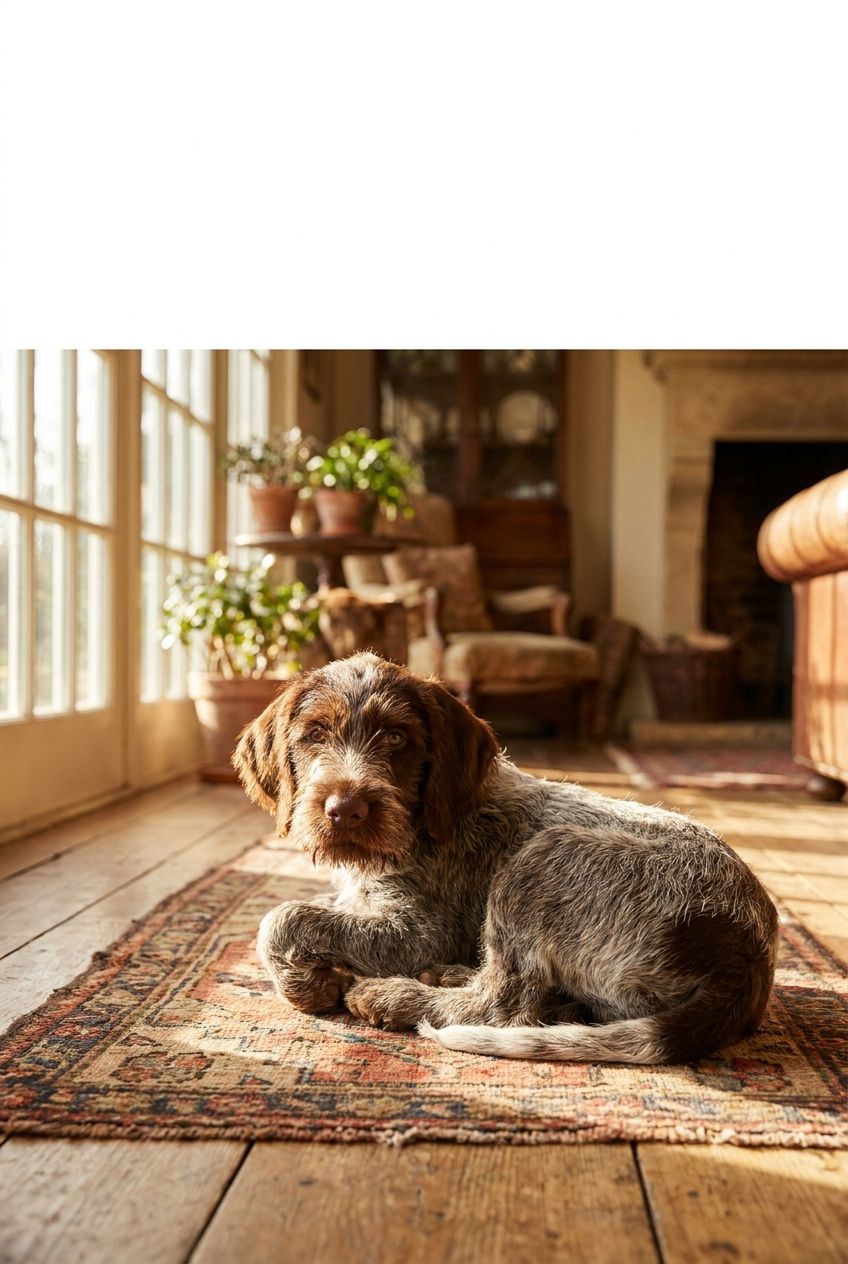
Your Wirehaired Pointing Griffon puppy just clamped down on your wrist for the fifth time this hour, and you’re starting to wonder if you brought home a shark instead of a gun dog. Here’s the truth: Griffons are mouthier than most sporting breeds because they were bred to grip, retrieve, and work with their mouths — but that doesn’t mean you’re stuck with a 50-pound biting machine forever. This guide gives you the exact methods that work for this specific breed, not generic puppy advice copy-pasted from a Labrador training site.
Why Wirehaired Pointing Griffons Bite More Than Other Breeds
The Wirehaired Pointing Griffon was developed in the Netherlands in the 1870s by Eduard Korthals specifically as a versatile hunting dog that points, retrieves, and tracks. That job description matters when you’re dealing with a biting puppy, because mouth-driven behavior isn’t a flaw in this breed — it’s baked into the genetics.
The Retrieving Drive Factor
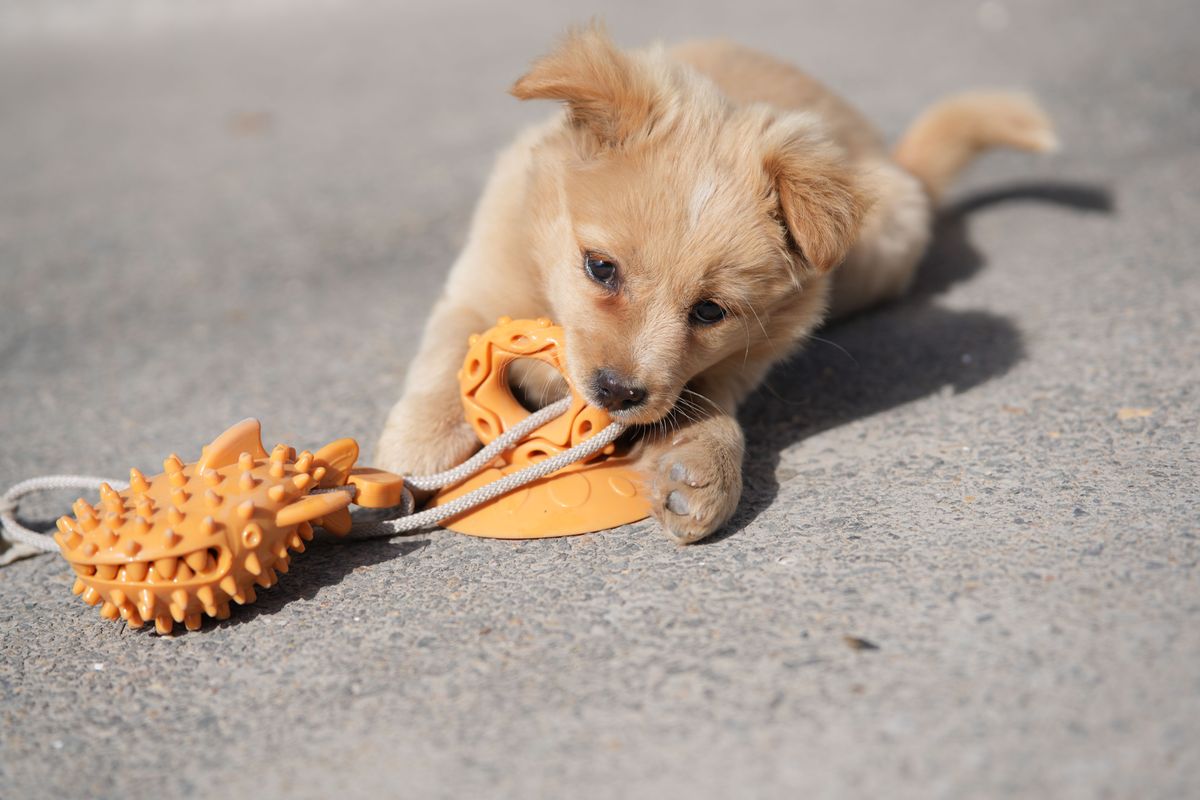
Griffons carry strong retrieving instincts, which means they explore the world mouth-first far more than breeds like Cavalier King Charles Spaniels or Shih Tzus. A 9-week-old Griffon puppy will mouth your shoelaces, your fingers, the couch cushion, and your kid’s stuffed animal with roughly equal enthusiasm because everything is a potential object to carry.
High Energy and Intelligence Combination
Griffons rank as highly intelligent working dogs, similar in trainability to German Shorthaired Pointers. That intelligence is a double-edged sword: a bored Griffon puppy left alone for even 20 minutes will invent a game, and biting your ankles as you walk past is a favorite. Underexercised Griffon puppies bite 2-3 times more frequently than those getting adequate daily activity, based on patterns reported by breed-specific trainers.
Understanding this breed context is the first step in any plan to stop the biting — you’re not fighting a behavioral problem so much as redirecting an instinct that has nowhere appropriate to go yet.
The Bite Timeline: What’s Normal at Each Age
Knowing what to expect helps you gauge whether your training is working or whether you’re dealing with an outlier case.
- 8-10 weeks: Peak biting phase. Needle-sharp puppy teeth, low bite pressure control. Expect 15-30 bite incidents per day during play.
- 11-16 weeks: Biting should decrease by roughly 40% if bite inhibition training is consistent. This is the critical window — most of the work happens here.
- 4-6 months: Teething intensifies again as adult teeth come in (usually complete by 6-7 months). Biting can spike temporarily even in well-trained pups.
- 6-12 months: Biting should be rare and low-pressure if training has been consistent. Occasional mouthing during rough play is still normal.
If your 7-month-old Griffon is still biting hard enough to break skin regularly, that’s outside the normal curve and warrants the professional help section further down.
Stop the Biting: The Bite Inhibition Method
Bite inhibition teaches your puppy to control the pressure of their mouth rather than eliminating mouthing entirely at first — this is the single most effective foundational technique for Griffon puppies.
Step-by-Step Process
- When your puppy bites and it hurts, immediately yelp in a high-pitched voice — Ouch! — and stop moving your hand.
- Withdraw attention for 10-15 seconds. Turn your body away, avoid eye contact.
- Resume play. If biting happens again within the session, repeat the yelp-and-withdraw sequence.
- If your puppy escalates or gets more excited by the yelp (common in high-drive Griffons), switch to a calm no and immediately leave the room for 30 seconds instead.
- Reward gentle mouth contact or licking with praise and a small treat — a pea-sized piece of freeze-dried chicken works well and doesn’t disrupt training momentum.
Most Griffon owners see a noticeable reduction in bite pressure within 7-10 days of consistent practice, though full bite inhibition typically takes 3-4 weeks of daily repetition.
Redirection Techniques That Actually Work
Telling a Griffon puppy no without giving them an alternative is like telling a toddler to stop touching things without handing them a toy. Redirection closes that gap.
Best Redirect Objects for Griffons
- Rope toys: Satisfies the tug and grip instinct. The Mammoth Flossy Chews rope toy (around $8-12) holds up well against Griffon jaws.
- Frozen washcloths: Wet a washcloth, tie a knot in it, freeze it for 2 hours. Excellent for teething relief during the 4-6 month spike.
- Rubber Kong Puppy toys ($10-15): Stuff with plain pumpkin puree or peanut butter (xylitol-free) and freeze for a 20-30 minute engagement window.
- Flirt poles: A flirt pole (essentially a cat teaser toy scaled up) burns retrieving energy in 10-minute sessions and redirects mouthing onto an appropriate target.
The Swap Technique
The moment teeth touch skin or clothing, calmly say off and immediately present the toy. Don’t yank your hand away fast — sudden movement triggers prey drive and often makes biting worse in retrieving breeds. Hold still, present the toy 2-3 inches from the bite point, and let your puppy make the choice to transfer their grip.
The Time-Out Method for Persistent Biters
Some Griffon puppies are simply more mouth-driven than others, and yelping alone won’t cut it. This is where structured time-outs come in.
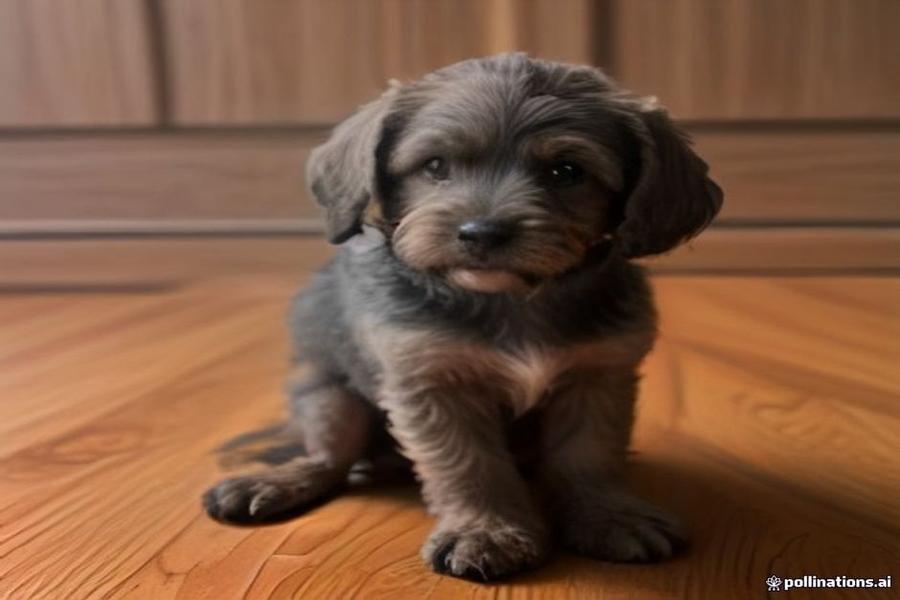
- Keep a lightweight puppy playpen or use a baby gate to section off a boring area — not the crate, since you don’t want to build negative crate associations.
- The instant biting happens with real pressure, say too bad in a neutral tone and place your puppy in the time-out zone.
- Leave them there for exactly 60-90 seconds. No talking, no eye contact.
- Release calmly and resume the activity. Repeat as needed — consistency matters more than duration.
Trainers who specialize in sporting breeds report that Griffon puppies typically need 15-20 time-out repetitions across a week before they reliably connect biting to the consequence, compared to 8-10 for less mouth-driven breeds like Golden Retrievers.
Common Mistakes That Make Biting Worse
Even well-intentioned owners sabotage their own progress. Here are the three biggest errors specific to Griffon owners.
Mistake 1: Using Hands as Toys
Wrestling with your puppy using bare hands during the 8-16 week window teaches them that hands are appropriate bite targets. Even if it feels harmless at 10 pounds, a 50-pound adult Griffon with that same habit is a real problem. Fix: use toys as the only hand-adjacent object from day one.
Mistake 2: Inconsistent Household Rules
If one family member allows rough mouthing during play while another scolds it, your puppy receives mixed signals and biting persists longer — often 2-3 times longer according to behaviorist case notes. Fix: hold a 10-minute family meeting and write down three agreed-upon rules everyone follows, including kids.
Mistake 3: Insufficient Physical Exercise
A Griffon puppy needs roughly 5 minutes of structured exercise per month of age, twice daily (so a 4-month-old needs about 20 minutes, twice a day), plus mental stimulation. Skipping this and expecting biting to resolve through discipline alone rarely works — pent-up energy has to go somewhere, and it usually goes into your sleeve.
Exercise and Mental Stimulation to Reduce Bite Drive
You cannot train away biting caused by boredom. Address the root cause alongside the behavioral techniques.
Daily Structure That Works
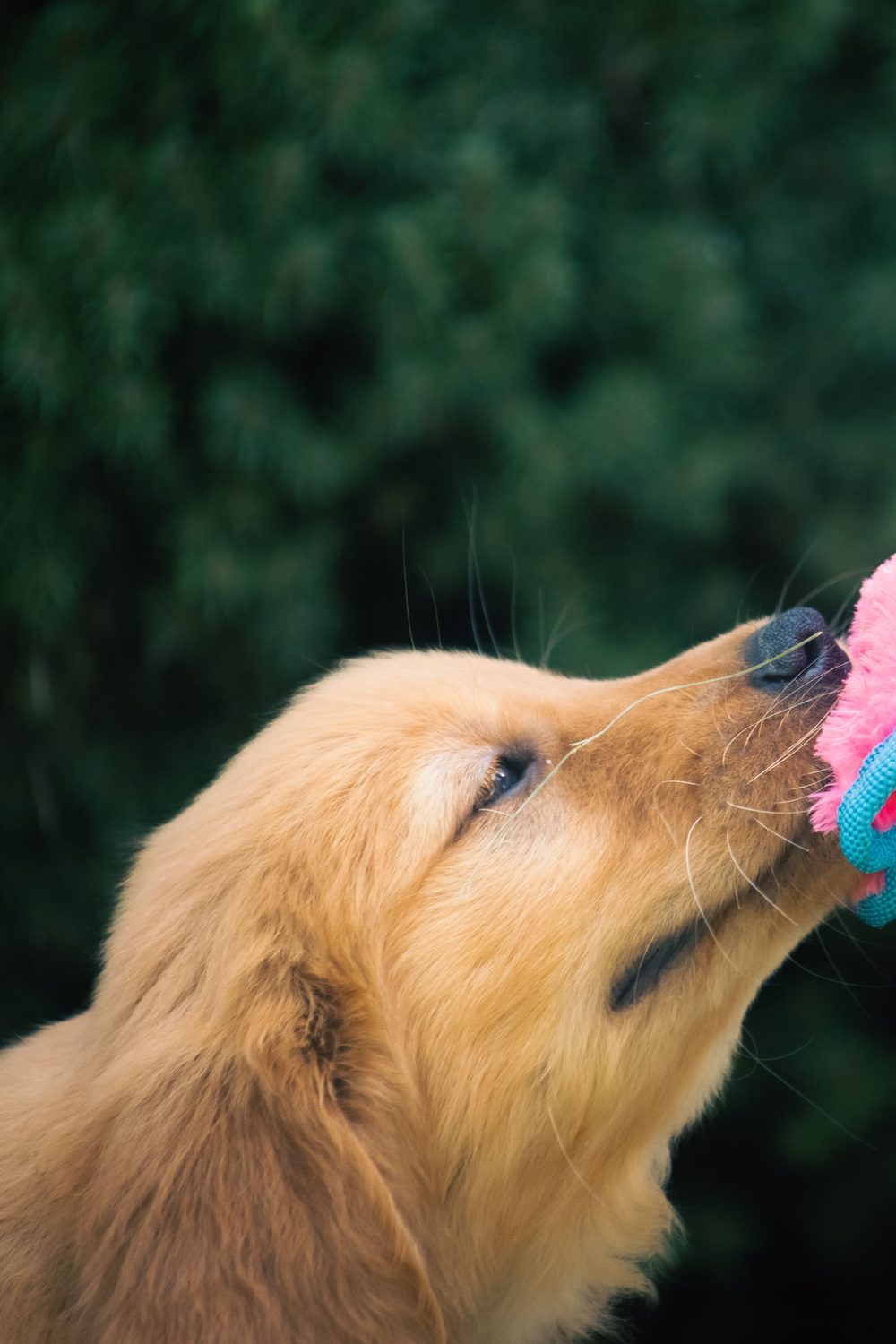
- Morning: 15-20 minute walk or structured fetch session before breakfast — Griffons who exercise before eating show calmer behavior for 2-3 hours afterward.
- Midday: 10-15 minutes of puzzle feeding using something like a Nina Ottosson puzzle toy ($15-25) instead of a plain bowl.
- Afternoon: Training session, 10 minutes, focused on basic obedience (sit, stay, come) which tires the brain as much as the body.
- Evening: Flirt pole or tug session, 10 minutes, followed by a chew item to wind down.
Owners who implement this four-part structure typically report a 50-60% drop in nuisance biting within two weeks, simply because the puppy has an outlet.
Comparison Table: Training Methods for Griffon Biting
| Method | Best For | Time to See Results | Effort Level |
|---|---|---|---|
| Yelp and Withdraw | Mild to moderate biters, ages 8-16 weeks | 7-10 days | Low |
| Redirection with Toys | High-drive retrievers, all ages | Immediate, ongoing | Medium |
| Structured Time-Outs | Persistent or excitable biters | 1-2 weeks | Medium-High |
| Increased Exercise | Boredom-driven biting | 2 weeks | High (time investment) |
| Professional Training | Aggressive or unresolved biting past 6 months | 3-6 weeks | High (financial and time) |
What If Scenarios: Answering Real Objections
What if my Griffon bites harder when I yelp?
Around 20-25% of high-drive puppies get more excited by a yelp because it sounds like a game noise. Switch to a flat, unemotional no followed by immediate withdrawal of attention instead.
What if the biting happens mostly with kids?
Puppies often view children as littermates rather than authority figures. Supervise all interactions until at least 5-6 months old, and teach kids to stand still and fold their arms (be a tree) instead of pulling away, which triggers chase-and-bite instinct.
What if my puppy draws blood?
Occasional skin nicks from needle teeth are common at 8-12 weeks and not usually a sign of aggression. If bruising, repeated hard bites, or growling accompany it past 5 months, document the incidents and consult a certified trainer — this crosses from normal mouthing into a behavior issue worth addressing early.
What if nothing seems to work after a month?
Reassess exercise levels first (this fixes 60%+ of stalled cases), then consider whether household rules are actually consistent. If both check out, it’s time for professional support.
Tools and Products Worth the Investment
- Bitter Apple Spray ($7-10): Applied to hands or furniture edges, though effectiveness varies — about 60% of dogs respond well to the taste deterrent.
- West Paw Zogoflex Chew Toys ($18-22): Durable enough for Griffon jaw strength, unlike cheaper toys that shred within a week.
- Adjustable exercise pen ($40-60): Useful for time-outs and safe containment during unsupervised moments.
- Treat pouch with clip ($12-15): Keeps reward timing fast and consistent, which matters more than treat quality for this training.
When to Call in Professional Help
Most Griffon biting resolves with consistent home training by 6 months of age. Call a Certified Professional Dog Trainer (CPDT-KA) or veterinary behaviorist if you notice any of the following: biting accompanied by stiff body language or growling, biting that increases in frequency after 5 months rather than decreasing, or any bite that requires medical attention. Expect to pay $75-150 per session for a private trainer experienced with sporting breeds, and budget for 3-6 sessions to see meaningful change in entrenched cases.
Conclusion
Your Griffon puppy’s biting isn’t a character flaw — it’s an instinct without an outlet yet, and your job is to build that outlet while teaching bite pressure control at the same time. Start today with one change: swap your bare hands out of every play session and replace them with a rope toy, then track your puppy’s bite incidents for the next seven days. Most owners who commit to the yelp-and-redirect combo alongside proper exercise see real, measurable improvement within two weeks — not because the method is magic, but because it finally gives a smart, driven dog something better to do with that mouth than use it on you.