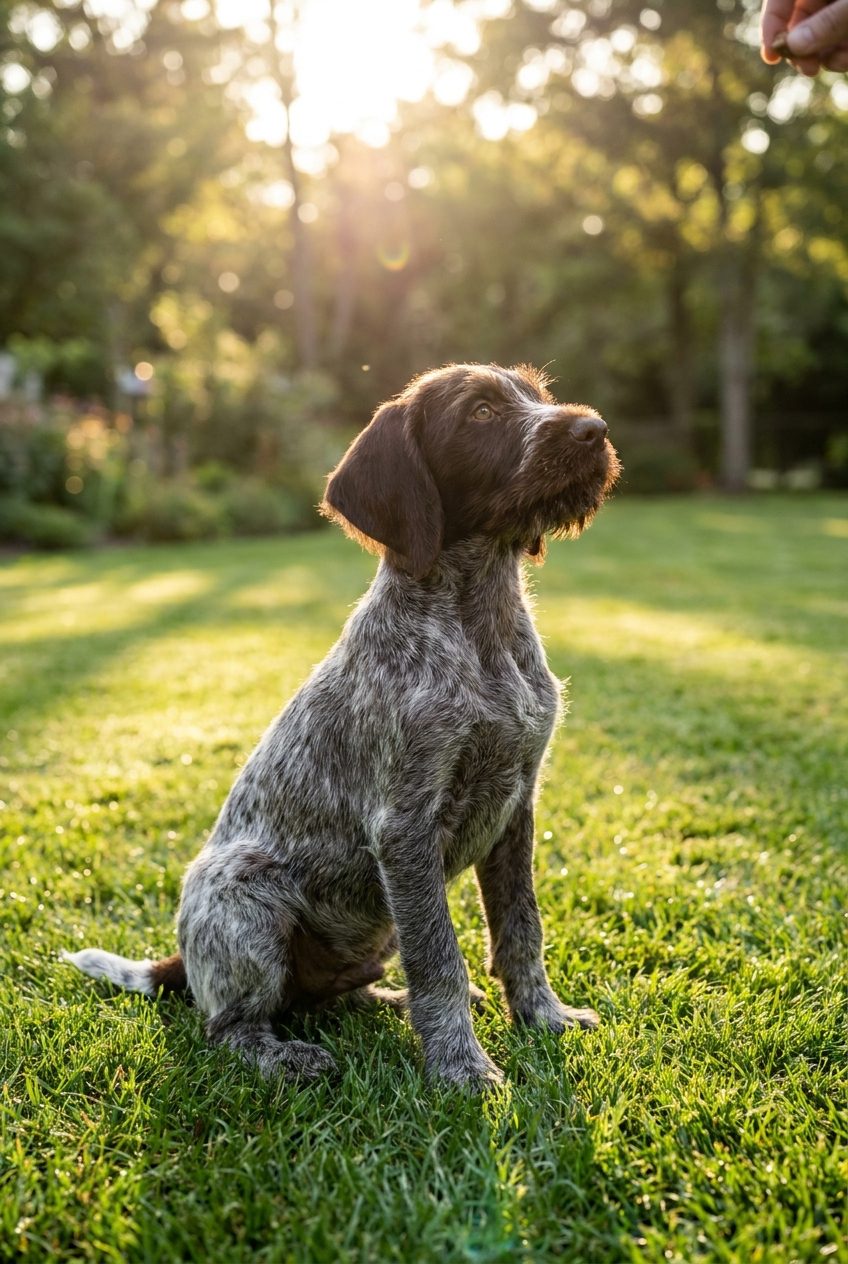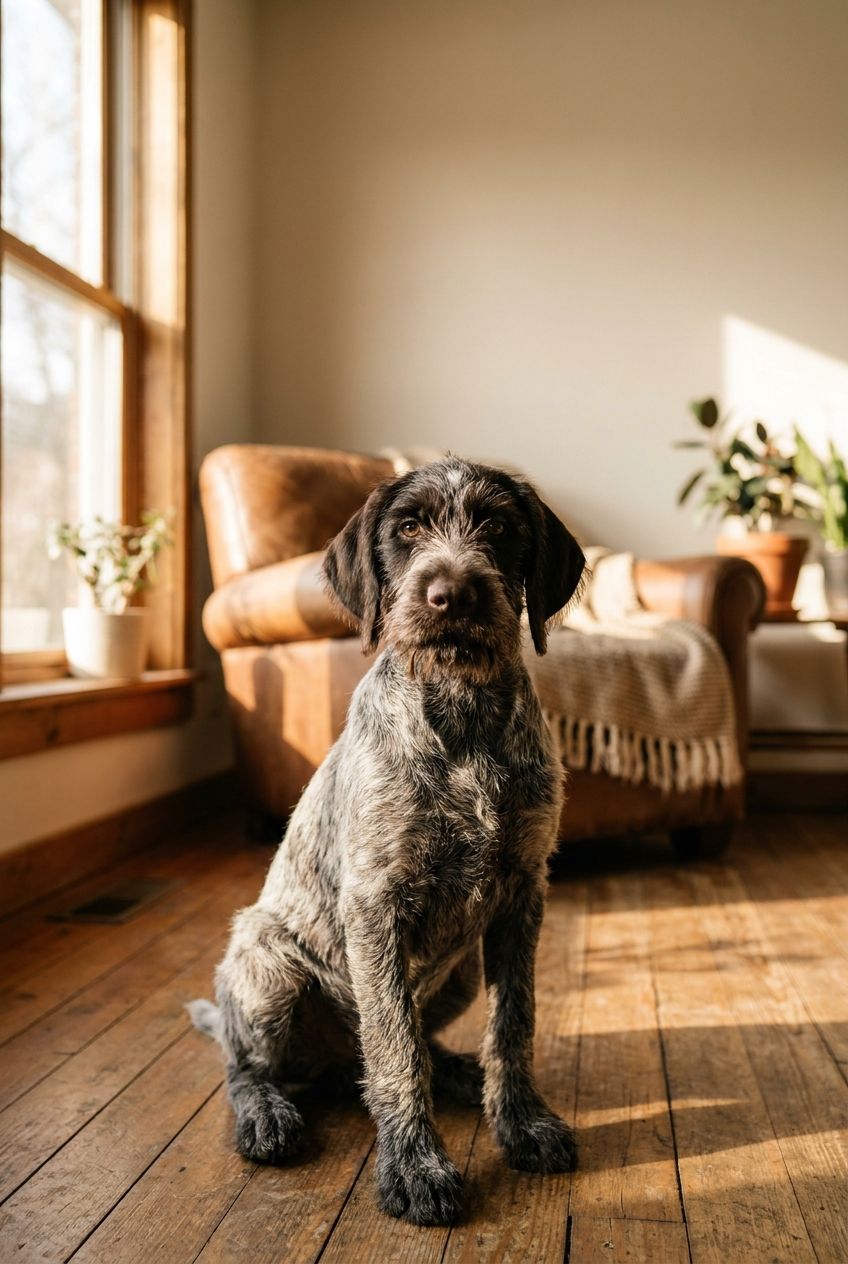
Stop German Wirehaired Pointer Puppy Biting: Training Tips!
Your German Wirehaired Pointer puppy just clamped down on your wrist mid-play, and it wasn’t a nibble — it felt like a bear trap with 28 tiny needle teeth. If you’re bleeding, frustrated, and Googling this at 11 PM after another chewed-up sleeve, you’re in the right place. This guide gives you the exact methods breeders and gun-dog trainers use to stop German Wirehaired Pointer puppy biting, without crushing the drive and confidence that makes this breed such a phenomenal hunting and family dog.
Why German Wirehaired Pointer Puppies Bite So Much
German Wirehaired Pointers (GWPs) were bred to work 8-10 hour days in the field, gripping birds, pushing through briars, and problem-solving independently. That work ethic shows up in an 8-week-old puppy as relentless mouthiness. Unlike a Cavalier or a Maltese, a GWP puppy has a genetically higher pain threshold, stronger jaw muscles for its size, and a prey drive that gets triggered by fast movement — including your kids running, your hands waving, or your other dog’s tail.
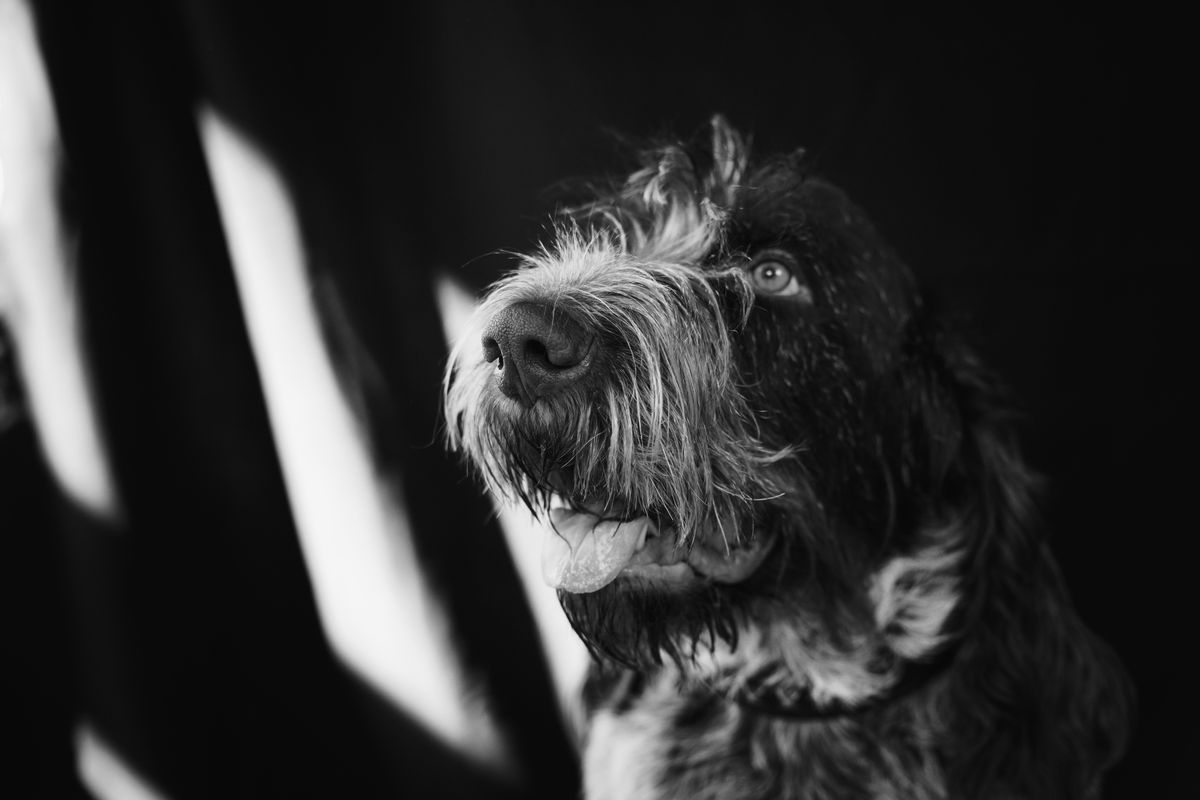
Biting in puppies under 5 months old is almost never aggression. It’s one of four things: teething discomfort, overstimulation, play behavior learned from littermates, or attention-seeking because biting gets an instant reaction from you. GWPs specifically rank in the top 15% of sporting breeds for “mouthiness” scores according to breed temperament surveys from the American Pointer Club, so if your puppy seems worse than your neighbor’s Lab, that’s not your imagination — it’s genetics plus drive.
The good news: this breed is also highly food-motivated and eager to please once past the adolescent stubborn phase (usually 5-9 months), which makes bite inhibition training faster than with a lot of other sporting breeds — if you’re consistent.
Understanding the GWP Bite Timeline: What’s Normal and When
Weeks 8-12: Needle Teeth Phase
At this age your puppy has 28 baby teeth, and biting is exploratory. Expect nipping during every play session. This is the ideal window to start bite inhibition — the goal isn’t zero biting yet, it’s teaching bite pressure control.
Weeks 12-20: Peak Teething
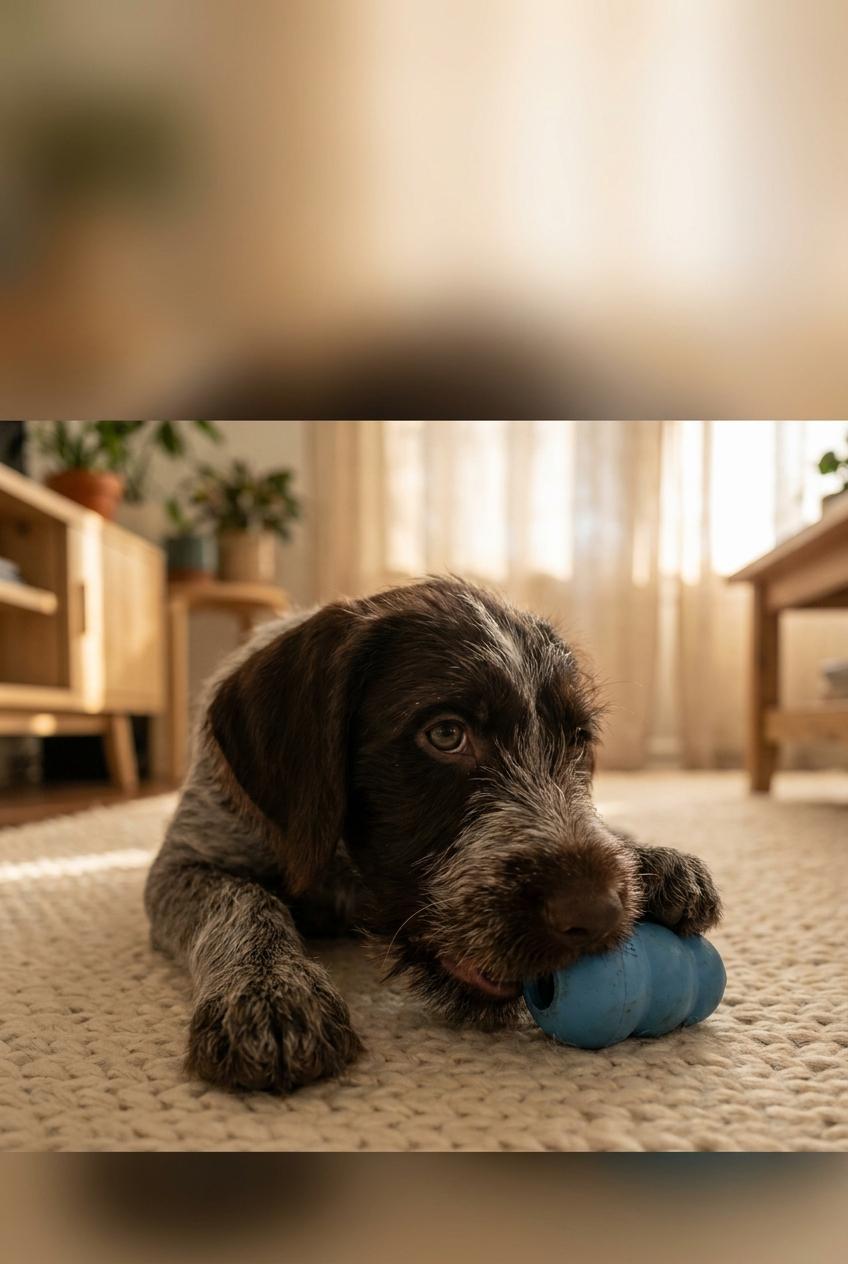
Adult teeth start pushing through around week 16, and gum pain spikes biting frequency by as much as 40-60% according to veterinary behaviorists. This is when owners panic the most, but it’s also temporary — usually resolving by 6-7 months once all 42 adult teeth are in.
Months 5-9: Adolescent Testing
Biting that resurfaces here is usually boundary-testing, not teething. This is where training consistency matters most, because GWPs reach sexual and social maturity later than small breeds, sometimes not settling until 18-24 months.
Stop German Wirehaired Pointer Puppy Biting: The Bite Inhibition Method
Bite inhibition is the single most important skill you’ll teach in the first 16 weeks. It doesn’t eliminate biting instantly — it teaches your puppy how much pressure is too much, which matters enormously for a breed that will grow into a 55-70 lb dog with a serious grip.
- Yelp and stop. The instant teeth touch skin too hard, let out a sharp, high-pitched “Ow!” — not a scream, just a sudden yelp like a littermate would give. Then immediately go still and stop interacting for 10-15 seconds.
- Withdraw attention. If the puppy bites again within that window, stand up, turn away, and ignore for 20-30 seconds. GWPs hate being ignored — this breed is velcro-attached to its people, and losing your attention is a real consequence.
- Reward the pause. The moment your puppy stops mouthing or offers a lick instead of a bite, mark it with “yes” and deliver a small treat within 2 seconds.
- Repeat 10-15 times per session. Do 3-4 short sessions daily rather than one long one. Puppies under 4 months lose focus after about 5 minutes.
- Gradually lower your bite threshold. Week one, you’re only correcting hard bites. By week three, you’re correcting any tooth-on-skin contact, even gentle mouthing.
Most GWP owners see a measurable drop in hard biting within 10-14 days of consistent practice, with soft mouthing resolving by 6-8 weeks of training.
Redirection Techniques That Actually Work
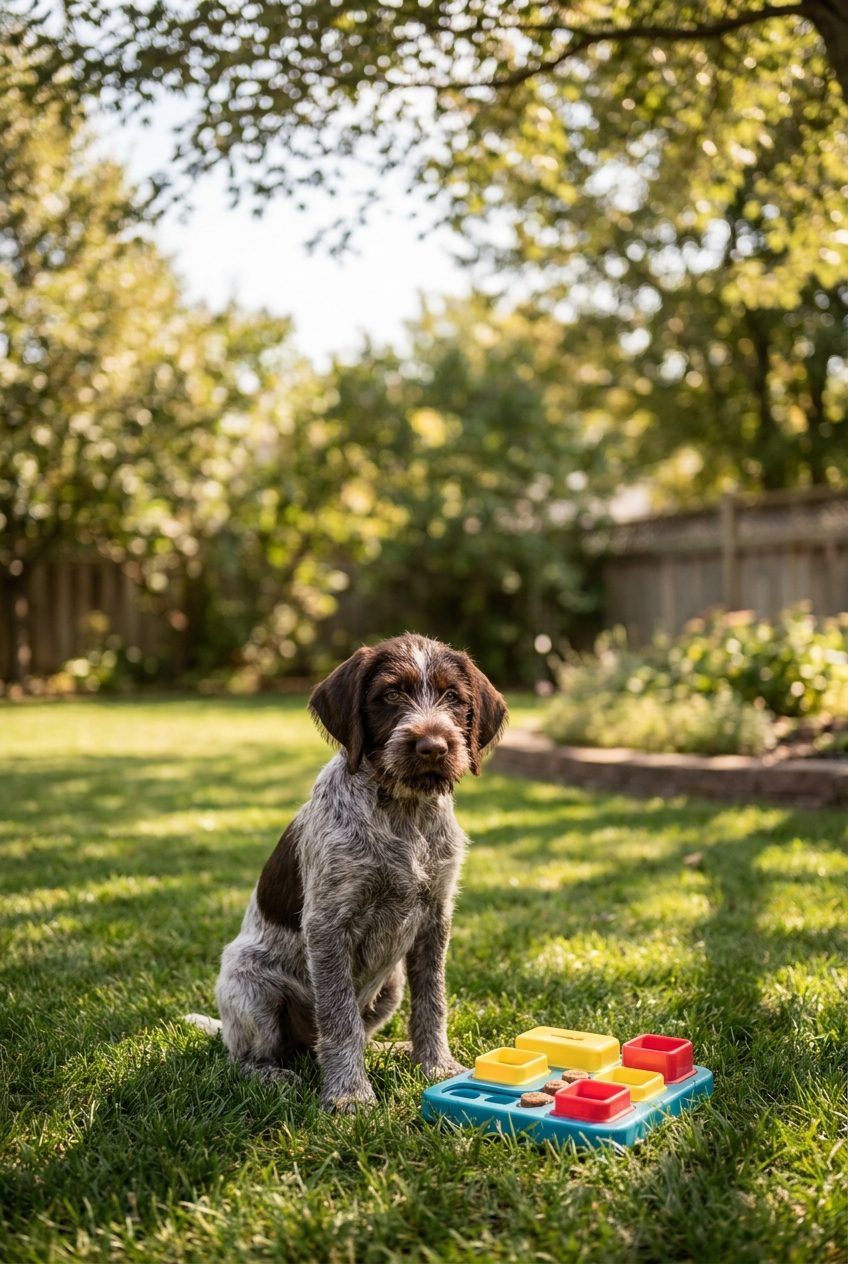
Bite inhibition teaches pressure control; redirection gives the mouth something appropriate to do instead. GWPs need to chew — it’s not optional, it’s a breed trait tied to their working drive.
- Freeze a stuffed KONG (Puppy size, ~$12-14): Fill with plain yogurt and kibble, freeze overnight. The cold soothes teething gums and occupies the puppy for 15-20 minutes.
- Nylabone Puppy Chew ($7-10): Softer than adult Nylabones, sized for developing jaws. Replace once it’s worn down to prevent choking hazards.
- West Paw Zogoflex Hurley ($18-22): Nearly indestructible, good for the aggressive chewers GWPs often turn into by 5 months.
- Flirt pole with a soft toy attachment ($15-20): Channels prey drive into an appropriate outlet in 5-10 minute bursts, 2x daily — this alone reduces hand-biting significantly because it burns off the exact drive causing the nipping.
- Frozen carrot or plain ice cube: Free, effective, safe teething relief for weeks 12-20.
The technique: the instant your puppy’s mouth touches you, calmly say “no bite,” then immediately present the toy and praise enthusiastically when they redirect onto it. Timing within 1-2 seconds is critical — beyond that, the puppy won’t connect the correction to the redirection.
Comparison Table: Training Tools and Methods
| Method/Tool | Best For | Cost | Time to See Results | Effort Level |
|---|---|---|---|---|
| Yelp & Withdraw Method | Ages 8-16 weeks, general mouthing | Free | 10-14 days | Medium (requires consistency) |
| Frozen KONG/Chews | Teething pain, ages 12-24 weeks | $7-22 | Immediate relief per session | Low |
| Flirt Pole Redirection | Prey-drive triggered biting, all ages | $15-20 | 1-2 weeks | Medium (daily sessions) |
| Structured Crate Time-Outs | Overstimulated/adolescent biting | $40-150 (crate) | 2-3 weeks | Medium |
| Professional Trainer | Aggressive or unresolved biting past 6 months | $50-150/session | 3-6 sessions | Low effort, higher cost |
Common Mistakes That Make Puppy Biting Worse
Even well-intentioned owners often accidentally reinforce biting. Here are the three biggest mistakes I see with GWP owners specifically:
- Mistake 1: Using hands as toys during play. Wrestling with bare hands teaches the puppy that skin is a legitimate chew target. Fix: always introduce a toy before initiating rough play, and if teeth touch skin, stop the game entirely for 30 seconds.
- Mistake 2: Punishing with physical corrections. Alpha rolls, nose flicks, or holding the muzzle shut increase fear-based biting in GWPs, a breed that’s naturally sensitive and can become hand-shy or defensive by 5-6 months if handled harshly. Fix: use the yelp-and-withdraw method instead — it mimics natural canine feedback without triggering defensive aggression.
- Mistake 3: Inconsistent household rules. If one family member allows rough hand-play and another doesn’t, the puppy gets mixed signals and biting persists 2-3x longer. Fix: hold a 10-minute family meeting and agree on identical rules — no exceptions, including for kids and guests.
Exercise and Mental Stimulation as Bite Prevention
Physical Exercise Requirements
An under-exercised GWP puppy bites more — it’s not laziness or bad temperament, it’s pent-up energy with nowhere to go. By 4-6 months, most GWPs need 45-60 minutes of active exercise daily, split into 2-3 sessions to protect developing joints (avoid high-impact running until growth plates close around 12-14 months).
Mental Enrichment
GWPs are bred to problem-solve in the field, so 10-15 minutes of scent work (hiding treats around a room) or a snuffle mat session before dinner can reduce evening “witching hour” biting by a noticeable margin. Puppies who get both physical and mental outlets typically show 30-40% less mouthing behavior in the evenings, based on patterns reported by sporting-breed trainers.
The Nap Trap
Overtired puppies bite more, not less — much like toddlers. If your GWP has been awake and active for more than 90 minutes straight, that biting spike is often a sign they need a nap, not more stimulation. Crate them with a chew toy for 30-45 minutes and reassess.
What If My Puppy’s Biting Draws Blood or Seems Aggressive?
This is the most common panic question, so let’s address it directly.
What if it draws blood? Puppy teeth are sharp enough to break skin even during normal play — this alone isn’t aggression. Continue the yelp-and-withdraw method, but shorten play sessions to 5 minutes and increase toy redirection frequency.
What if my puppy growls while biting? Play growling with a loose, wiggly body is normal GWP communication. Growling paired with stiff body posture, whale eye (showing whites of the eyes), or biting that increases in intensity when you pull away is a different signal and warrants a professional evaluation, ideally before 5 months.
What if biting happens mostly around food or toys? This is resource guarding, not typical mouthing, and needs a separate protocol: practice trading up (offering a higher-value treat in exchange for the item) 3-4 times daily starting at 8-10 weeks.
What if I have young kids? Kids’ fast movements and high-pitched voices trigger prey drive. Until biting is under control (usually by 4-5 months with consistent training), supervise all interactions and teach kids to stand still and fold their arms if nipped, rather than running or screaming.
Age-Specific Training Adjustments
Training that works at 9 weeks won’t look the same at 6 months. Here’s how to adjust:
- 8-12 weeks: Focus purely on bite inhibition and socialization. Short 5-minute sessions, high treat frequency (every 10-15 seconds during training).
- 12-20 weeks: Add chew redirection tools aggressively since teething peaks here. Introduce basic obedience (sit, stay) to build impulse control, which transfers directly to bite control.
- 5-9 months: Biting that resurfaces is often adolescent testing. Reintroduce structured time-outs (30-60 seconds in a separate room) for repeated offenses, and increase exercise to manage rising energy levels.
- 9+ months: Most GWPs have largely outgrown mouthing by now if training was consistent. Persistent biting at this stage often points to insufficient exercise (less than 60 minutes/day) or an unaddressed anxiety issue.
When to Call a Professional Trainer
Most GWP biting resolves with consistent home training within 8-12 weeks of starting. Call a certified professional (look for CPDT-KA or IAABC credentials) if:
- Biting is still drawing blood regularly past 6 months of age.
- You notice stiff body language, prolonged eye contact, or biting that escalates rather than stops when you disengage.
- Biting is directed specifically at one family member or a child under 6.
- You’ve been consistent for 4+ weeks with zero improvement.
Expect to pay $50-150 per private session, or $150-300 for a 4-6 week group puppy class, which also doubles as socialization — something GWPs need heavily given their tendency toward reserved-with-strangers behavior if under-socialized before 16 weeks.
Conclusion: Your Next 14 Days
Stop overthinking this and start today: pick two redirection tools from the list above, commit to the yelp-and-withdraw method for every single bite for the next 14 days, and track progress in a notes app — note the time of day biting happens most, because most owners find a pattern (usually late afternoon overtiredness or post-dinner zoomies) within the first week. Consistency beats intensity here; five short 5-minute sessions daily will outperform one frustrated 30-minute correction marathon every time. Your German Wirehaired Pointer isn’t broken and doesn’t need harsh handling — it needs clear, repeated feedback from a breed that genuinely wants to work with you. Stick with the method for a full month before judging results, and don’t be surprised if the same drive that made training feel exhausting at 10 weeks is what makes this dog an exceptional, biddable companion by its first birthday.